
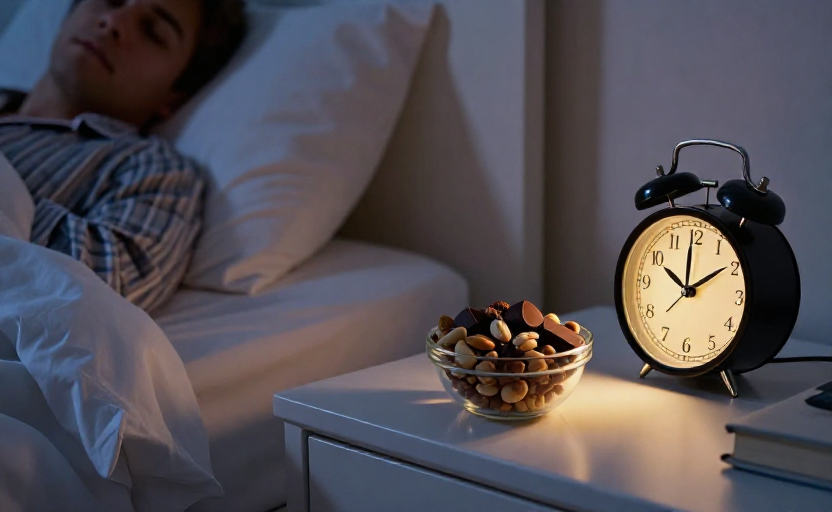
You’ve heard the usual advice: don’t eat a heavy meal right before bed. But what about the seemingly innocent handful of almonds, the small square of dark chocolate, or a bowl of cereal you eat while winding down? Even a light evening snack can quietly interfere with your sleep architecture in ways you might not immediately connect to what you ate.
Instead of lying awake staring at the ceiling, you might notice these two subtle signs that your nighttime nibble is working against your rest. Recognizing them is the first step toward a snack swap that supports, rather than sabotages, your sleep cycle.
Sign #1: You Wake Up Feeling Unrefreshed, Even After 8 Hours
If you routinely log a full night in bed but wake up groggy, with brain fog, or as if you barely slept, your blood sugar may have been on a rollercoaster overnight. This is a classic, and often overlooked, sign of a disrupted sleep cycle caused by the wrong pre-bed snack.
Many evening snacks—especially those high in refined carbohydrates or certain natural sugars—cause a sharp spike in blood glucose. Your body responds by releasing insulin to bring that level back down. For some people, this hormonal response can overshoot, leading to a blood sugar dip in the middle of the night.
That dip triggers the release of stress hormones like cortisol and adrenaline to protect you from hypoglycemia. These hormones are designed to wake you up, and they do—even if you don’t fully rouse. The result is lighter, fragmented sleep that doesn’t deliver the deep restorative stages you need.
Check your snack: If your evening snack is mostly carbs (crackers, pretzels, cereal, fruit juice, or even a banana), your blood sugar could be the culprit.
What to do about it
Instead of ditching the snack entirely, shift its balance. The ideal pre-bed snack combines a small amount of complex carbohydrate with a source of protein or healthy fat. That combination slows digestion and provides a steady release of energy, preventing the spike-and-crash cycle. Think a few apple slices with almond butter, a small handful of walnuts, or a thin slice of turkey.
Sign #2: You Toss and Turn, or Wake Up Frequently to Pee
It’s easy to chalk up restless sleep or multiple nighttime bathroom trips to stress, age, or just a bad night. But your evening snack might be the hidden driver. Certain foods and drinks act as diuretics or bladder irritants, and they can also stimulate your digestive system when it should be powering down.
Beyond the obvious fluids, watch for these common snack offenders:
- Spicy or acidic foods: Even a small amount of hot sauce or a tangy dressing on a late-night salad can trigger heartburn or indigestion that disrupts sleep without causing sharp pain.
- Hidden sources of caffeine and theobromine: Dark chocolate, certain green teas, and matcha contain enough stimulants to interfere with sleep onset and sleep depth for sensitive individuals.
- High-sodium snacks: A handful of salted nuts, edamame, or crackers can make you retain water, leading to that middle-of-the-night bathroom wake-up.
- Fermented foods: Pickles, kimchi, or sauerkraut are healthy, but their high histamine content can cause a minor allergic-like reaction in some people, resulting in restlessness or a slightly stuffy nose that impedes deep breathing.
The telltale clue: If you notice that your sleep quality varies depending on what you snack on (not just if you snack), the specific food choices are the likely issue.
A simple test
For one week, try eating your last food at least two to three hours before bedtime. If your restlessness or bathroom trips improve, you have your answer. If they don’t, your snack timing or composition needs tweaking—not elimination.
How to choose a sleep-friendly evening snack
The goal of a nighttime snack isn’t to fill your stomach; it’s to lightly support stable blood sugar and provide building blocks for sleep hormones. Here’s a quick guide to building a snack that works with your body, not against it.
- Pair carbohydrates with protein or fat. This slows digestion. Examples: half an apple with a tablespoon of peanut butter, or a small bowl of berries with full-fat Greek yogurt.
- Aim for a small portion. Around 150 to 200 calories is plenty. Your body doesn’t need a meal; it just needs a nudge toward stability.
- Consider nutrients known to aid sleep. Foods containing tryptophan (turkey, dairy, eggs), magnesium (pumpkin seeds, almonds), or melatonin (tart cherries, grapes) are gentle choices.
- Finish eating at least 60 to 90 minutes before lying down. This gives digestion a head start so your body can focus on repair and rest.
If your evening habit is more about winding down than hunger, a cup of herbal tea (like chamomile or lavender) or a glass of warm milk can serve the same comforting purpose without the metabolic disruption.
Not everyone needs an evening snack, and forcing one when you’re not hungry can backfire. But if you enjoy something small before bed, and you’ve been blaming stress or bad luck for your restless nights, take a closer look at what’s on your plate. Often, the simplest swap—a few olives instead of crackers, or cottage cheese instead of cereal—can be the difference between a night of tossing and a night of true, deep sleep.