When a deep, painful bump appears along your jawline or chin, it is tempting to blame your skincare routine. But for many people, the real culprit is on their plate. Cystic acne—the kind that forms hard, inflamed cysts under the skin—is stubborn, and while hormones and stress play a role, diet can act as a powerful trigger. Let's look at two common foods that researchers consistently link to these flare-ups and, more importantly, what to eat instead to help calm your skin.
Why dairy and high-glycemic foods get under your skin
Before we get into specific items, it helps to understand the mechanism. Both dairy and rapidly digested carbohydrates (high-glycemic foods) ramp up a hormone called insulin-like growth factor 1 (IGF-1). This hormone tells your sebaceous glands to produce more oil, and it also makes your skin cells grow faster—a perfect setup for clogged pores and deep inflammation. Not everyone reacts to these foods the same way, but if you regularly get cystic breakouts, they are worth testing.
Food #1: cow's milk (especially skim and low-fat)
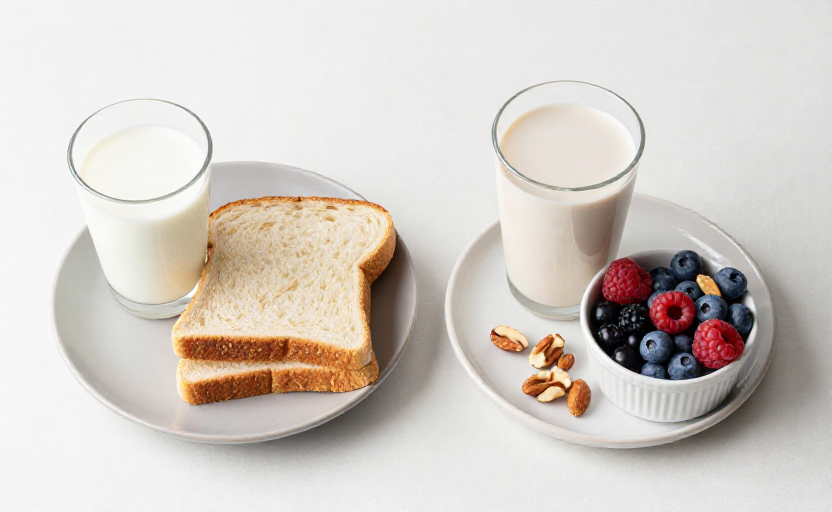
Out of all dairy products, cow's milk—particularly skim and low-fat milk—shows the strongest connection to acne in clinical studies. The theory is that processing removes fat but concentrates the whey proteins and IGF-1, delivering a bigger hormonal punch to your system. A 2016 study in the Journal of the American Academy of Dermatology found that people who drank milk regularly were 24% more likely to have active acne, with skim milk carrying the strongest risk.
That single glass of milk with breakfast could be nudging your oil glands into overdrive. For cystic acne specifically, the deep inflammation seems especially sensitive to milk's effects.
What to drink instead: unsweetened oat or almond milk
Neither oat milk nor almond milk naturally contains the bovine growth hormones or whey proteins that appear to trigger acne. Oat milk has a bit more natural sugar (around 7 grams per cup), so stick to unsweetened versions. If you miss the creaminess of milk in coffee, try a splash of full-fat coconut milk—it contains medium-chain triglycerides that don't spike IGF-1 the way dairy does.
Reader tip: Try eliminating all cow's milk for three weeks. Take a photo of your skin on day one and again on day 21. Many people see a reduction in new cysts within the second week, though the change can be subtle at first.
Food #2: white bread, white rice, and sugary snacks
Here we are talking about any food that sends your blood sugar soaring fast. That includes white bread, white rice, sugary breakfast cereals, instant oatmeal, pastries, soda, and candy. When blood sugar spikes, your body releases a flood of insulin, which in turn boosts IGF-1. The result is the same cascade: more sebum, more rapid skin cell turnover, and more deep cysts.
A 2012 systematic review in Skinmed concluded that high-glycemic diets are a significant contributor to acne severity. While older research focused on superficial pimples, newer findings suggest that refined carbs specifically worsen the painful, cystic forms because of that intense inflammatory response.
What to eat instead: lower-glycemic carbs and fiber-rich foods
Swapping refined bread and sugar for whole, intact sources of carbohydrate makes a real difference. Consider these replacements:
- Replace white bread with sprouted grain bread or 100% rye sourdough—both have a gentler impact on blood sugar.
- Swap white rice for quinoa, farro, or bulgur. These grains still give you energy but come with fiber that slows digestion.
- Choose berries over bananas when you crave something sweet. Berries are lower in sugar and packed with antioxidants that help cool inflammation.
- Add a palm-size portion of vegetables to every meal. Leafy greens, broccoli, and bell peppers add bulk and fiber that blunt glucose spikes.
Other foods that help calm cystic acne
Beyond cutting out triggers, you can actively support your skin by including foods that reduce inflammation and support detoxification pathways.
Omega-3 fatty acids from fatty fish (salmon, sardines, mackerel) or from chia seeds and walnuts are powerful inflammation fighters. A study in Lipids in Health and Disease found that people with acne who took a fish oil supplement for 10 weeks saw significantly less inflammation and fewer new lesions.
Zinc-rich foods also play a role. Zinc helps regulate oil production and protects skin cells from damage. Oysters are the richest source, but pumpkin seeds, chickpeas, and cashews also provide decent amounts. Aim for a handful of pumpkin seeds as a snack a few times per week.
Green tea (unsweetened) contains catechins that lower sebum production and reduce the activity of acne-causing bacteria. One small Japanese study found that drinking one to two cups of green tea daily for four weeks led to fewer acne lesions overall, including inflammatory cysts.
Is a perfect diet the only answer?
No—and I do not want to imply otherwise. Cystic acne is complex. Genetics, hormonal fluctuations, stress, and even certain medications all play major roles. Cleaning up your diet can reduce the frequency and severity of flare-ups, but it may not clear you completely. If you have been struggling for months, it is always worth seeing a dermatologist or a registered dietitian who understands the skin-gut connection.
What diet changes can do is remove a controllable fuel source for those deep, painful cysts. For many people, cutting out milk and switching to lower-glycemic carbohydrates is the single most effective dietary shift they can make.
A quick word about patience. Dietary changes do not fix acne overnight. Your skin's cellular turnover cycle is roughly 28 days, so give any elimination or swap at least that long before deciding if it is helping. Take notes in a journal—what you ate, when you ate it, and how your skin looked the next morning. Patterns often become visible after two or three weeks.