Racing thoughts, a tight chest, the sudden urge to check your phone for the fifth time — sleep anxiety can turn the quiet moments before bed into a mental battlefield. When your mind refuses to settle, it’s tempting to reach for a sleep aid or simply lie there, hoping for the best. But research and clinical experience suggest that two simple daily habits can ease that pre-sleep tension, helping you transition from alert to resting without the drama.
I’ve reviewed the latest behavioral sleep medicine and talked with experts who treat sleep anxiety regularly. The goal here is not a rigid protocol — it’s about weaving small, evidence-backed practices into your existing routine so your nervous system gets the signal that bedtime is safe, not stressful.
Why sleep anxiety happens — and why habits beat willpower
Sleep anxiety isn’t just “thinking too much.” It’s a physiological response. Your brain’s threat-detection system stays active, keeping cortisol elevated and melatonin production suppressed. Trying to force relaxation often backfires — the effort itself becomes another stressor. That’s where carefully chosen daily habits come in. They lower the nervous system’s baseline arousal gradually, not by brute force, but by repetition and predictability.
The first habit: a structured wind-down that starts hours before bed
Most people assume that sleep preparation begins at the pillow. Sleep specialists know better: the quality of your transition to sleep depends on what you do in the 90 to 120 minutes before you get into bed. A structured pre-bed routine acts as a conditioned cue for the brain to begin releasing sleep neurotransmitters.
What a good wind-down actually looks like
It doesn’t need to be elaborate. An effective wind-down is predictable, dimly lit, and free from high-stimulation inputs. It might include:
- Dimming the lights about an hour before target bedtime — this cues your body’s natural melatonin production.
- Putting screens away for at least 30 minutes. Blue light suppresses melatonin, but even non-blue light from devices can be mentally activating.
- A short mindfulness or breath practice, such as slow exhale-focused breathing (e.g., 4-7-8 pattern) for two to three minutes. This stimulates the vagus nerve and shifts your body into a parasympathetic state.
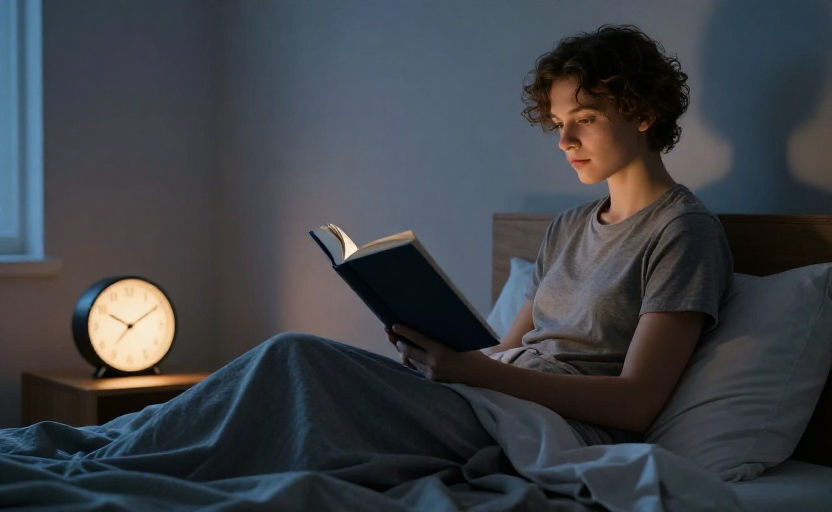
- Reading a physical book (not a tablet) for 10 to 15 minutes — fiction or something light, something you genuinely enjoy.
An important detail: this routine should feel neutral, not like a chore. If a particular step feels forced or frustrating, swap it for something else. The brain learns best when the routine feels safe, not obligatory.
The second habit: daytime movement that primes the sleep system
Exercise is well-known to improve sleep, but the type and timing matter immensely when the goal is reducing sleep anxiety. High-intensity workouts within two hours of bedtime can raise core body temperature and heart rate, interfering with sleep onset. Instead, research points to moderate aerobic activity and gentle movement in the late afternoon or early evening as the most reliable way to lower nighttime anxiety.
In a 2022 meta-analysis published in Sleep Medicine Reviews, researchers found that regular moderate aerobic exercise — think brisk walking, cycling, swimming, or a consistent yoga flow — significantly reduced pre-sleep anxiety and improved sleep quality. The mechanism? Exercise increases levels of brain-derived neurotrophic factor (BDNF) and serotonin, both of which play roles in mood regulation and the sleep-wake cycle. It also helps process excess stress hormones like adrenaline so they don’t linger in your system at bedtime.
“Moving your body consistently during the day helps your brain see that the world is safe enough to rest at night,” says Dr. Rachel Manber, a professor of psychiatry and behavioral sciences at Stanford and a leading researcher on insomnia and anxiety.
You don’t need a gym. A twenty-minute walk outdoors in the afternoon — ideally somewhere with trees or sunlight — has been shown in a 2015 study in Landscape and Urban Planning to lower anxiety and improve mood. The combination of gentle aerobic movement and natural light exposure is particularly powerful for resetting your circadian rhythm and quieting the anxious mind.
Putting the two habits together in real life
Neither of these habits requires a big time commitment, but consistency matters more than duration. Here’s how you might pair them on an average day:
- Late afternoon / early evening: 20-30 minutes of brisk walking, gentle yoga, or cycling — done ideally before dinner, not right before bed.
- 90 minutes before bed: Begin your wind-down. Dim lights, put screens away, do a short breathing exercise, read a calm book.
- Bedtime: Lights out at roughly the same time you aimed for, with no pressure to fall asleep immediately. If you’re still awake after 20 minutes, get up, do something quiet in dim light until you feel drowsy, then return to bed.
This combination — daytime movement that metabolizes stress plus a predictable, low-stimulation wind-down — works because they influence two different parts of the sleep-anxiety cycle. Movement lowers the general level of arousal; the wind-down builds a conditioned relaxation response.
A small note on expectations: neither habit is a quick fix. The benefits accumulate over days and weeks as your nervous system learns new patterns. If you miss a day or two, that’s okay — just return to the routine without self-criticism.
Common pitfalls and how to avoid them
One of the most common mistakes people make when trying to reduce sleep anxiety is turning the wind-down itself into a performance. When your “relaxation routine” feels like another stressor — “I have to do my breathing right or I won’t sleep” — it backfires. Approach the habits with curiosity, not pressure. The goal is not perfection; it’s simply repetition. If your mind wanders during breathing, that’s fine. If you forgot to walk one day, that’s also fine. The nervous system learns from the overall pattern, not from a single session.
Another mistake is assuming that these habits can replace medical or therapeutic support for clinical anxiety disorders. If racing thoughts, panic, or avoidance of sleep are severely affecting your daily life, please talk with a healthcare provider such as a primary care doctor or a clinical psychologist who specializes in cognitive behavioral therapy for insomnia (CBT-I). These daily habits are designed to support, not replace, professional care.
The takeaway for restless minds
Sleep anxiety thrives on unpredictability and high arousal. By adding two simple habits — a moderate daytime movement session and a structured, screen-free wind-down — you create a counter-ritual that gently teaches your brain that bedtime is not a threat. It’s not about silencing every thought. It’s about giving your nervous system the signals it needs to settle on its own.