
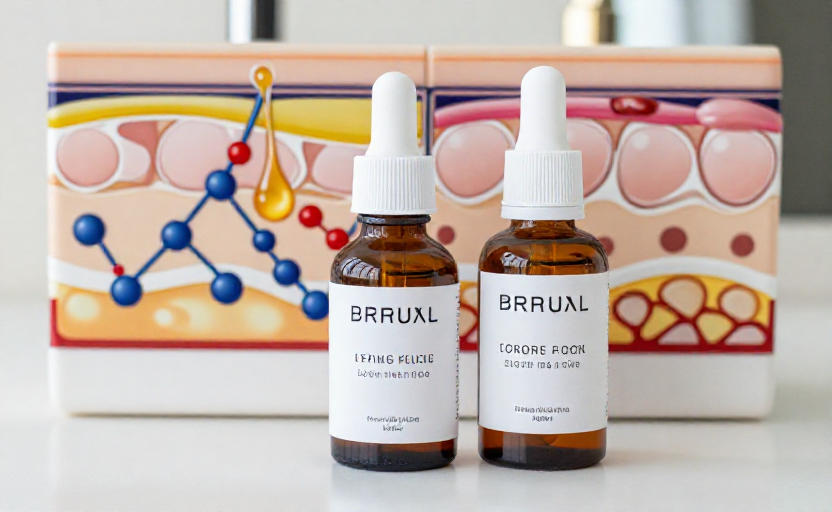
Peptides are celebrated in skincare for their ability to signal the skin to produce more collagen, potentially smoothing fine lines and improving firmness. But for these short chains of amino acids to work, they must penetrate the outer layer of the skin and reach the living cells below. Unfortunately, the same diligent routines we rely on can sometimes put up a roadblock.
If you're using a peptide serum or cream and not noticing results, the issue may not be the product itself. Two common habits—applying peptides alongside certain acids and layering them over heavy occlusives—can quietly prevent these ingredients from getting where they need to go. Here's what's happening beneath the surface, and how to adjust your routine for better results.
What Peptides Need to Penetrate
Peptides are water-soluble molecules that generally don't slip easily through the skin's lipid-rich protective barrier. To reach deeper layers, they rely on a formulation that includes penetration enhancers (like certain glycols) and on the skin being in a receptive state. This means a clean, slightly hydrated surface with minimal competition from other active ingredients that could alter pH or form a physical block.
Mistake 1: Pairing Peptides with Low-pH Acids
Many popular exfoliating acids—such as glycolic acid, lactic acid, and salicylic acid—work best at a low pH (around 3.0–4.0). Peptides, on the other hand, are most stable and effective at a pH closer to the skin's natural range of 4.5–5.5. When you apply an acid and then a peptide product before the acid has fully dried or been neutralized, the peptide's structure can break down or become less capable of binding to skin receptors.
The Compromise Solution
You don't have to give up acids altogether. The simplest fix is to use your exfoliating acid in the morning and your peptide product in the evening (or vice versa), allowing each to work in its optimal pH environment. If you prefer to use both in the same routine, wait at least 15–20 minutes after the acid layer has dried before applying peptides. Even better: rinse the acid off after its contact time, then follow with a peptide serum.
Quick check: If your peptide serum feels tacky or pills when layered over an acid, the pH conflict is likely the cause.
Mistake 2: Layering Peptides Over Heavy Oils or Balms
Peptides need water to move through the stratum corneum. If you apply a thick, occlusive moisturizer—such as petrolatum, shea butter, or a heavy facial oil—before your peptide product, you create a hydrophobic seal that traps the peptide on the surface. The active ingredient ends up sitting on top of the skin, never reaching the deeper layers where collagen-producing cells reside.
Order Matters
The general rule for water-soluble actives is to apply them on damp skin after cleansing, before heavier creams and oils. A peptide serum should go on a clean, slightly moist face. Wait 30 to 60 seconds for it to start absorbing, then follow with a lightweight moisturizer. Reserve your occlusive balm or rich oil for the very last step of your nighttime routine—if you use it at all on peptide nights.
One exception: Some peptide formulations are oil soluble and designed to be used with oils. Always check the product instructions, but as a default, assume a watery serum needs to go first.
How to Rethink Your Routine for Peptide Success
Adjusting your routine doesn't have to be complex. Here's a simple framework to protect your peptide investment:
- Morning: Cleanse → (if using) vitamin C or acid – wait 15 minutes → moisturizer with SPF.
- Evening: Cleanse → peptide serum on damp skin → lightweight moisturizer → (optional) occlusive layer only after absorption.
If you use retinol and peptides together, apply retinol after the peptide serum has dried, or alternate nights to avoid overwhelming the skin barrier. The goal is to keep the path clear and the pH friendly so the peptide can do its job.
Additional Tips for Better Peptide Absorption
- Exfoliate gently once or twice a week: A smooth surface helps any active ingredient penetrate more evenly. Avoid over-exfoliating, which can damage the barrier and make skin reactive.
- Keep skin hydrated: Applying a peptide serum over slightly damp skin improves absorption. You can also mist your face with a simple hydrating toner before the serum.
- Don't mix peptides with high-concentration vitamin C in the same step: Some vitamin C forms are acidic and may destabilize peptides. Use them at separate times of day.
- Be patient: Peptides work gradually to support collagen synthesis. Visible improvements in firmness and fine lines typically take 4 to 12 weeks of consistent use.
When to Consider a Different Formulation
If you've corrected both mistakes and still see no progress, the peptide product itself may not be well-formulated. Look for products that list the specific peptide name (like palmitoyl tripeptide-1, copper tripeptide-1, or acetyl hexapeptide-8) rather than just "peptide complex." Also, products in airtight, opaque packaging help preserve peptide stability. A serum or cream that contains penetration enhancers—often listed as glycols or ethoxydiglycol—can also improve results.
Skincare is a series of small choices. By avoiding these two common missteps—the acid-peptide clash and the oil-seal barrier—you give peptides the fighting chance they need to reach deeper skin and deliver the collagen-boosting benefits you're paying for.