
You know that feeling: the alarm goes off, and your brain is already running a to-do list. By the time you’ve wrestled with the coffee maker, answered three emails, and tried to find matching socks, you might not think about water until your head starts to throb sometime around 10 a.m. It is a predictable pattern, and it is costing you more than just a headache.
Hydration is often treated as an afterthought during the morning rush. Yet, even mild dehydration can sap your focus, worsen stress responses, and leave you reaching for another cup of caffeine sooner than you should. For busy adults, two specific mistakes tend to surface again and again. Once you see them, they are easy to correct—no complicated tracking apps required.
Mistake #1: Leaning on Coffee as Your First Fluid
For many, the morning starts with coffee. It feels like a reward for getting out of bed. While coffee is mostly water, and moderate consumption is fine for most healthy adults, relying on it as your sole morning hydration source is a strategic error.
Caffeine is a mild diuretic. While the fluid in your mug offsets some of this effect, the net result is not the same as drinking plain water. When you wake up, you are already in a mildly dehydrated state—your body has been processing and losing water overnight. The first thing it needs is a gentle rehydration, not a stimulant that encourages fluid loss. Think of it this way: you are trying to fill a bucket that has a small hole in the bottom. Coffee is your fluid, but that hole is the diuretic effect. You can still fill the bucket, but it requires more effort.
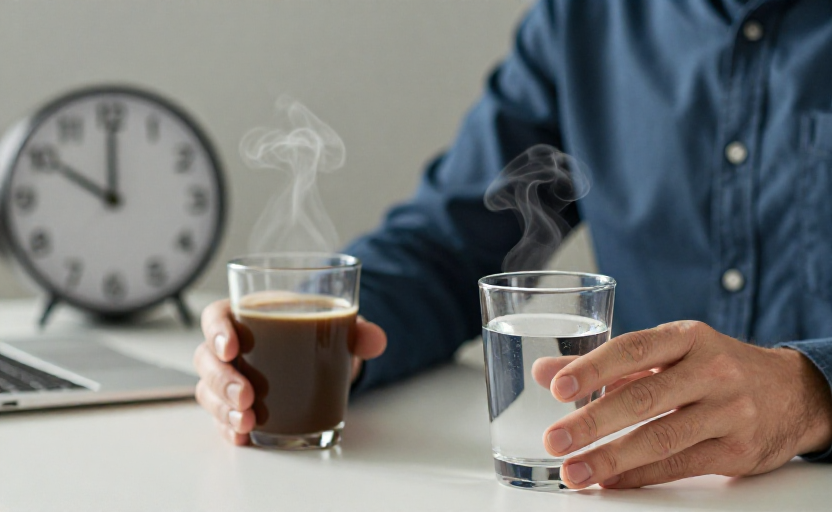
The real issue for busy adults is timing. They grab the coffee, rush out the door, and do not drink anything else until lunch. That three-to-four-hour gap without plain water creates a straight line from the morning commute to that 11:00 a.m. slump, brain fog, or irritability. The solution is not to abandon your morning brew. It is to have a glass of water—about 8 to 12 ounces—before you pour the coffee. Just one glass. It resets your baseline and lets the coffee be a treat, not a survival tool.
Mistake #2: The Urine Color Confusion
You have probably heard the common advice: “If your urine is dark, you need to drink more water.” That is generally true, but it is not the full picture for a busy person. Many morning eaters unknowingly confuse dark-colored urine with concentrated urine. After a full night’s sleep, a darker first-morning void is normal—your kidneys have been concentrating waste without fresh fluid intake for hours.
The mistake happens when a person sees that dark morning urine, panic-drinks a giant bottle of water, and then assumes everything is fine for the rest of the day. The color of your urine in the afternoon is actually the more useful signal. If you are still producing dark urine at 2:00 p.m. after having had coffee and a snack, that is when you have a real deficit. Busy adults often miss this nuance because they are distracted. They check the box of “I drank water” after the morning rush, but they fail to pace their intake throughout the morning.
Quick tip: Aim for about 8 ounces of water every 2 hours during the workday. Set a repeating alarm on your phone until it becomes a habit.
How to Fix Both Mistakes Without Overthinking It
You do not need a gallon jug or a smartphone reminder that buzzes every ten minutes. Small structural changes work best for busy schedules.
- Water-bottle anchoring. Keep a reusable water bottle on your desk, your nightstand, or the kitchen counter where you eat breakfast. If you see it, you will drink from it. Out of sight truly means out of mind for a stressed brain.
- The coffee-prep rule. While your coffee is brewing or heating, drink one glass of water. It adds only 30 seconds to your routine and makes a measurable difference in how you feel by midmorning.
- Avoid heavy caffeine-plus-sugar combos. Sugary lattes and energy drinks can actually worsen dehydration because the sugar requires additional water for metabolic processing. If you need a morning boost, stick with unsweetened coffee or tea, and always have water first.
When you fix these two hydration habits, you often notice other positive shifts. Fingertips that used to feel dry, skin that seemed dull, and that vague grogginess that coffee never fully banishes—these tend to improve. Hydration is not a cure-all, but it is a foundational piece that many busy adults overlook during the very hours when they need clarity and composure the most.
The next time you feel that familiar morning stress rising, pause before you grab the travel mug. Ask yourself: did I have water yet? If the answer is no, start there. Two small shifts—water before coffee and keeping an eye on afternoon urine color—are enough to take you from surviving the morning to actually running it.