
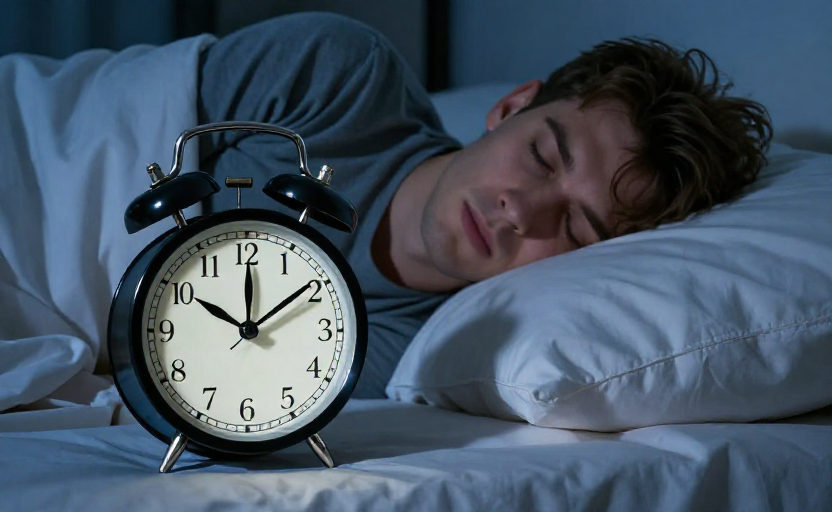
Sleep is a biological necessity, but most of us treat it like an afterthought—something we squeeze in after work, screens, and social obligations. When it works, we barely notice. When it starts to slip, the first signs are often subtle enough to ignore. But there is one specific warning sign that, if recognized early, can save weeks of exhaustion and the slow drift into chronic sleep deprivation.
The signal is not just feeling tired. Everyone feels tired sometimes. The real red flag is a specific, measurable shift in how your sleep and wake times drift over the course of a week. Call it schedule creep, call it circadian drift—it is the moment your body stops keeping time on its own.
What does sleep schedule drift actually look like?
Imagine Monday night. You fall asleep at 10:30 p.m. and wake up feeling decent at 6:30 a.m. Tuesday, a late work email and a TV episode push bedtime to 11:15 p.m. Wednesday, you are in bed by midnight. By Thursday night, you fall asleep at 1 a.m., wake up groggy at 7 a.m., and rely on coffee to function. Friday night, you sleep until 9 a.m. on Saturday morning, then stay up later Saturday night. By Sunday, your bedtime has crept to 2 a.m., and Monday morning feels like a physical assault.
This pattern—sleep and wake times shifting later by 30 to 90 minutes each day—is the single most reliable sign that your internal clock is losing its anchor. It is not about one bad night. It is about a trajectory.
The key sign: If your bedtime varies by more than 60 minutes across three consecutive days, your sleep schedule is drifting and needs a reset.
Why this matters more than total sleep hours
Many people obsess over the number of hours they sleep—seven, eight, nine—but ignore when they sleep. Sleep scientists call the alignment between sleep timing and your internal body clock circadian regularity. It turns out that consistency of timing may be as important for health outcomes as total sleep duration.
When your sleep schedule drifts, you throw off your circadian rhythm—the roughly 24-hour cycle that governs hormone release, body temperature, digestion, and cognitive performance. Your brain releases melatonin at predictable times based on light exposure and behavioral cues. When bedtime keeps shifting, your brain does not know when to begin the wind-down process. You end up in a state researchers call social jetlag—feeling like you are operating in the wrong time zone, even though you never left home.
A 2019 study in Scientific Reports found that irregular sleep schedules were linked to higher levels of metabolic issues and inflammation—independent of how long people slept each night. In other words, a consistent seven-hour schedule from 10 p.m. to 5 a.m. is biologically different from seven hours that shifts across the week.
Three subtle clues you might be missing
Sleep schedule drift rarely announces itself as a single dramatic event. It shows up in quieter ways. Here are three signs that your sleep anchor is loosening:
- You need an alarm clock to wake up most days. If you consistently wake before an alarm without feeling sleep-deprived, your schedule likely aligns with your natural rhythm. Needing an alarm seven days a week—especially on weekends—suggests that you are fighting your internal clock.
- Your meals and digestion feel off. Circadian disruption alters how your body processes glucose and releases hunger hormones. If you suddenly feel ravenous late at night or lose your appetite at breakfast, your sleep timing may be the source.
- Your energy crashes at the same time every afternoon. A 3 p.m. slump is normal. A 1 p.m. slump that worsens day by day often indicates that your sleep debt is accumulating because your schedule keeps shifting.
How to catch the drift before it becomes a pattern
Prevention is simpler than fixing a thoroughly broken schedule. The most effective strategy is also the most obvious one—but rarely followed consistently.
Pick one anchor bedtime and one anchor wake time. Even if you cannot control the exact minute you fall asleep, you can control when you get into bed with lights dimmed and devices away. And you can control when your alarm goes off. If you choose an 11 p.m. bedtime and 7 a.m. wake time, stick to that within a 30-minute window seven days a week. No sleeping in on Saturday. No staying up late “because it’s the weekend.”
This is not about punishment. It is about giving your brain a predictable signal. Research from the National Sleep Foundation shows that regular bedtimes and wake times are among the strongest predictors of good sleep quality and daytime energy. The body thrives on rhythm, not spontaneity.
When to reset rather than adjust
If you notice that your bedtime has crept past 1 a.m. for several nights in a row, a minor tweak will not fix it. At this point, you need a reset.
Try this: wake up at your target time (even if you went to bed late) and get at least 15 minutes of morning sunlight immediately. Do not nap during the day. Then go to bed at your target time that evening, even if you do not feel tired. Repeat for two to three days. The first morning will be rough. By the third day, your biology starts to respond to the consistent light-and-dark cues.
Sunlight is the most powerful regulator of circadian timing. Morning light exposure tells your brain to stop producing melatonin and shift into daytime mode. Without that signal bedtime drift can persist indefinitely.
Artificial light at night is the other side of the equation. Blue light from screens suppresses melatonin and delays sleep onset. If you are dealing with schedule drift, commit to no screens for at least 30 to 45 minutes before your intended bedtime. Dim the house lights an hour before bed. This is not wellness dogma—it is how your cells read the time of day.
A note on flexibility and realism
No one maintains a perfect sleep schedule forever. Life happens—late flights, sick kids, stressful deadlines. The goal is not perfection. The goal is recognizing when a small drift becomes a pattern. A single late night is irrelevant. Two late nights in a row is a nudge. Three or more and your internal clock starts to recalibrate to the wrong time zone.
If you notice that your bedtime and wake time have shifted by more than an hour from where you started the week, that is your warning sign. Do not wait for full-blown insomnia or chronic fatigue to set in. A single week of disciplined sleep and wake timing often resets the system entirely.
Your body craves rhythm. Sleep schedule drift is not a moral failure; it is a biological signal that your environment and your choices are not aligned with your biology. Listen to it early, and you can course-correct in days—not weeks.