
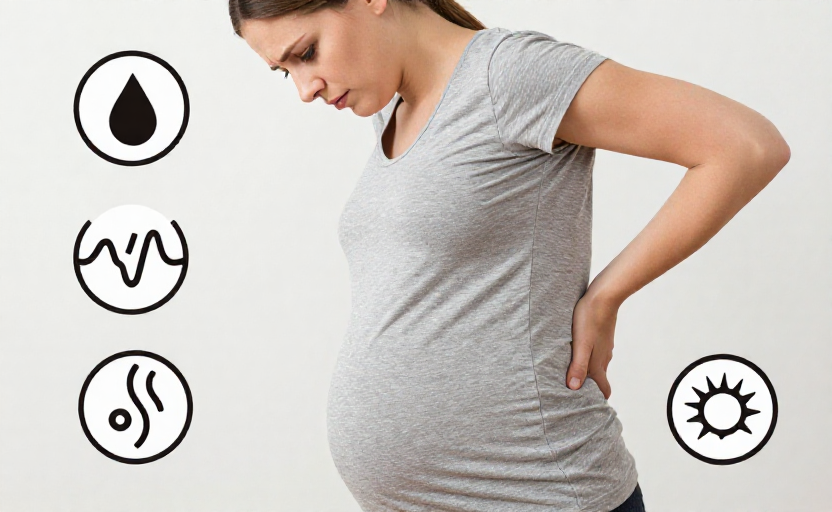
Back pain is so common during pregnancy that many women instinctively shrug it off as part of the package. The extra weight, the shifting center of gravity, the loosening ligaments — all of it can make your lower back ache by the end of the day. But sometimes, that ache is trying to tell you something more serious.
Knowing the difference between normal discomfort and a warning sign can make a real difference for your health and your baby's. Here are the four specific symptoms that, when paired with back pain, mean it's time to pick up the phone and call your provider.
1. Pain That Comes in Waves and Changes Intensity
Ordinary pregnancy back pain tends to be a dull, steady ache. It might feel worse after standing for a while or when you're tired, but it doesn't typically come and go in a rhythmic pattern. If your back pain starts to feel like waves — it builds, peaks, and then eases off on a regular cycle — that could be a sign of preterm labor.
This is especially true if the pain is located in the lower back and radiates around to the front of your abdomen. Many women describe preterm labor contractions as feeling like intense menstrual cramps that start in the back and wrap around. To be clear, not every wave of lower back pain means labor, but if the pattern becomes consistent (for example, every ten minutes for an hour), do not wait for your next prenatal visit.
What to do: Time the waves. If they are regular and getting closer together, call your doctor or go to labor and delivery.
2. A Sudden Sharp or Tearing Sensation
Most pregnancy back pain comes on gradually. You might notice it more in the third trimester, or it might flare up after a long day on your feet. What is not normal is a sudden, sharp, or tearing pain in your lower back or abdomen that hits you like a punch. This type of pain can signal placental abruption — a serious condition where the placenta separates from the uterus before delivery.
Women who experience placental abruption often describe the pain as constant and severe. It may also be accompanied by uterine tenderness or a feeling that the uterus is hard and not relaxing. Vaginal bleeding is another possible sign, though not always present (the blood can be trapped behind the placenta). If you feel this kind of back pain — especially after a fall, a car accident, or any abdominal trauma — do not wait.
3. Back Pain Accompanied by Chills or a Fever
Pregnancy naturally raises your body temperature slightly, but a true fever (100.4°F or higher) combined with back pain is a red flag. This combination often points to a kidney infection, which is more common and more dangerous during pregnancy. Your urinary tract changes in pregnancy — the ureters widen, urine can pool, and bacteria have an easier time traveling up to your kidneys.
A kidney infection during pregnancy usually causes pain on just one side of your lower back, just under your ribs. You might also notice pain or burning when you pee, feel the urge to go constantly, or see blood in your urine. Other symptoms can include nausea, vomiting, and general fatigue. Left untreated, a kidney infection can lead to sepsis or trigger preterm labor.
If your back pain comes with a fever, do not try to "sweat it out" at home. You need medical attention, and likely antibiotics that are safe for pregnancy.
4. Numbness, Weakness, or Loss of Bladder Control
Back pain that travels down one leg (sciatica) is common in pregnancy and can be unpleasantly intense. But true numbness in the saddle area — the inner thighs, genitals, and buttocks — along with progressive weakness in your legs or a sudden inability to control your bladder or bowels, is not sciatica. This is a medical emergency called cauda equina syndrome.
Cauda equina syndrome is caused by compression of the nerve roots at the very bottom of the spinal cord. In pregnancy, this compression can sometimes be triggered by a herniated disc, which the added weight and loosened ligaments of pregnancy can make more likely. The key sign is not just back pain, but back pain plus profound changes in sensation or function below the waist.
Note: Many pregnant women experience some stress incontinence (leaking when they cough or sneeze), which is normal. This is different. We are talking about the complete inability to control urination or the sensation of being unable to stop a bowel movement.
If you notice numbness spreading, legs feeling heavy or clumsy, or loss of bladder control, you need emergency treatment to prevent permanent nerve damage.
When in Doubt, Check It Out
It is not your job to diagnose what is causing your back pain. Your job is to notice the patterns and report them. The four symptoms above — rhythmic waves, sudden tearing pain, fever, and nerve-related changes — are the ones that warrant a same-day call, even if it turns out to be nothing.
Here is the bottom line: Trust your instincts. You live in your body and you know when something feels off. If your back pain is severe enough to interrupt your sleep, keep you from walking normally, or simply feels "different" from the usual pregnancy aches, never hesitate to call your provider. A quick check can save you days of worry — or catch a serious problem early. Either way, it is the right move for you and your baby.