Putting together a lunch that truly supports your heart doesn’t require a culinary degree or hours in the kitchen. It’s about a simple, sustainable shift in what you reach for when midday hunger strikes. As a dietitian, I see the most success when we move away from rigid rules and focus on building a plate that’s both satisfying and nourishing. The goal is to create a meal that leaves you feeling energized, not sluggish, and contributes to long-term cardiovascular wellness with every bite.
Think of your lunch plate as a canvas for color, fiber, and healthy fats. It’s an opportunity to incorporate foods that actively manage inflammation, support healthy blood pressure and cholesterol levels, and provide steady energy. The best part? A heart-smart lunch can be a vibrant, delicious affair, whether you’re packing a lunchbox, ordering takeout, or throwing something together from the fridge.
Building your heart-healthy plate
The foundation of a cardioprotective lunch is a balanced combination of key nutrients. Instead of fixating on what to avoid, let’s focus on what to include. Aim to incorporate most of these elements into your main meal.
Fiber is your heart’s best friend. Soluble fiber, in particular, acts like a sponge in your digestive tract, helping to bind and remove excess LDL (the “less desirable”) cholesterol from your body. It also promotes stable blood sugar levels, preventing the energy crashes that lead to poor snack choices later.
Healthy fats reduce inflammation. Monounsaturated and polyunsaturated fats help lower LDL cholesterol and provide essential fatty acids. They’re also crucial for absorbing fat-soluble vitamins from the other vegetables on your plate.
Lean protein provides satiety and essential amino acids without the saturated fat often found in fatty cuts of red meat or processed meats. This helps you feel full and satisfied, preventing overeating.
A rainbow of plants delivers antioxidants and potassium. These compounds combat oxidative stress and help manage blood pressure. The more color variety, the wider the range of protective phytonutrients you consume.
What does this look like in practice?
Translating principles to practice is where the magic happens. Here are concrete ways to build your lunch.
The packed lunch powerhouse
For a lunch you prepare at home, a modular approach works wonders. Use a container with compartments or simply mentally divide your plate.
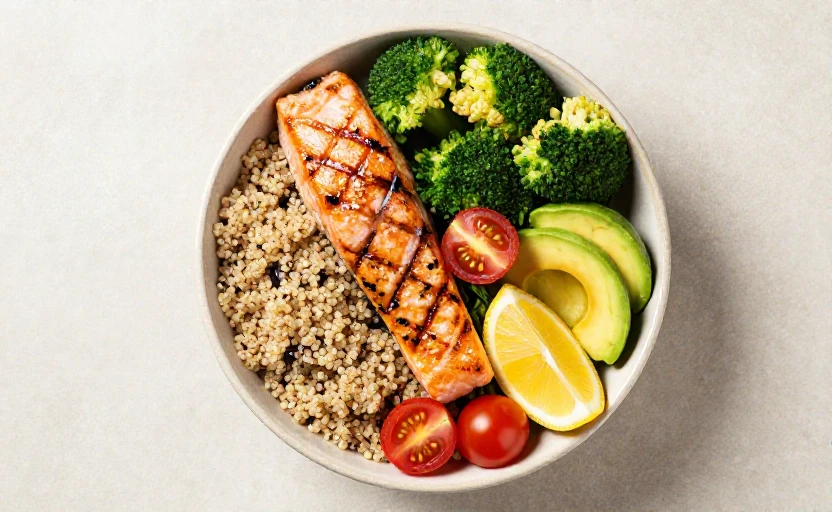
- Base (½ your container): Start with a foundation of non-starchy vegetables and/or leafy greens. Think spinach, roasted broccoli, bell peppers, shredded carrots, or a big mixed salad.
- Complex Carb (¼ of your container): Add a fist-sized portion of a fiber-rich carbohydrate. Options include quinoa, farro, brown rice, sweet potato, or whole-grain pasta or bread.
- Lean Protein (¼ of your container): Include a palm-sized portion of protein like grilled chicken breast, canned tuna or salmon (packed in water), lentils, chickpeas, black beans, or tofu.
- Healthy Fat (a generous sprinkle or drizzle): Top with a thumb-sized portion of fat. This could be ¼ of an avocado, a tablespoon of chopped nuts or seeds, or a dressing made with olive oil.
Prep tip: Cook a batch of grains and roast a tray of vegetables on Sunday. You’ll have the building blocks for quick assemblies all week.
Navigating restaurants and takeout
Eating out requires a slightly different strategy. Look for menu items described as grilled, baked, steamed, or roasted—not fried, crispy, or creamy.
- At the sandwich shop: Opt for whole-grain bread. Choose lean proteins like turkey or chicken breast. Load up on vegetable toppings, ask for avocado instead of cheese or mayo, and request sauces/dressings on the side.
- At the salad bar or restaurant: Start with dark leafy greens. Add a variety of colorful vegetables. Pick a lean protein. Choose a vinaigrette over a creamy dressing, and ask for it on the side so you control the amount.
- At Asian restaurants: Steer toward stir-fried or steamed dishes with plenty of vegetables and tofu, shrimp, or chicken. Request brown rice if available. Be mindful of sodium-heavy sauces; asking for sauce on the side can help.
Foods to emphasize and foods to be mindful of
Knowing which foods to reach for more often, and which to enjoy less frequently, can simplify your decisions.
Emphasize: Fatty fish (salmon, mackerel, sardines), oats and barley, all legumes (beans, lentils, peas), nuts and seeds (especially walnuts and flaxseeds), berries, dark leafy greens, tomatoes, avocados, and olive oil.
Be mindful of: Processed deli meats and hot dogs, fried foods, packaged snacks high in refined carbs and sodium, sugary beverages, and meals heavy with cheese, butter, or creamy sauces. This doesn’t mean never, but rather, not making them the centerpiece of your daily lunch.
Five simple lunch ideas to get you started
1. The Big Salad Bowl: Mixed greens with chickpeas, cucumber, cherry tomatoes, shredded carrots, and diced chicken. Top with pumpkin seeds and a lemon-tahini dressing (tahini thinned with lemon juice and water).
2. Whole-Grain Wrap: A whole-wheat tortilla spread with mashed avocado, filled with canned salmon (mixed with a little Greek yogurt and dill), spinach, and sliced radishes.
3. Leftover Transformation: Last night’s roasted salmon flaked over a bowl of reheated quinoa and steamed broccoli, drizzled with a tiny bit of sesame oil.
4. Heart-Healthy “Bento”: Hummus with sliced bell peppers and whole-grain crackers, a hard-boiled egg, a handful of berries, and a small handful of almonds.
5. Simple Soup & Side: A bowl of lentil or minestrone soup (broth-based, not creamy) paired with a small whole-grain roll and a side apple.
Sustaining the habit
Consistency beats perfection. Packing a healthy lunch three days a week is more impactful than a single “perfect” meal. Find flavors you genuinely enjoy—if you love Mediterranean flavors, lean into olives, tomatoes, and fish. If you prefer Mexican-inspired bowls, focus on beans, corn, and avocado. The most heart-healthy lunch is the one you’ll actually eat and look forward to, day after day.
Listen to your body. A lunch that supports your heart should also support your energy and focus for the rest of your afternoon. If you finish your meal feeling comfortably satisfied and clear-headed, you’re on the right track. It’s a practical, daily investment in your long-term well-being.