Your morning routine sets the tone for the day, and that’s especially true for your digestive system. What you choose to eat first can gently wake up your gut, support its delicate ecosystem, and influence how you feel for hours. It’s less about a rigid prescription and more about offering your body a supportive, nourishing foundation.
Think of it as a friendly greeting to your microbiome—the trillions of bacteria living in your intestines. These microbes play a crucial role in digestion, immunity, and even mood. The right morning choices can help them thrive, promoting better digestion, reduced bloating, and a stronger overall sense of well-being.
Why Your First Meal Matters for Digestion
After a night of rest, your digestive system is in a quiet, fasting state. The first foods you introduce act as a signal, telling your gut it’s time to get to work. A harsh or sugary start can lead to a rapid spike in blood sugar followed by a crash, potentially causing mid-morning fatigue and cravings. A gentle, supportive meal, however, can promote steady energy and provide the specific nutrients your gut bacteria love to feed on.
This initial meal helps stimulate digestive enzymes and gut motility—the natural, wave-like contractions that move food along. Choosing foods that support this process can make your digestion feel smoother and more comfortable throughout the day.
Foundational Foods to Consider
When building a gut-friendly morning, focus on foods that offer fiber, hydration, and natural probiotics. These elements work together to nourish your existing gut bacteria and encourage a balanced environment.
Fiber: The Preferred Fuel
Dietary fiber is indigestible to you, but it’s a feast for your beneficial gut bacteria. As they ferment fiber, they produce short-chain fatty acids, which are vital for gut lining health and reducing inflammation. There are two key types to include.
Soluble fiber dissolves in water, forming a gel that slows digestion and helps regulate blood sugar. Good morning sources include oats, chia seeds, flaxseeds, and berries.
Insoluble fiber adds bulk to stool and helps keep things moving. You’ll find it in whole grains, nuts, and many vegetables. A balanced approach that includes both is ideal.
Aim to incorporate fiber gradually. Adding too much too quickly can be counterproductive, so listen to your body and increase your intake slowly over time.
Probiotics and Fermented Foods
These foods contain live, active cultures of beneficial bacteria. Including them can help introduce or bolster diverse strains in your gut. Classic morning-friendly options include plain yogurt, kefir (a drinkable yogurt), and unsweetened cultured cottage cheese. For a savory start, a small side of sauerkraut or kimchi can be a powerful addition.
Hydration: The Essential First Step
Before you eat anything, consider starting with a glass of water. Overnight, your body loses fluids through breath and sweat. Rehydrating first thing helps prime your digestive tract, making it easier to process your first meal. For an extra gut-friendly boost, you might try warm water with a squeeze of lemon.
Putting It Together: Simple Morning Ideas
You don’t need a complicated recipe. The goal is to combine elements from the categories above into something simple and enjoyable.
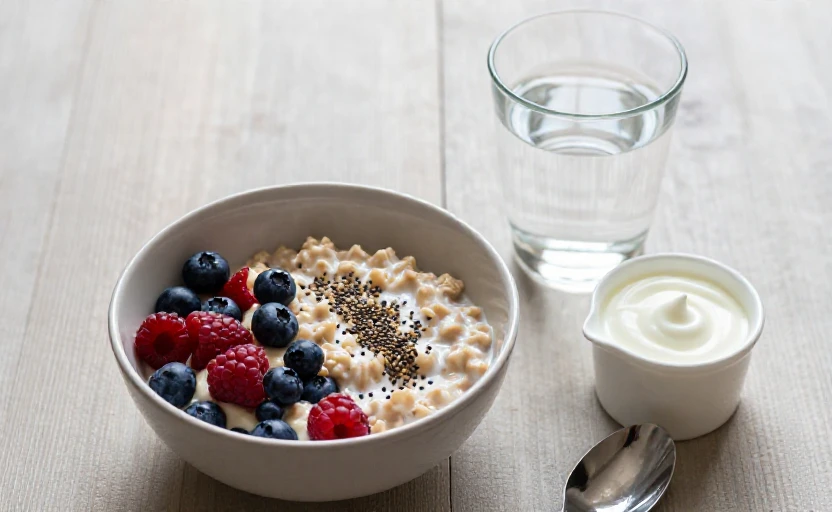
- A Warm Bowl of Oats: Cook old-fashioned oats with water or milk. Top with a handful of berries (for fiber and antioxidants), a tablespoon of ground flaxseed (for soluble fiber and omega-3s), and a sprinkle of nuts for crunch and healthy fats.
- A Simple Smoothie: Blend plain kefir or yogurt with a handful of spinach, half a banana, a tablespoon of chia seeds, and a few frozen mango chunks. The kefir provides probiotics, while the chia seeds and fruits offer fiber.
- Savory Toast: Top a slice of whole-grain or sourdough toast with mashed avocado, a sprinkle of everything bagel seasoning, and a side of two scrambled eggs. The avocado provides fiber and healthy fats, while the fermented sourdough can be easier to digest for some.
- A Quick Parfait: Layer plain Greek yogurt with fresh berries and a sprinkle of low-sugar granola or chopped walnuts. The yogurt offers protein and probiotics, while the berries and nuts add fiber.
Foods and Habits to Approach Gently
It’s not about creating a list of forbidden foods, but about understanding how certain choices might affect your gut, especially on an empty stomach. Highly processed sugary cereals, pastries, or sweetened juices can flood your system with simple sugars. This can lead to a blood sugar rollercoaster and may feed less desirable bacteria in the gut.
Similarly, drinking strong coffee on a completely empty stomach can increase stomach acid production, which some people find irritating. If you enjoy coffee, having it alongside or after a small bite of food can often mitigate this effect.
Listening to Your Body
The most important guide is your own body’s response. A food that is celebrated as a “superfood” for one person might not sit well with another. Pay attention to how you feel an hour or two after your meal. Do you feel energized and comfortable, or sluggish and bloated?
Start with small portions of new foods, particularly fermented ones or high-fiber additions. Consistency matters more than perfection. Choosing a gut-supportive breakfast most days of the week will have a more significant impact than an occasional “perfect” meal.
Ultimately, a gut-friendly morning is one that feels nourishing and sustainable for you. It’s a simple, daily practice of choosing foods that care for your digestive system, setting a positive tone for your health from the moment you wake up.