You are standing in the vitamin aisle, squinting at the back of a prenatal bottle. The label is dense, the font is tiny, and every brand claims to be the best. It is easy to think that more nutrients are always better—but that is not how prenatal supplements work. Some ingredients, surprisingly common in so-called “complete” formulas, can actually work against you.
Choosing a prenatal vitamin is not about cramming in every vitamin and mineral available. It is about precision. Your body needs certain nutrients at safe, effective levels, and it also needs to avoid substances that interfere with absorption or carry unnecessary risks. Here are the three ingredients a smart shopper skips.
Iron overload: why more is not helpful for everyone
Iron is essential during pregnancy—it supports increased blood volume and prevents anemia. But the line between enough and too much is real. Some prenatal vitamins contain 45 milligrams or more, often in forms like ferrous fumarate that can be harsh on the stomach.
High-dose iron can cause constipation, nausea, and dark stools, all common complaints that make pregnancy harder. More importantly, excess iron can accumulate in tissues, a condition called hemosiderosis, which may stress the liver. Unless you have a diagnosed deficiency, you likely do not need the maximum dose. Look for a prenatal with 18 to 27 milligrams of iron—the amount in most standard multivitamins—and choose a gentler form such as ferrous bisglycinate if your stomach is sensitive.
A simple rule: if the prenatal has more than 30 milligrams of iron, ask your provider if you actually need that level.
If you have a history of iron-deficiency anemia, your doctor may want you on a higher dose. But for many people, lower iron means fewer side effects and better compliance.
Retinyl palmitate: the pre-formed vitamin A risk
Vitamin A is critical for fetal eye, skin, and immune development, but the type matters enormously. Prenatal vitamins that use retinyl palmitate or retinyl acetate—animal-derived, pre-formed vitamin A—carry a known risk. In high amounts, especially above 10,000 IU per day, these forms can cause birth defects.
The body stores pre-formed vitamin A in the liver, and it does not flush out quickly. That means even moderate amounts taken day after day can build up to levels that cross the safe threshold. The American College of Obstetricians and Gynecologists recommends that pregnant women avoid high-dose vitamin A supplements.
What should you look for instead? Beta-carotene, the plant-based precursor. Your body converts only as much beta-carotene into active vitamin A as it needs, so the risk of toxicity is near zero. Check the ingredient list: if you see “retinyl palmitate” or “retinol,” keep looking. If you see “beta-carotene” or “mixed carotenoids,” you are in the clear.
Herbal and botanical blends: unpredictable potency
Herbs have a place in wellness, but that place is rarely inside a prenatal vitamin. Many supplement makers add proprietary herbal blends for marketing appeal—things like red raspberry leaf, ginger, or chamomile. The problem is that most of these blends lack standardized dosing and rigorous safety data for pregnancy.
Ginger can help with nausea, but in a prenatal it is usually present in an untested amount—too little to do anything or too much to assume it is harmless. Red raspberry leaf, often touted for uterine tone, has limited evidence and may stimulate contractions in some women. Chasteberry (vitex) can alter hormone levels, which is the opposite of what you want when your hormones are already in a delicate dance.
Best practice: treat your prenatal like a multivitamin, not an herbal tonic. If you want specific botanical support—for morning sickness, sleep, or stress—choose a separate, well-studied supplement that you can start and stop under guidance.
How to vet a prenatal label quickly
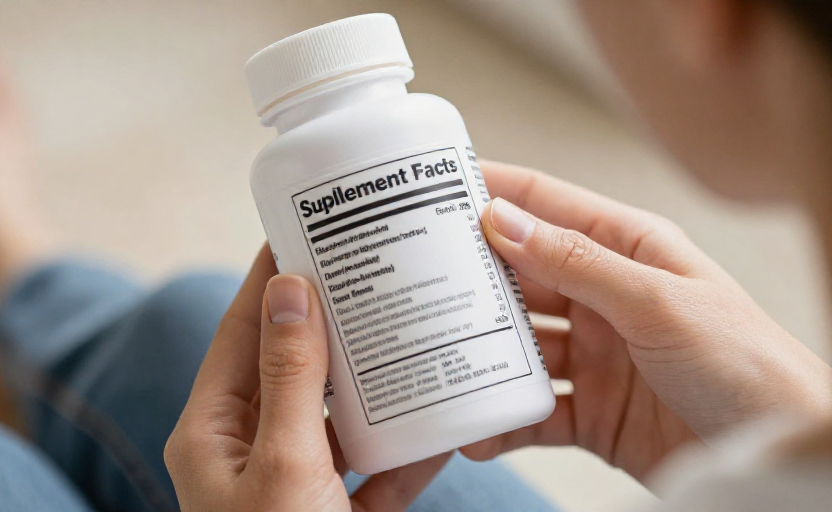
Reading labels does not have to be a science degree. Flip the bottle over and scan three things first:
- Iron source and level – Look for 18–27 mg of iron, ideally ferrous bisglycinate or carbonyl iron if you have a sensitive stomach.
- Vitamin A form – Reject any product with retinyl palmitate or retinyl acetate. Accept only beta-carotene.
- Herbal additions – If you see a blend listed in the ingredients that is not a standard nutrient, think twice. Skip it unless your provider specifically recommended it.
Beyond these red flags, confirm the vitamin includes sufficient folic acid (or methylfolate, if you have the MTHFR gene mutation), vitamin D (at least 600 IU), and choline if possible. These are the nutrients that truly move the needle for fetal development.
Why third-party testing matters
Even if a label passes the ingredient check, quality can still vary. Supplements are not FDA-approved before they hit the market. Third-party seals from organizations like USP, NSF, or ConsumerLab mean the product has been tested for purity and potency.
A prenatal could look perfect on paper but contain less of an active ingredient than advertised—or harbor contaminants like heavy metals. Paying a bit more for a verified brand removes that gamble. Your body during pregnancy is worth the assurance.
Trust your prenatal, trust your body
A good prenatal vitamin should feel boring. It delivers steady, reliable nutrition without surprises. If your bottle feels like a cocktail of flashy extras, it probably is not the right one. Stick to the essentials, skip the risky forms, and keep the conversation open with your healthcare team about what you are taking.