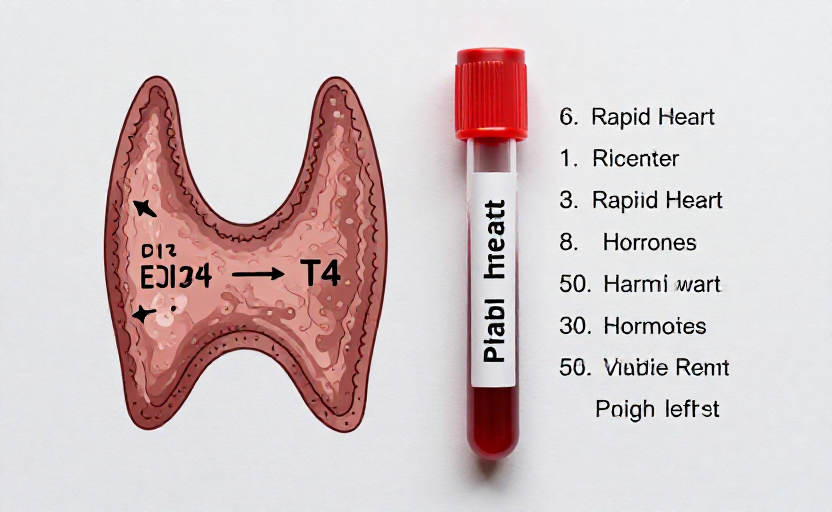
When a routine blood test flags your thyroid hormone levels as high, it’s natural to wonder what’s going on beneath the surface. Think of the thyroid gland as your body’s thermostat: it produces hormones (T3 and T4) that regulate your metabolism, heart rate, and body temperature. When those levels climb too high, your internal systems essentially run in overdrive.
This condition is most commonly known as hyperthyroidism, but one elevated lab result doesn’t always equal a diagnosis. A quick explainer on what these numbers indicate can help you have a more focused discussion with your doctor.
What Causes Thyroid Hormones to Spike?
The most frequent driver of high T3 and T4 is an autoimmune disorder called Graves’ disease. In this case, your immune system mistakenly produces antibodies that tell your thyroid to keep pumping out hormones, regardless of what your body actually needs. Other causes include:
- Thyroid nodules. One or more benign lumps on the gland can become hyperactive, producing hormone independent of normal regulation.
- Thyroiditis. Inflammation of the thyroid (often after a viral infection or postpartum) can cause stored hormone to leak into the bloodstream all at once.
- Excessive iodine intake. Since the thyroid uses iodine to make hormones, too much — from certain supplements, medications like amiodarone, or contrast dye — can push production above normal.
How Do High Levels Show Up in Your Body?
Because thyroid hormone accelerates metabolism, the symptoms often mirror what you’d feel if you were on a constant adrenaline drip. Common signs include unintentional weight loss despite a normal or increased appetite, rapid or irregular heartbeat, feeling jittery or anxious, excessive sweating, heat intolerance, and fatigue (yes, even with overactive metabolism, exhaustion is real). Some people also notice more frequent bowel movements, shaky hands, or a visible swelling at the base of the neck called a goiter.
One caveat: older adults and some individuals may experience “apathetic hyperthyroidism,” where fatigue and lethargy are the main complaints rather than the classic jitters — so symptoms aren’t always textbook.
What Do the Lab Numbers Actually Tell You?
Your doctor will look at three key markers:
- TSH (thyroid-stimulating hormone). Low TSH is the hallmark of primary hyperthyroidism. The pituitary gland stops sending the signal because it senses the body already has enough thyroid hormone.
- Free T4. The main inactive hormone that circulates in your blood. When this is high alongside low TSH, it strongly suggests true hyperthyroidism.
- Free T3. The more active form. Some people have normal T4 but high T3 — a pattern called “T3 toxicosis” — which can still produce full symptoms.
Occasionally, TSH is low but T4 and T3 are normal. That picture, called subclinical hyperthyroidism, is milder and often watched over time rather than treated immediately.
Can High Levels Happen Without Hyperthyroidism?
Yes, and this is where interpretation matters. Some conditions cause falsely elevated results without your body actually being hyperthyroid:
- Thyroid hormone resistance. A rare genetic condition where your cells are less sensitive to T3/T4, so your pituitary cranks out more TSH to compensate, keeping hormone levels high yet your metabolism normal or even sluggish.
- Thyrotoxicosis factitia. Intentional or accidental overuse of thyroid hormone medication (like levothyroxine) leads to high levels without gland overproduction.
- Pregnancy or estrogen therapy. High estrogen (from pregnancy, birth control, or HRT) raises thyroxine-binding globulin, which can increase total T4 and T3 on lab tests even though free levels are fine.
A skilled endocrinologist looks at the full panel — including TSH, free hormones, and sometimes antibody tests — to sort out these nuances.
What Happens if High Levels Aren’t Managed?
Untreated hyperthyroidism puts prolonged strain on your cardiovascular system, increasing risks for atrial fibrillation, high blood pressure, and even heart failure over time. It can also accelerate bone loss, leading to osteoporosis, and affect mental health with persistent anxiety or mood swings. A thyroid storm — a life-threatening surge in hormones triggered by infection, surgery, or stress — is rare but real.
If Your Levels Are High, What Comes Next?
Your next steps depend on the specific cause and severity. Common treatment routes include antithyroid medications (methimazole) to slow hormone production, radioactive iodine to shrink the thyroid, or surgery. In mild or subclinical cases, monitoring alone may be appropriate. Diet adjustments can help too: limiting iodine-rich foods like seaweed and kelp supplements, and avoiding stimulants if palpitations bother you.
Bottom line: A single high thyroid hormone reading isn’t a finished diagnosis — it’s a starting point. Work with a healthcare provider to get the complete picture so you can address the root cause, not just the number.