
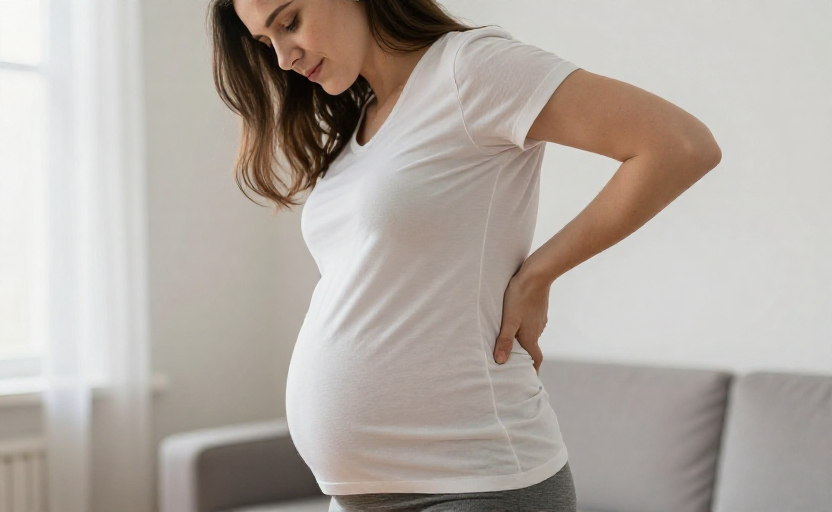
You're only a few weeks into pregnancy, and already your lower back feels achy and tight. It can be surprising—even worrying—to feel back pain this early, when you don't yet have a visible baby bump. But first-trimester back pain is actually quite common, and for most women, it's a normal part of early pregnancy.
Understanding what's happening inside your body can make the discomfort feel less alarming and more manageable. Here's a straight-talking look at why your back hurts in the first trimester, plus safe, practical ways to find relief.
Why Does Back Pain Start So Early?
In the first trimester, your body is undergoing rapid hormonal and structural changes. The main culprits are:
1. Hormonal Shifts — The Relaxin Effect
Early in pregnancy, your body begins producing a hormone called relaxin. Its job is to loosen the ligaments in your pelvis so your body can eventually accommodate a growing uterus and prepare for childbirth. However, relaxin doesn't just target your pelvis—it affects all the ligaments in your spine and lower back. This increased laxity can make your back feel less stable, more prone to strain, and achy, especially as you go about daily activities.
2. Changes in Posture and Center of Gravity
Even before you “show,” your uterus starts to expand and shift your center of gravity forward. To compensate, many women unconsciously arch their lower back (a posture called lumbar lordosis). This puts added pressure on the small joints and muscles in your lower spine, leading to muscle fatigue and pain—often as early as week 6 or 7.
3. Increased Blood Flow and Progesterone
Your blood volume increases dramatically in early pregnancy to support the developing embryo. This extra fluid can cause mild swelling in tissues around the spine, adding to stiffness. Progesterone, another key pregnancy hormone, relaxes smooth muscle and can slow digestion, which sometimes contributes to constipation—and straining on the toilet puts more pressure on lower back structures.
What Does First-Trimester Back Pain Feel Like?
It's usually a dull, constant ache in the lower back (the sacral area), sometimes spreading to the hips or buttocks. It may feel worse after standing for long periods, after bending, or at the end of the day. Unlike menstrual cramps, which can radiate around to the front, pregnancy back pain tends to stay in the lower spine. Some women also notice a pulling or heavy sensation.
Important note: First-trimester back pain that is sharp, severe, or accompanied by vaginal bleeding, cramping, fever, or burning during urination could be a sign of something other than normal pregnancy changes—like a urinary tract infection or, rarely, an ectopic pregnancy. If you have any of those symptoms, call your provider immediately.
Simple, Safe Relief Strategies for Early Pregnancy
Most first-trimester back pain responds well to conservative, drug-free measures. Here are evidence-informed approaches to consider:
- Mind your posture. When standing, keep your shoulders back and your pelvis slightly tucked (not tilted forward). When sitting, use a small pillow or rolled towel behind your lower back for support.
- Sleep with a pillow between your knees. Lying on your side (especially the left side) with a pillow between your thighs can help align your hips and reduce strain on your lower back.
- Apply heat. A warm compress or heating pad (on a low setting) placed on your back for 15–20 minutes can relax tight muscles. Avoid applying heat directly to your abdomen.
- Stay active—gently. Walking, prenatal yoga (with modifications), and swimming are excellent low-impact options. Regular movement strengthens core and back muscles, which helps stabilize your spine.
- Wear supportive shoes. Avoid high heels or flat, unsupportive sandals. Choose shoes with good arch support to help align your posture.
- Lift correctly. Squat from your knees, not your waist, and keep objects close to your body. Ask for help with heavy lifting.
When to Check in With Your Provider
Most first-trimester back pain is not dangerous for you or your baby. But you should mention it at your next prenatal visit if it's persistent or interfering with sleep or daily activities. And definitely call your doctor or midwife right away if you experience any of the following:
- Pain that is severe, sudden, or stabbing
- Pain accompanied by vaginal bleeding or spotting
- Fever or chills
- Pain or burning during urination
- Numbness or weakness in your legs
The Bottom Line
First-trimester back pain is a common early pregnancy symptom driven by hormonal changes, ligament laxity, and subtle postural shifts. While it can be uncomfortable, it's usually temporary and manageable with good body mechanics, heat, gentle movement, and support. Your body is doing a huge amount of work behind the scenes—and a few aches are part of the process. Listen to your body, take it easy when you need to, and keep your care team informed.