
If you're navigating a potential hyperthyroidism diagnosis, the page of lab results in your hand can feel like a foreign language. You see abbreviations like TSH, T3, and T4, numbers with arrows pointing up or down, and a reference range that may or may not provide clarity. It’s a common source of anxiety, but understanding what these tests measure is the first step toward understanding your own health. This guide will walk you through the key thyroid function tests, focusing on what they typically look like in hyperthyroidism, to help you have more informed conversations with your healthcare provider.
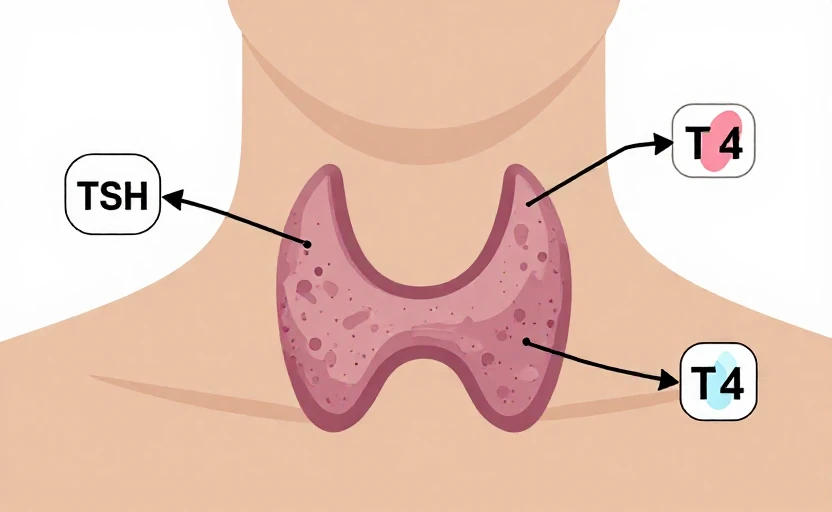
Think of your thyroid gland as your body's thermostat. It produces hormones—primarily thyroxine (T4) and triiodothyronine (T3)—that regulate your metabolism, energy, temperature, and heart rate. In hyperthyroidism, this thermostat is cranked too high; the gland is overactive and produces excess hormones. The lab tests are the tools we use to measure the thermostat's setting and its output.
The Central Control: Thyroid-Stimulating Hormone (TSH)
TSH isn't produced by your thyroid. It comes from your pituitary gland, a tiny structure at the base of your brain that acts as the body's master regulator. The pituitary constantly monitors the level of thyroid hormones in your blood. If it senses those levels are too low, it releases more TSH to tell the thyroid to work harder. If it senses levels are too high, it slams on the brakes, releasing very little TSH.
This is why TSH is the most sensitive and usually the first test checked. In hyperthyroidism, the thyroid is producing hormones on its own, without needing a signal. The pituitary gland sees this flood of T4 and T3 and responds by nearly shutting off TSH production.
In nearly all cases of true hyperthyroidism, the TSH level will be very low or undetectable. It's the hallmark lab finding.
A low TSH alone, however, doesn't automatically mean you have a hyperactive thyroid. Certain medications, other pituitary issues, or even non-thyroidal illness can sometimes suppress TSH. That's why doctors always look at TSH in conjunction with the actual thyroid hormone levels.
The Thyroid Hormones: Free T4 and Free T3
These are the hormones your thyroid gland manufactures. Most of the hormone produced is T4, which is relatively inactive. The body converts T4 into the much more potent T3 in tissues like the liver and kidneys. When we measure "Free" T4 and T3, we're measuring the tiny fraction of hormone that is unbound and biologically active—the part that's actually doing the work in your cells.
Free Thyroxine (Free T4)
Free T4 is a crucial piece of the puzzle. In hyperthyroidism, as the gland overproduces, the Free T4 level rises above the normal range. This elevated Free T4, paired with a low TSH, confirms that the thyroid itself is the source of the overactivity. It's a direct measurement of the thermostat's output.
Free Triiodothyronine (Free T3)
Not every person with hyperthyroidism will have a high Free T3. Often, the T4 is elevated first. However, in some conditions, particularly Graves' disease (the most common cause of hyperthyroidism), the conversion of T4 to T3 can be very efficient, leading to a significant rise in Free T3. Sometimes, T3 can be high even when T4 is normal, a situation called "T3 toxicosis." Your doctor will look at both to get the full picture.
Putting the Pattern Together: What the Numbers Mean
So, what does the classic hyperthyroidism lab pattern look like?
- TSH: Low or undetectable.
- Free T4: High.
- Free T3: Often high, but may be normal in early or mild cases.
This pattern tells your doctor that the feedback loop is broken. The pituitary is screaming "stop!" with a near-zero TSH, but the thyroid isn't listening and continues to pump out hormones.
Beyond the Basics: Additional Tests in the Hyperthyroidism Workup
Once hyperthyroidism is confirmed by TSH and thyroid hormone levels, the next question is: Why? Additional tests help pinpoint the cause, which is essential for determining the right treatment.
Thyroid Antibody Tests
These tests look for antibodies that mistakenly attack your own thyroid tissue. The two main ones are:
- Thyroid-Stimulating Immunoglobulin (TSI): This antibody mimics TSH, latching onto the thyroid and forcing it to produce hormones non-stop. A positive TSI is strongly indicative of Graves' disease.
- Thyroid Peroxidase (TPO) Antibodies: While often associated with Hashimoto's (which usually causes hypothyroidism), these can also be present in Graves' disease and indicate an underlying autoimmune process.
Thyroid Ultrasound
This imaging test uses sound waves to create a picture of your thyroid gland. It can reveal nodules (lumps), overall gland size, and blood flow. In Graves' disease, the gland often appears diffusely enlarged with increased blood flow. A single overactive nodule will show up as a distinct mass.
Radioactive Iodine Uptake (RAIU) Scan
This test measures how much iodine your thyroid collects from the bloodstream. Iodine is the key building block for T4 and T3. In Graves' disease, the uptake is high and diffuse. With a toxic nodule, the uptake is concentrated in the nodule itself. If the uptake is very low, it might suggest a different cause, like thyroiditis (inflammation causing a leak of hormones).
What Your Lab Results Don't Tell You
It's vital to remember that lab values are one part of a larger story. They provide objective data, but they must be interpreted in the context of you—your specific symptoms, medical history, and physical exam findings. Two people can have identical TSH levels but feel dramatically different. The numbers guide treatment, but your lived experience validates it.
Always discuss your results and symptoms in detail with your healthcare provider. They are the only one who can integrate the labs with your full clinical picture.
Preparing for Your Doctor's Appointment
Walking into your appointment prepared can make the conversation more productive. Before you go, jot down notes on:
- Your specific symptoms (e.g., rapid heartbeat, weight loss, anxiety, heat intolerance, tremors) and when they started.
- Any questions you have about your lab results.
- Your understanding of the next steps—is it more testing, starting medication, or a referral to a specialist like an endocrinologist?
Understanding your thyroid labs demystifies the process and empowers you to be an active participant in your healthcare journey. With this knowledge, you can move from feeling confused by the numbers to understanding the story they are telling about your thyroid health.