
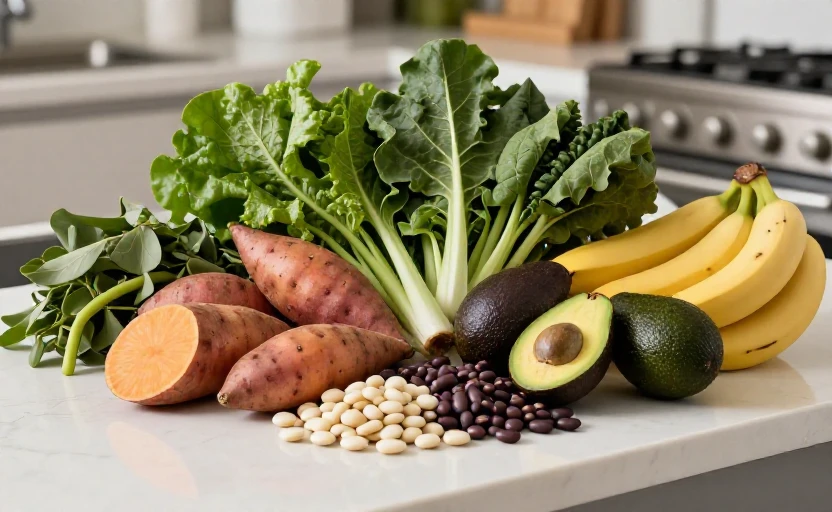
You’ve likely heard that potassium is good for your heart, perhaps in the context of bananas or leafy greens. But the connection between this essential mineral and blood pressure is more than just a health cliché—it’s a well-documented relationship supported by decades of nutritional science. Understanding this link isn't about finding a magic bullet, but about appreciating how a consistent, food-first approach can support the complex system that keeps your blood pressure in a healthy range.
At its core, blood pressure management is a story of balance, particularly the delicate dance between sodium and potassium within your body. While sodium often gets the spotlight (and the blame), potassium works quietly in the background, helping your kidneys excrete excess sodium and easing tension in blood vessel walls. It’s a partnership, and when potassium intake is sufficient, it helps counterbalance sodium's effects, promoting a more relaxed cardiovascular state.
How Potassium Influences Your Blood Vessels
Potassium’s role is fundamentally one of regulation. Inside your cells, it acts as a key electrolyte, helping to maintain proper fluid balance and electrical impulses that govern muscle contractions—including the gentle, constant contractions of your heart and the smooth muscle lining your arteries.
One of its primary mechanisms is through the kidneys. Your kidneys filter your blood, deciding what to keep and what to excrete. Adequate potassium signals the kidneys to release more sodium into your urine. This process, in turn, helps reduce the overall volume of fluid in your bloodstream, lessening the pressure against your artery walls. Think of it as potassium helping to open a pressure-release valve.
Furthermore, potassium helps promote vasodilation—the widening of blood vessels. It supports the production of nitric oxide, a compound that signals blood vessel walls to relax. When vessels are more relaxed and pliable, blood flows more freely with less resistance, which directly translates to lower blood pressure readings.
A diet rich in potassium is not a substitute for prescribed medication, but it is a powerful, evidence-based pillar of a heart-healthy lifestyle.
Spotlight on Potassium-Rich Foods
Moving beyond the banana, a diverse world of potassium-rich foods awaits. Variety is crucial not only for meeting your potassium goals but also for benefiting from the symphony of other vitamins, minerals, and antioxidants these whole foods provide.
Leafy greens like spinach, Swiss chard, and kale are exceptional sources. A cup of cooked spinach can provide over 800 mg of potassium. White beans, lentils, and edamame are legume powerhouses, offering protein and fiber alongside their mineral content. Sweet potatoes and potatoes (with their skin on) are often overlooked champions, packing more potassium per serving than a medium banana.
Don’t forget fruits like oranges, cantaloupe, and dried apricots. Avocados and tomatoes (including tomato paste and sauce) are also remarkably rich in this mineral. Even fish, such as salmon and tuna, contributes a meaningful amount. The goal is to weave these foods into your regular meals, creating a pattern of intake that your body can rely on.
Practical Ways to Increase Your Intake
Shifting your diet doesn’t require a complete overhaul overnight. Small, sustainable additions can make a significant cumulative difference.
- Start with one swap: Choose a sweet potato over a regular potato, or add a handful of spinach to your morning smoothie or evening pasta sauce.
- Embrace beans: Add white beans to soups and salads, or enjoy lentil-based dishes a few times a week.
- Rethink your snacks: A small handful of dried apricots, a slice of cantaloupe, or a cup of plain yogurt with banana slices are all smart choices.
- Cook wisely: Steaming or sautéing vegetables preserves more potassium than boiling, which can leach the mineral into the cooking water.
It’s also about the overall dietary pattern. The DASH (Dietary Approaches to Stop Hypertension) diet, which is renowned for its blood pressure-lowering effects, is inherently rich in potassium because it emphasizes fruits, vegetables, low-fat dairy, and legumes. Following its principles naturally boosts your intake.
Important Considerations and Cautions
While increasing dietary potassium is beneficial for most people, it’s not a universal prescription. Certain health conditions, particularly advanced kidney disease, can impair the body’s ability to remove excess potassium from the blood, leading to a dangerous buildup. If you have kidney issues or are on medication for blood pressure (like certain diuretics) or heart failure, it is essential to discuss any significant dietary changes with your doctor or a registered dietitian.
This highlights a critical point: the source matters. Aiming for potassium from whole foods is generally considered safe for healthy individuals, as the body regulates absorption effectively. High-dose potassium supplements, however, can cause serious side effects and should only be used under medical supervision.
Listening to Your Body
The journey to better heart health is personal. Pay attention to how your body responds as you incorporate more whole, mineral-rich foods. You might notice improved energy, less bloating (thanks to better fluid balance), or simply the satisfaction of eating more colorful, varied meals. These are all positive signs that you’re nourishing your body in a foundational way.
Ultimately, focusing on potassium-rich foods is about supporting your body’s innate wisdom and mechanisms. It’s a long-term strategy, not a quick fix. By consistently choosing foods that are naturally high in potassium and other nutrients, you’re taking a proactive, gentle step toward maintaining the resilience and health of your cardiovascular system for years to come.