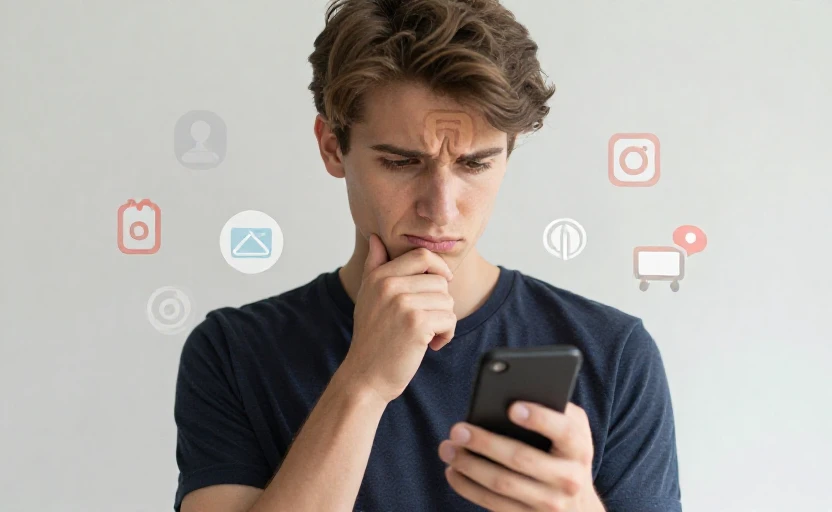
You open an app for a quick scroll, and an hour later, you’re left feeling drained, inadequate, or oddly disconnected. That heavy, restless feeling after spending time online isn't just in your head—it's a common experience many now recognize as social media anxiety. Unlike general anxiety, it’s specifically tied to the unique ecosystem of feeds, likes, and curated lives. The good news is that by understanding what triggers it, you can begin to reshape your relationship with these platforms.
Social media anxiety isn't about blaming the technology itself, but about recognizing how certain built-in features and our own human psychology can collide. It often shows up as a sense of comparison, fear of missing out, or a compulsive need to check for updates. The goal isn't to swear off social media entirely, but to engage with it in a way that feels intentional and preserves your sense of well-being.
What exactly triggers social media anxiety?
While experiences vary, several common patterns emerge. These triggers often work in tandem, creating a perfect storm of digital stress.
The comparison trap
This is perhaps the most potent trigger. Scrolling through a highlight reel of vacations, career milestones, and happy gatherings can subtly shift our perspective. We stop seeing a feed as a collection of curated moments and start viewing it as a benchmark for our own lives. It’s crucial to remember that these platforms are a stage, not a documentary.
The most dangerous comparison is between your behind-the-scenes and everyone else's highlight reel.
Fear of missing out (FOMO)
FOMO is that nagging sense that others are having rewarding experiences from which you're absent. Social media acts as a constant, real-time catalog of everything you're not doing. Seeing friends tag each other in posts or stories from an event you weren't invited to can trigger feelings of social exclusion and anxiety, even if your own weekend was perfectly pleasant.
The performance pressure
Social media turns everyday life into a potential performance. The pressure to craft the perfect caption, choose the most flattering photo, or share only “worthy” news can be exhausting. This performance anxiety extends to interactions: “Did my comment sound clever?” “Why did they ‘like’ her photo but not mine?” The platform becomes a social ledger we feel compelled to manage.
Information overload and doomscrolling
The infinite scroll delivers a firehose of information—from global crises to neighborhood gossip. Our brains aren't wired to process this volume of input, especially when it's heavily weighted toward negative or alarming news. Doomscrolling, the act of consuming large amounts of negative content despite feeling worse, directly fuels anxiety and a sense of helplessness.
Notification addiction and disrupted focus
Every ping, buzz, or red badge is designed to pull you back in. This constant interruption fractures your attention, making it difficult to immerse yourself in offline tasks or relaxation. The anxiety here is twofold: the stress of interrupted focus, and the low-grade tension of anticipating the next notification, keeping your nervous system in a state of alert.
How can you manage these triggers?
Managing social media anxiety is less about willpower and more about creating thoughtful boundaries and shifting your habits. Small, consistent changes can significantly reduce its grip.
Curate your feed with intention. You control what you see. Unfollow, mute, or use the “not interested” feature liberally on accounts that trigger comparison or negativity. Actively seek out accounts that inspire, educate, or genuinely amuse you without the aftertaste of inadequacy. Fill your feed with art, nature, hobbies, or communities that align with your interests.
Schedule your social media time. Instead of checking apps reflexively throughout the day, designate specific, limited times for it. This could be 20 minutes in the afternoon and 10 minutes in the evening. Outside those windows, keep the apps off your home screen or in a folder. This breaks the cycle of compulsive checking and gives your mind sustained breaks.
Turn off non-essential notifications. Go into your device settings and disable all social media push notifications except for, perhaps, direct messages from close friends. This single step removes the platform’s ability to hijack your attention and allows you to engage on your own terms, not in response to a prompt.
Practice mindful scrolling. Before you open an app, ask yourself: “What is my purpose here?” Is it to check on a friend, find a recipe, or just pass time? As you scroll, periodically check in with your body. Do you feel tense? Envious? Bored? When you notice a negative feeling, let that be your cue to close the app and do something grounding, like taking three deep breaths or stretching.
Re-engage with direct connection. Counteract the shallow nature of feed-based interaction by investing in direct, meaningful contact. Send a voice note instead of a text. Make a phone call to wish someone happy birthday. Plan an in-person coffee. These acts reinforce that your real social worth isn't measured in likes, but in the quality of your connections.
When does it become more than just anxiety?
For most, these strategies can foster a healthier balance. However, if your social media use consistently leads to intense feelings of depression, severe sleep disruption, or causes significant problems in your work or relationships, it may be a sign to seek support. Talking to a therapist or counselor can provide personalized tools to address underlying anxiety patterns, both online and off.
The aim is empowerment, not deprivation. By identifying your personal triggers and implementing conscious management techniques, you can reclaim social media as a tool for connection and inspiration, rather than a source of chronic stress. The power to scroll with peace of mind ultimately lies in your hands.