We often think of health warnings as loud and clear—a sharp pain, a sudden shortness of breath, a fever. But some of the most critical signals our bodies send are quiet, subtle, and easy to dismiss in the rush of daily life. High cholesterol is a master of this quiet communication. It rarely announces itself with obvious symptoms, which is precisely why it’s so important to understand its more silent, indirect signs.
Cholesterol itself isn’t inherently bad; your body needs it to build cells. The problem arises when levels of low-density lipoprotein (LDL), often called “bad” cholesterol, become too high. This excess can slowly build up in your artery walls, forming plaque. This process, atherosclerosis, narrows the arteries and restricts blood flow. It’s a gradual, silent development that can eventually lead to a heart attack or stroke. Because you can’t feel this buildup happening, paying attention to the body’s secondary signals becomes your first line of awareness.
What are the subtle signs of high cholesterol?
Since high cholesterol doesn’t cause direct symptoms like a headache or sore throat, the warning signs are often related to the consequences of narrowed or hardened arteries. They’re clues that your circulatory system might be under strain.
1. Xanthomas: Fatty deposits on the skin
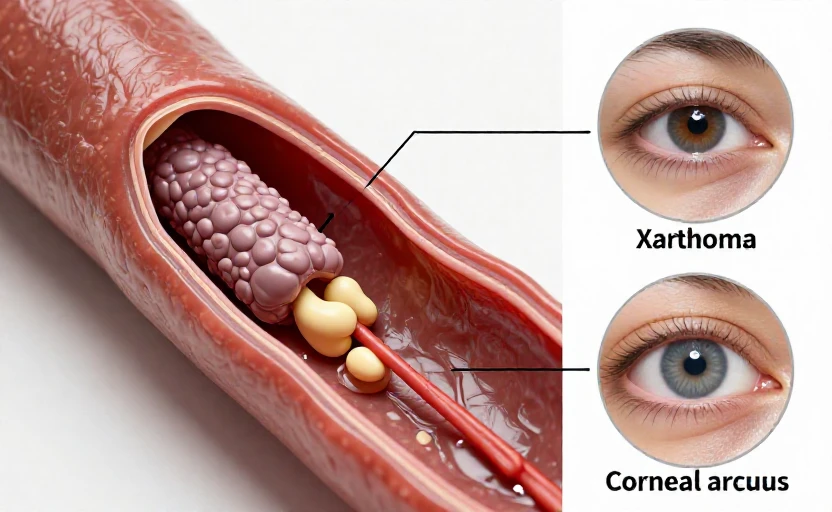
One of the few visible, physical signs directly linked to high cholesterol levels is the appearance of xanthomas. These are yellowish, fatty deposits that develop under the skin. They can vary in size—some are as small as a pinhead, while others may be larger. They often feel soft and doughy to the touch and are not typically painful.
You might notice them:
- On or around your eyelids (known as xanthelasma)
- On the tendons, particularly the Achilles tendon at the back of your ankle or tendons in your hands and fingers
- Over joints like your knees or elbows
The appearance of these deposits, especially around the eyes, is a strong visual cue to discuss cholesterol levels with a doctor.
2. Corneal arcus: A grayish ring around the cornea
Another visible sign can appear in the eyes. Corneal arcus, sometimes called arcus senilis, presents as a pale white, gray, or blueish ring around the colored part of your eye (the iris). It’s caused by fatty deposits in the outer edge of the cornea.
While a faint arcus can be a normal part of aging for some, its appearance in a person under the age of 45 is more strongly associated with high cholesterol levels. It doesn’t affect vision, but it can be a noteworthy marker when assessed by a healthcare professional in context with other factors.
3. Recurring leg pain, especially when walking
This sign is less about cholesterol itself and more about what high cholesterol can do: restrict blood flow. When plaque builds up in the arteries that supply your legs (a condition called peripheral artery disease, or PAD), your muscles may not get enough oxygen-rich blood during activity.
The classic symptom is a cramping, aching, or tired feeling in your leg muscles—calves, thighs, or buttocks—that comes on with walking or exercise and goes away with a few minutes of rest. This cycle of pain with activity and relief with rest is called claudication. It’s your muscles literally signaling for more oxygen that restricted arteries can’t deliver efficiently.
When a silent problem becomes an emergency
The signs above are indirect warnings. However, the ultimate, severe consequence of untreated high cholesterol is a sudden blockage of blood flow to the heart or brain. It’s crucial to recognize these acute events, which are medical emergencies.
4. Symptoms of a heart attack or stroke
These are not “silent” signs but catastrophic ones. They represent the potential endpoint of ignored high cholesterol. Knowing them is non-negotiable.
Heart attack symptoms can include:
- Pressure, tightness, or pain in the chest, arm, or under the breastbone
- Pain that radiates to the back, jaw, throat, or arm
- Fullness, indigestion, or a choking feeling
- Sweating, nausea, vomiting, or dizziness
- Extreme weakness, anxiety, or shortness of breath
- Rapid or irregular heartbeats
Stroke symptoms (remember the acronym FAST):
- Face drooping
- Arm weakness
- Speech difficulty
- Time to call emergency services
Other stroke signs can include sudden numbness, confusion, trouble seeing, walking, or a severe headache.
What to do if you recognize these signals
If you notice any of the subtle signs like xanthomas or experience leg pain with walking, the next step is not to panic but to plan a conversation. Schedule a visit with your primary care doctor. They can review your personal and family history, conduct a physical exam, and order a simple blood test—a lipid panel—to measure your cholesterol levels.
The only definitive way to know your cholesterol status is through that blood test. The silent nature of high cholesterol is why regular screening is recommended for most adults, even those who feel perfectly healthy.
Managing cholesterol is often a combination of lifestyle foundations and, when necessary, medication. Focus on a heart-healthy diet rich in fruits, vegetables, whole grains, and lean proteins, maintain a healthy weight, engage in regular physical activity, avoid tobacco smoke, and limit alcohol. For some, these changes are powerful enough; for others, medications like statins provide essential support under a doctor’s guidance.
The goal is to listen to the quiet signals so you never have to face the loud ones. Your body’s subtle whispers about cholesterol are worth your full attention.