
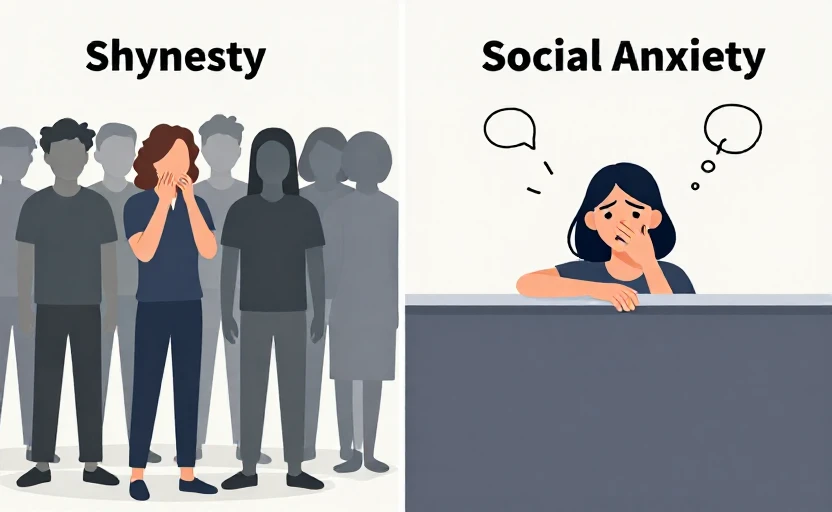
Many of us have felt that flutter of nerves before speaking up in a meeting or walking into a party alone. It’s a common human experience, a thread of vulnerability woven into social life. But when does typical shyness cross into something more significant? Understanding the distinction isn't about slapping a label on discomfort; it's about recognizing when that discomfort shifts from a personality trait to a barrier that limits your life.
At its core, shyness is a temperament, often characterized by feeling awkward or tense in unfamiliar social situations. Social anxiety disorder, on the other hand, is a recognized mental health condition marked by intense, persistent fear of being judged or scrutinized. The line can feel blurry, but experts point to specific, measurable differences in intensity, impact, and the underlying thought processes.
What Does Shyness Feel Like?
Shyness is part of the normal spectrum of human personality. Think of it as a preference for quieter, more familiar settings. A shy person might feel initial hesitation, need a little time to warm up in a new group, or prefer listening to speaking. The discomfort is usually situational and manageable.
Once the initial awkwardness passes—maybe after a few minutes of conversation—a shy individual can often engage and even enjoy themselves. The feeling is akin to stage fright that fades once the performance begins. Shyness might influence your choices (perhaps you decline a large networking event), but it doesn’t typically prevent you from fulfilling major obligations or pursuing things that are important to you.
Shyness is about discomfort; social anxiety is about fear.
The Hallmarks of Social Anxiety Disorder
Social anxiety disorder (SAD) is characterized by more than just nerves. It involves a profound, often debilitating fear of social situations where one might be exposed to possible scrutiny. The central fear is of being humiliated, embarrassed, or judged negatively. This isn't just a feeling; it's a prediction of a negative outcome that feels certain.
This fear triggers a cascade of physical and cognitive symptoms. Physically, you might experience a racing heart, sweating, trembling, nausea, or a feeling of your mind "going blank." Cognitively, there is intense self-consciousness and a pattern of anticipating the worst possible social blunder. The key differentiator is the avoidance or endurance with intense distress. A person with social anxiety will often go to great lengths to avoid feared situations, or if they cannot avoid them, they endure them with extreme anxiety.
How It Manifests in Daily Life
The impact is concrete and far-reaching. It might mean turning down a promotion because it requires public speaking, skipping a friend's wedding to avoid being in the spotlight, or being unable to eat in front of others. The fear isn't limited to performance situations; for many, it extends to everyday interactions like making small talk, using a public restroom, or returning an item to a store.
Key Differences Side-by-Side
Let’s break down the distinctions more clearly. While shyness and social anxiety can look similar from the outside, the internal experience and life consequences are markedly different.
- Intensity of Fear: Shyness involves mild to moderate discomfort. Social anxiety involves intense fear or panic.
- Physical Symptoms: Shyness may bring slight nervousness. Social anxiety often triggers pronounced physical symptoms like panic attacks.
- Anticipation & Worry: A shy person might think, "I hope this goes okay." A person with social anxiety is often consumed for days or weeks by thoughts like, "I will definitely say something stupid and everyone will laugh at me."
- Impact on Functioning: Shyness may be an inconvenience. Social anxiety actively interferes with work, school, relationships, or other important areas of life.
- Avoidance Behavior: A shy person might hesitate but usually participates. Someone with social anxiety will frequently avoid situations altogether, or endure them with overwhelming distress.
When Does Shyness Become Social Anxiety?
This is a question many people wrestle with. There isn't a bright line, but mental health professionals look for specific criteria. A primary indicator is the degree of impairment. If your fear of social situations causes you significant distress or stops you from doing things you want or need to do—building relationships, advancing your career, attending family functions—it’s worth exploring further.
Another sign is the pervasiveness of the fear. Is it limited to one or two specific scenarios (like giving a speech), or does it color most of your social interactions? The more pervasive and uncontrollable the worry, the more it aligns with social anxiety disorder.
What Can You Do About It?
If you identify more with the descriptions of social anxiety, know that it is one of the most treatable anxiety disorders. The first and most powerful step is speaking with a healthcare provider or a mental health professional, such as a psychologist or therapist, for an accurate assessment. They can provide a clear diagnosis and discuss options.
Effective treatments often include:
- Cognitive Behavioral Therapy (CBT): This gold-standard approach helps you identify and challenge the negative thought patterns that fuel anxiety, and gradually face feared situations through exposure exercises.
- Mindfulness and Acceptance Practices: Learning to observe anxious thoughts and physical sensations without judgment can reduce their power.
- Lifestyle Foundations: Prioritizing consistent sleep, regular physical movement, and balanced nutrition supports overall nervous system resilience. Reducing stimulants like caffeine can also be surprisingly helpful.
For those whose experience aligns more with shyness, building comfort is still possible. Pushing gently outside your comfort zone in small, manageable steps—striking up a brief conversation, accepting an invitation—can build confidence over time. The goal isn't to become an extrovert, but to feel more at ease being yourself in the world.
Recognizing the difference between shyness and social anxiety is an act of self-awareness, not self-judgment. It’s about understanding your own experience with clarity so you can seek the right kind of support, whether that’s a bit of personal courage or professional guidance. Your comfort in your own skin is worth the attention.