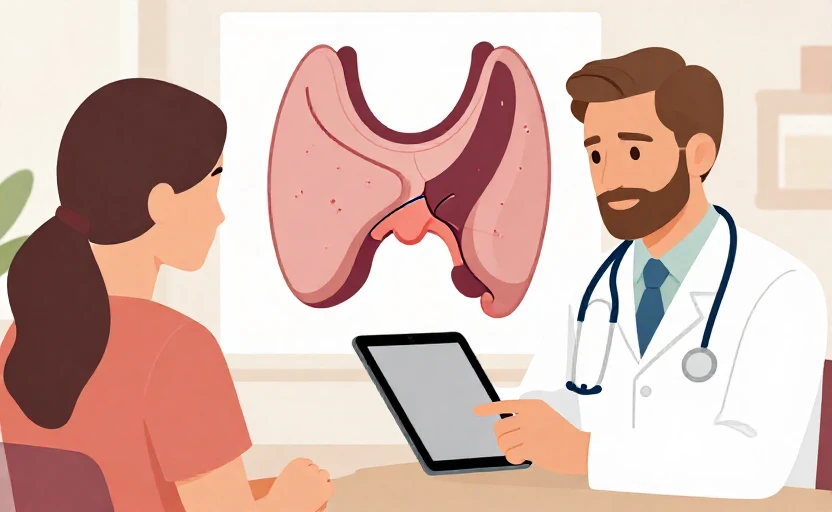
If your doctor suspects your thyroid isn’t producing enough hormones, they’ll likely recommend a series of blood tests. This process can feel like stepping into unfamiliar territory. Knowing what to expect from these tests—what they measure, what the results might mean, and what happens next—can help you approach your diagnosis with clarity and confidence.
Hypothyroidism diagnosis isn't about a single moment of discovery; it's a careful process of gathering evidence. Your symptoms, medical history, and physical exam provide the first clues. The blood tests then offer the concrete data needed to confirm the picture. This measured approach ensures an accurate diagnosis, which is the essential first step toward effective management.
Which blood tests are used to diagnose hypothyroidism?
The cornerstone of hypothyroidism testing is the thyroid panel, a group of blood tests that paint a detailed picture of your thyroid function. The most common and critical test is the Thyroid-Stimulating Hormone (TSH) test. Think of TSH as a message from the pituitary gland in your brain to your thyroid. If your thyroid hormone levels are low, your pituitary gland releases more TSH to shout "work harder!" at your thyroid. Therefore, a consistently high TSH level is the most sensitive indicator of an underactive thyroid.
However, doctors rarely rely on TSH alone. They typically pair it with a Free Thyroxine (Free T4) test. T4 is the main hormone produced by your thyroid. The "free" part measures the hormone that is active and available for your body to use, not the portion bound to proteins. In hypothyroidism, Free T4 levels are usually low. The combination of a high TSH and a low Free T4 confirms a diagnosis of overt, or primary, hypothyroidism.
Your TSH level is the body's most sensitive thermostat for thyroid function—when thyroid hormone drops, TSH rises to signal for more.
In some cases, especially early on or when the cause is unclear, your doctor may also order a Triiodothyronine (T3) test. T3 is the more active form of thyroid hormone, converted from T4 in the body's tissues. It's less commonly used for initial diagnosis but can be helpful in certain situations.
What about thyroid antibody tests?
If your TSH is elevated, the next logical question is "why?" The most common cause of hypothyroidism in many parts of the world is Hashimoto's thyroiditis, an autoimmune disorder. To check for this, your doctor may order thyroid antibody tests.
- Thyroid Peroxidase Antibodies (TPOab): These are the most common antibodies found in Hashimoto's. Their presence confirms an autoimmune attack on the thyroid gland.
- Thyroglobulin Antibodies (TgAb): These antibodies are also associated with autoimmune thyroid disease, though they are less specific than TPO antibodies.
A positive antibody test, alongside abnormal TSH and T4 levels, confirms a diagnosis of Hashimoto's as the cause of hypothyroidism. This information doesn't typically change the initial treatment—which is thyroid hormone replacement—but it provides important context about the nature of your condition.
How should I prepare for my thyroid blood test?
For standard thyroid function tests (TSH, Free T4, T3), no special preparation is usually required. You can typically take the test at any time of day, though some labs prefer morning appointments. It's generally fine to eat and drink beforehand unless your doctor instructs otherwise for other tests being done simultaneously.
However, there are a few factors that can influence your results. Be sure to tell your doctor about all medications and supplements you take. Certain substances, like biotin (a common ingredient in hair, skin, and nail supplements), can interfere with the accuracy of thyroid lab tests. Your doctor will likely advise you to stop taking high-dose biotin several days before your blood draw.
Understanding your test results and reference ranges
When you receive your results, you'll see your numbers alongside a laboratory's "reference range." This is the range of values considered normal for that lab. It's crucial to interpret your results within the context of these ranges and, more importantly, in conversation with your doctor.
A high TSH with a low Free T4 points to overt hypothyroidism. Sometimes, you might see a pattern called subclinical hypothyroidism: your TSH is elevated, but your Free T4 is still within the normal range. This indicates your thyroid is struggling but hasn't yet failed to the point of causing a hormone deficiency. Management of subclinical hypothyroidism is individualized, based on your TSH level, symptoms, and other health factors.
What happens after the diagnosis is confirmed?
A confirmed diagnosis of hypothyroidism is the beginning of a management plan, not an end point. The standard treatment is daily thyroid hormone replacement medication, usually a synthetic form of T4 called levothyroxine. This medication is identical to the hormone your body should be making.
Starting medication is a careful calibration process. Your doctor will prescribe a starting dose based on your weight, age, and TSH level. Because it can take several weeks for your body to adjust and for the medication to reach a steady level in your bloodstream, you won't feel different overnight.
Follow-up testing is a key part of this process. Typically, your doctor will check your TSH level again about 6-8 weeks after starting medication or after any dose change. The goal is to find the dose that brings your TSH into the target range, which usually correlates with the resolution of symptoms. Once you're on a stable dose, monitoring typically shifts to once or twice a year.
Treatment is a partnership. Tracking your symptoms and communicating them to your doctor is as important as the lab numbers.
While the blood tests provide the roadmap, your personal experience is the terrain. Pay attention to changes in your energy, mood, weight, skin, and hair. Keeping a simple log can help you and your doctor see patterns and fine-tune your treatment for the best possible quality of life.
When to seek a second opinion
Most hypothyroidism cases are straightforward to diagnose and manage. However, if you feel your symptoms are persistently dismissed despite abnormal labs, or if your symptoms don't improve on standard treatment despite "normal" TSH levels, it may be reasonable to seek a second opinion from an endocrinologist, a doctor who specializes in hormone-related conditions.
The path from suspicion to diagnosis to stable management requires patience. The tests are a tool—a precise one—that guides you and your healthcare team toward the right support for your body. By understanding what these tests mean, you become an active, informed participant in your own care.