If you are living with polycystic ovary syndrome (PCOS), you have likely noticed that what you eat seems to affect more than just your energy levels. For many women, one of the most visible and frustrating symptoms is hirsutism — the growth of coarse, dark hair on the face, chest, back, or abdomen. It feels unfair, and it is easy to assume that the topic is purely hormonal and entirely out of your control. Endocrinologists, however, see a clear biological thread that runs from your plate to your hair follicles: insulin.
The connection is not about blame or quick fixes. It is about understanding that high insulin levels, which are common in PCOS, can drive your ovaries to produce more androgens (like testosterone). Those androgens, in turn, stimulate hair follicles to produce terminal hair where you might not want it. The good news, backed by clinical research, is that dietary changes can help lower insulin, reduce androgen excess, and over time, slow the progression of unwanted hair growth.
Why insulin is the root cause
In order to understand how diet influences hair growth, you have to understand insulin resistance. Up to 75 percent of women with PCOS have some degree of insulin resistance, meaning their cells do not respond efficiently to insulin. To compensate, the pancreas pumps out more insulin. This surplus of insulin in the bloodstream signals the ovaries to increase production of androgens — namely, free testosterone.
“When insulin is high, your ovaries act like a factory for male hormones,” explains a reproductive endocrinologist. “That is the main biochemical mechanism that drives hirsutism in PCOS.”
This means that any diet that helps lower and stabilize insulin levels can reduce the hormonal trigger for excess hair growth. The goal is not to “cure” hirsutism, but to address its metabolic source.
Evidence-based dietary patterns for lower androgens
Clinical nutrition research in PCOS consistently points to three major dietary strategies: a low glycemic index (GI) diet, a Mediterranean-style eating pattern, and, for some women, a modestly reduced carbohydrate intake. None of these requires extreme restriction.
Low glycemic index foods
A low glycemic index diet focuses on carbohydrate-rich foods that release glucose slowly into the bloodstream, avoiding sharp spikes in blood sugar and insulin. This includes whole grains like steel-cut oats and quinoa, legumes, non-starchy vegetables, and most fruits (especially berries, apples, and pears).
A 2020 meta-analysis in the Journal of the Academy of Nutrition and Dietetics found that women with PCOS who followed a low GI diet had significantly lower fasting insulin levels compared to those on a standard diet. Lower insulin means less stimulation of ovarian androgen production.
The Mediterranean diet and anti-inflammatory benefits
The Mediterranean diet — rich in olive oil, leafy greens, fatty fish, nuts, and seeds — offers a two-pronged benefit. It naturally has a low glycemic load, and it is packed with anti-inflammatory compounds. PCOS is considered a state of low-grade chronic inflammation, which can worsen insulin resistance and androgen production.
In a study published in Nutrients (2022), women with PCOS who adhered to a Mediterranean diet for 12 weeks saw a measurable reduction in free testosterone and an improvement in markers of insulin sensitivity. While hair growth was not immediately reversed, the hormonal environment that drives it improved.
Moderate carbohydrate reduction
Some endocrinologists recommend reducing total carbohydrate intake to roughly 40 percent of daily calories, sourced mainly from vegetables, legumes, and whole grains. This is not a ketogenic diet (which is generally not recommended long-term for PCOS). The aim is simply to lower the overall insulin demand on the body. One practical approach is to keep carbohydrate portions to about a quarter of your plate at meals and fill the rest with protein, healthy fats, and vegetables.
Practical tip: Pairing carbohydrates with a protein or fat source blunts the insulin response. For example, eat an apple with almond butter or whole-grain crackers with cheese, rather than alone.
Specific nutrients and foods that may help
Beyond overall dietary patterns, certain nutrients have been studied for their potential to reduce androgen levels or improve insulin sensitivity.
- Myo-inositol and D-chiro-inositol: These compounds, found naturally in cantaloupe, citrus fruits, and legumes, have been shown to improve insulin signaling. A 2023 review in Frontiers in Endocrinology concluded that a 40:1 ratio of myo-inositol to D-chiro-inositol can reduce serum testosterone in women with PCOS.
- Omega-3 fatty acids: Found in salmon, sardines, walnuts, and flaxseeds, omega-3s reduce inflammation and may modestly lower androgen levels. A 2021 randomized trial found that women who took omega-3 supplements for 12 weeks had lower free testosterone compared to a placebo group.
- Vitamin D and calcium: Many women with PCOS have low vitamin D levels. Adequate vitamin D is linked to better insulin sensitivity. One study found that combining vitamin D with calcium improved menstrual regularity and reduced hair growth scores on the Ferriman-Gallwey scale.
- Zinc: Zinc is involved in testosterone metabolism. Some research indicates that zinc supplementation can reduce hair growth scores, though more studies are needed.
What to reduce or avoid
Just as important as what you eat is what you limit. High-glycemic foods are the primary concern.
- Sugary beverages: Soda, sweetened teas, and fruit juice cocktails cause the fastest and highest insulin spikes. Eliminating these alone can improve insulin levels within days.
- Refined white flour products: White bread, pasta, pastries, and crackers act much like sugar in the body. Switching to whole-grain versions makes a meaningful difference.
- Excessive red and processed meat: Some research suggests high intake of animal fats can worsen androgen production. This does not mean eliminating meat, but prioritizing fish and lean poultry.
Realistic expectations and timelines
It is crucial to be honest about what diet can and cannot do for hirsutism. Diet alone will not reverse existing terminal hair growth. Once a follicle has produced coarse hair, it typically requires physical removal methods (laser, electrolysis, or topical prescription creams like eflornithine). However, diet can stop the problem from getting worse and can reduce the formation of new coarse hairs over a period of six to twelve months.
“Your hair follicles have a long growth cycle,” explains an endocrinologist. “It takes patience. We tell patients to expect to see changes in the rate of new hair growth after about six months of consistent lifestyle changes, not overnight.”
Dietary changes also pair well with other medical treatments. Metformin, for instance, lowers hepatic glucose production and improves insulin sensitivity. When combined with a low-GI diet and regular exercise, the metabolic effect is amplified. Some women also use spironolactone, which blocks androgen receptors. The combination of diet and medication often yields better results than either alone.
A sample day that supports lower insulin
To give you a concrete sense of what this looks like, here is an example of a day of eating designed to stabilize blood sugar and keep insulin low.
- Breakfast: Two-egg omelet with spinach, mushrooms, and a side of half an avocado. A small handful of berries.
- Lunch: Large green salad with grilled chicken, chickpeas, cucumber, bell peppers, and a dressing of olive oil and lemon juice.
- Snack: A handful of almonds and a pear.
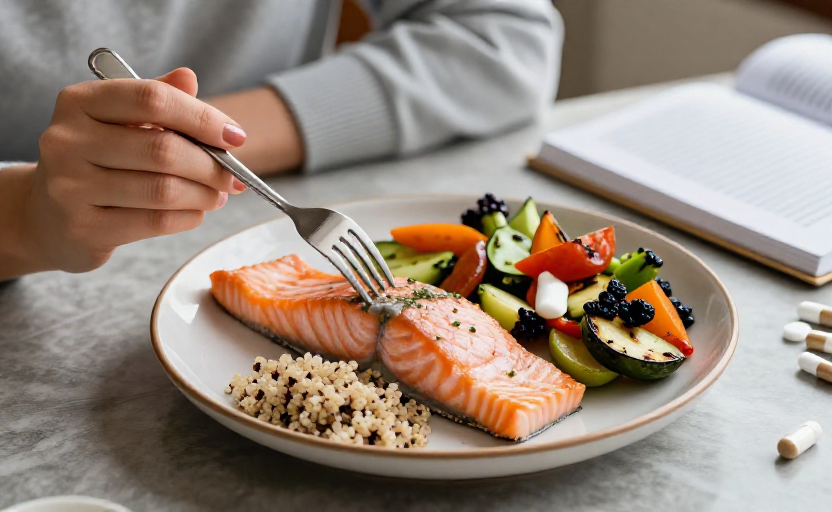
- Dinner: Baked salmon with roasted broccoli and a serving of quinoa.
This pattern provides roughly 30 to 35 grams of fiber per day, which helps slow glucose absorption, and keeps refined carbohydrates to zero.
When to consult a specialist
If you are trying to manage PCOS-related hair growth through diet, consider working with a registered dietitian who specializes in PCOS or a reproductive endocrinologist. They can help you individualize your carbohydrate tolerance, check your insulin and testosterone levels, and ensure you are not missing any key nutrients. Self-directed restrictive diets can sometimes worsen hormonal imbalances, especially if you cut out entire food groups without guidance.
Diet is a powerful lever, but it works best as part of a comprehensive plan that includes stress management (which reduces cortisol), adequate sleep, and regular physical activity. For hirsutism specifically, it is one tool — but for many women, it is the tool that finally helps them feel more in control of their body and their health.