If you have polycystic ovary syndrome, your menstrual cycle can feel unpredictable. Some months you might not get a period at all; other times, you may not know when bleeding will start or how heavy it will be. That uncertainty can be frustrating, but it also carries information. Learning to track your cycle with intention can help you see patterns your irregular rhythm is trying to show you.
Below are two tracking habits that go beyond simply marking the first day of your period. Each one focuses on different signals your body sends—and together, they can help you decode what is happening with your hormones and ovulation.
Why a basic period app is not enough
Standard period trackers assume a 28-day cycle with predictable ovulation. In PCOS, cycles are often longer than 35 days, or anovulatory (no egg released). If you only log when bleeding starts and stops, you might miss key shifts that happen between periods. The two habits below fill that gap by tracking signs that are more reliable for irregular cycles.
Habit 1: Track waking basal body temperature daily
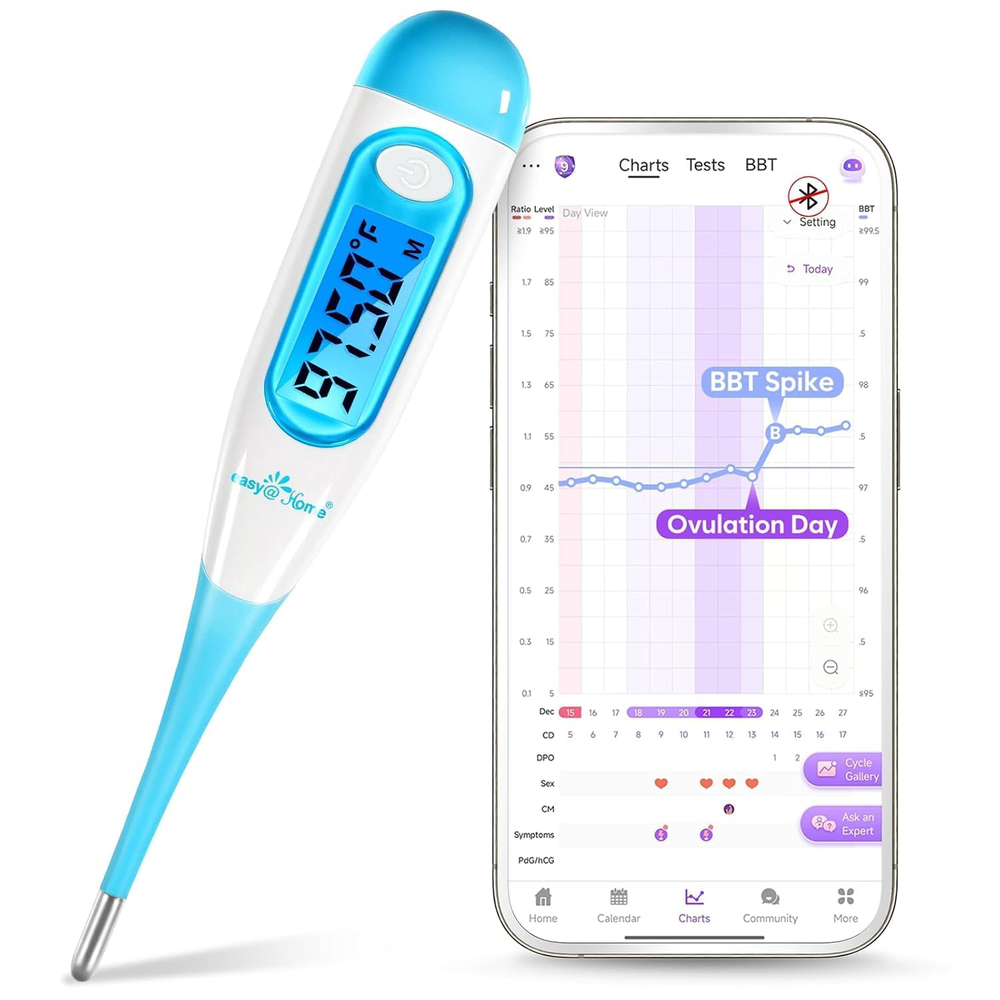
Your basal body temperature (BBT) is your lowest resting temperature, taken immediately after waking, before any movement. In a normal ovulatory cycle, a sustained rise of about 0.5 to 1.0°F occurs after ovulation due to progesterone. If your temperature stays flat for weeks on end, it strongly suggests you did not ovulate that cycle. If you see a clear shift, you can pinpoint which day ovulation likely occurred, even if your cycle is 45 or 60 days long.
To make BBT tracking reliable, follow these steps:
- Take your temperature at the same time each morning (within a 30-minute window) before getting up, eating, or drinking.
- Use a basal body thermometer that reads to two decimal places (e.g., 97.45°F). A standard fever thermometer is not precise enough.
- Log the reading immediately in a paper chart or a dedicated fertility app that does not guess your ovulation date—some apps adjust retrospectively once you input enough data.
- After three to four months, review the chart for patterns: Do you see a clear thermal shift most cycles, or is your temperature mostly flat? Do you see a slow rise or a sudden one?
What this tells you: A sustained temperature rise confirms ovulation happened. No sustained rise means the cycle was likely anovulatory—a common occurrence in PCOS that explains long gaps between periods.
Habit 2: Observe cervical mucus throughout the cycle
Cervical mucus changes in consistency and volume under the influence of estrogen. In the days leading up to ovulation, rising estrogen makes mucus more abundant, clear, and slippery—similar to raw egg white. This is called fertile-quality mucus. After ovulation, progesterone thickens mucus into a creamy or sticky texture, and then it often dries up until the next cycle.
For someone with PCOS, tracking mucus can reveal whether you are approaching ovulation, even when your period is delayed. It also helps you distinguish between a true menstrual period and breakthrough bleeding, which can look similar when cycles are anovulatory.
Here is how to track mucus accurately:
- Check mucus at the vaginal opening each time you use the bathroom. Wipe before urinating, and note the sensation (dry, moist, wet, slippery).
- Record the appearance and feel (sticky, creamy, egg-white, watery) on the same chart where you log BBT.
- Look for a pattern: After your period ends, you might have several dry days, then a few days of sticky or creamy mucus, followed by several days of egg-white mucus. Ovulation typically occurs on the last day of egg-white mucus or the day after.
- If you see egg-white mucus but your temperature never rises, that can mean your body attempted to ovulate but did not complete the process—a clue that hormone balance is shaky.
What this tells you: Fertile-quality mucus signals that estrogen is rising and ovulation may be near. If you never see egg-white mucus, your estrogen levels might be consistently low or unbalanced.
How to combine both habits for a clearer picture
Using BBT and cervical mucus together gives you a more complete story. Here are three common PCOS cycle patterns and what they suggest:
- Long cycles with a clear temperature shift and egg-white mucus: You are ovulating, just later than average. This can be reassuring—you may not need medical intervention for ovulation.
- Long cycles with no temperature shift but some egg-white mucus: Your body tries to ovulate but does not succeed. This is common in PCOS and may indicate a need for lifestyle or medical support to stabilize hormones.
- Long cycles with flat temperature and no fertile mucus: Little ovarian activity—estrogen and progesterone are both low. This pattern may require closer evaluation by a healthcare provider.
Over time, these two tracking habits can help you estimate when to expect your next period (about 12–16 days after a sustained temperature rise) and identify times you might need to check in with your doctor about why your cycle stalls.
Practical tips for staying consistent
Keep the thermometer by your bed. Place it on your nightstand so you do not have to search for it. If you share a bed, a gentle alarm on your phone can help you wake at the same time.
Use a paper chart or a simple spreadsheet. Many fertility apps add a predictive layer that can be confusing for irregular cycles. A blank BBT chart or a spreadsheet with columns for date, temperature, and mucus type gives you control.
Pair mucus checks with a daily routine. Attach the observation to something you already do every morning, like using the bathroom after waking.
Do not get discouraged by gaps. Even four or five cycles of partial data can reveal a trend. Consistency matters more than perfection.
Share your charts with your healthcare team. Many endocrinologists and OB-GYNs find BBT and mucus charts helpful for diagnosing anovulation and guiding treatment decisions.
A final note on safety and expectation
Tracking habits are educational tools, not diagnostic instruments. They can help you recognize when your cycle is behaving in a way that warrants a conversation with a clinician, but they cannot treat PCOS or replace medical advice. If you have not had a period for more than 90 days, or if you experience severe pain or heavy bleeding, consult a healthcare provider promptly.