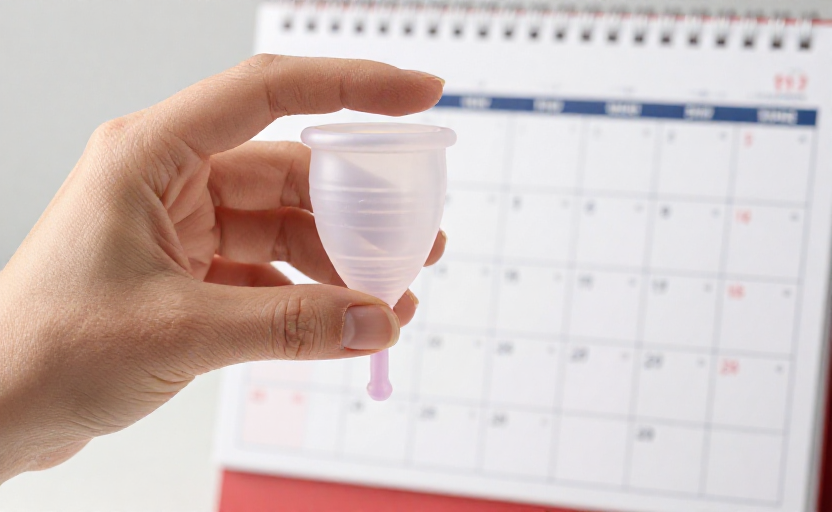
For many women, periods are simply a fact of life — uncomfortable, inconvenient, and sometimes heavy. But how do you know if your flow is within the range of normal or if it's a signal that something deeper is going on, like endometriosis? Understanding the difference isn't always straightforward, but it matters for your long-term health, including your fertility.
Let's walk through the key signs and symptoms that separate a typical heavy period from one that warrants a closer look.
What does a normal heavy period look like?
A heavy period (clinically called menorrhagia) means you're bleeding more than about 80 milliliters per cycle. But unless you're measuring your flow with a menstrual cup and a graduated cylinder, it's more practical to watch for these signs:
- Soaking through a pad or tampon every hour for several hours in a row.
- Needing to double up on protection (pad plus tampon) just to get through the day.
- Passing clots that are larger than a quarter.
- Feeling so fatigued during your period that it interferes with daily life — a possible sign of anemia from blood loss.
If any of these sound familiar, it's worth tracking your cycle and discussing it with your healthcare provider.
When heavy bleeding points to endometriosis
Endometriosis is one of the most common causes of heavy, painful periods. The condition occurs when tissue similar to the uterine lining (endometrium) grows outside your uterus — on your ovaries, fallopian tubes, bowel, or other pelvic structures. Each month, this misplaced tissue responds to your hormones: it thickens, breaks down, and bleeds, just like the lining inside your uterus. But unlike normal menstrual blood, this blood has no way to leave the body. Instead, it becomes trapped, causing inflammation, scarring, and adhesions.
The pain and bleeding from endometriosis can be severe, but here's the tricky part: some women with advanced endometriosis have no pain at all, while others with minimal disease suffer intensely. That's why relying on symptoms alone isn't enough.
Other signs that your period might not be "just heavy"
If your heavy period is accompanied by any of these symptoms, endometriosis or another underlying condition could be at play:
- Pelvic pain before and during your period that doesn't let up with over-the-counter pain relievers.
- Pain during or after sex (dyspareunia).
- Bleeding or spotting between periods (breakthrough bleeding).
- Painful bowel movements or urination, especially around the time of your period.
- Chronic fatigue or low energy that seems cyclical.
- Difficulty getting pregnant after trying for 12 months (or 6 months if over 35).
Key reminder: Up to 15–20% of women with endometriosis have no symptoms at all. A normal period does not rule out endometriosis, and a heavy period does not automatically mean you have it.
How endometriosis affects fertility
Endometriosis can interfere with conception in several ways. Inflammation in the pelvis can damage the fimbriae — the tiny finger-like projections that sweep an egg into the fallopian tube after ovulation. Scarring and adhesions can distort the pelvic anatomy, essentially gluing organs together. The hostile inflammatory environment can also destroy sperm and eggs before they even meet.
According to research, 30–50% of women with endometriosis experience infertility. But here's the hopeful news: pregnancy itself often improves endometriosis. The hormonal shifts of pregnancy suppress the misplaced tissue, sometimes offering relief even after delivery.
Stages of endometriosis and pregnancy odds
If your doctor performs a laparoscopy — the only definitive way to diagnose endometriosis — they will assign a stage based on the location, amount, and depth of the tissue found:
- Stage 1 (minimal): Small lesions, no significant scarring.
- Stage 2 (mild): More lesions, still limited.
- Stage 3 (moderate): Deep implants, cysts on one or both ovaries, and adhesions.
- Stage 4 (severe): Extensive scarring, blocked tubes, and damaged ovaries.
Women with stage 1 or 2 often conceive without intervention. Stage 4 may require advanced fertility treatments, but pregnancy is still possible.
What should you do if you think your period isn't normal?
Start by tracking your cycle. Note the number of days you bleed, the heaviness (pad/tampon count), pain levels, and any additional symptoms. Take this log to your OB-GYN.
If your doctor suspects endometriosis, they may recommend an ultrasound. However, only laparoscopy can confirm the diagnosis — a minor outpatient surgery where a thin scope is inserted through the belly button to look inside the pelvis. During the same procedure, the surgeon can often remove or destroy the endometriosis lesions using laser, cautery, or excision.
Hormonal management and breastfeeding
After pregnancy, breastfeeding can help keep endometriosis at bay (similar to how birth control pills suppress the condition). Once breastfeeding ends, your doctor may suggest starting birth control pills to prevent regrowth until you're ready for another child. This approach gives you the best chance at spacing pregnancies without needing additional surgery, though every woman's situation is unique.
Bottom line: trust your gut (and your gyno)
If your periods are heavy enough to cause fatigue, pain, or disruption to your life, it's not just something you have to "put up with." Menstrual health is health. Whether the cause is endometriosis, fibroids, polyps, or a hormonal imbalance, the first step is always the same: raise the issue with your clinician. Be specific, be persistent, and remember that you deserve to feel well all month — not just when you aren't bleeding.