When patients with polycystic ovary syndrome (PCOS) describe their skin, they often use the same word: stubborn. Breakouts that don’t respond to over-the-counter washes or even prescription topicals are common. As a health editor who has followed this topic closely, I’ve learned that dermatologists aren’t always the first doctors to identify the root cause. More often, endocrinologists see the pattern long before the skin is involved.
The reason is straightforward. PCOS-driven acne has distinct hormonal fingerprints that look different from standard adolescent acne or the occasional stress breakout. Endocrinologists are trained to read these signals, and they know exactly which clinical signs warn of progressive skin involvement. If you or a loved one is navigating PCOS, understanding what these doctors look for can help you stay ahead of the condition.
Why PCOS acne is different from other breakouts
Most acne arises from a combination of excess oil, clogged pores, and bacteria. In PCOS, the primary driver is hyperandrogenism — elevated levels of androgens like testosterone that stimulate sebaceous glands to produce more sebum. This oil-rich environment sets the stage for inflammatory lesions. Endocrinologists look for acne that is notably persistent, deep, and located in a specific pattern.
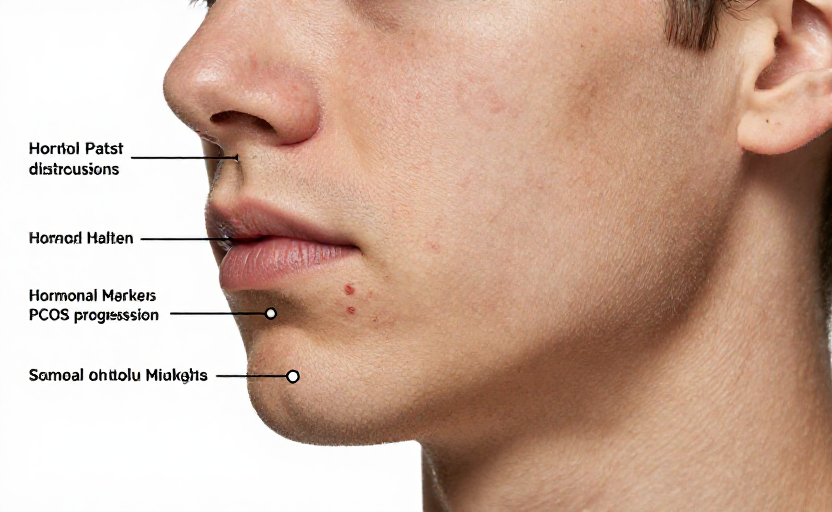
Classic signs include breakouts along the jawline, chin, and lower cheeks. This is the “beard area” or mandibular distribution. If a patient reports acne in these zones that flares cyclically — often worsening a few days before a missed or irregular period — it strongly points toward an endocrine source rather than a simple pore issue.
Clue to know: If acne suddenly appears in adulthood, especially in women who had clear skin as teenagers, endocrinologists flag it immediately. Late-onset acne is a known red flag for PCOS.
The hormonal evaluation: what numbers matter
An endocrinologist’s clinical eye begins with blood work. The key markers that correlate with PCOS acne progression include free and total testosterone, dehydroepiandrosterone sulfate (DHEAS), and luteinizing hormone-to-follicle-stimulating hormone (LH-to-FSH) ratio. But they aren’t just looking at raw numbers. They pay close attention to the ratio of free testosterone to sex hormone-binding globulin (SHBG). When SHBG is low, more testosterone circulates freely and reaches the skin, accelerating acne.
High DHEAS levels suggest an adrenal component, which can make acne more treatment-resistant. If a patient also has elevated fasting insulin or signs of insulin resistance — a common co-occurrence in PCOS — the endocrinologist will note that skin inflammation often worsens with dietary spikes. This metabolic connection is crucial because treating insulin resistance can improve acne even before hormones normalize.
Visual signs of progression in the clinic
During a physical exam, endocrinologists look beyond active pimples. They inspect for evidence of long-standing inflammation: post-inflammatory hyperpigmentation (dark spots left after lesions heal), scarring, and stubborn nodular cysts. The presence of deep, painful nodules that last for weeks rather than days is a hallmark of PCOS-driven acne progression.
They also check for concurrent signs of hyperandrogenism elsewhere on the body. Hirsutism (coarse hair on the chin, upper lip, abdomen, or chest) and acanthosis nigricans (dark, velvety patches on the neck or underarms) often appear alongside androgen-mediated acne. If these signs are present together, the endocrinologist has strong evidence that acne is part of a systemic endocrine picture, not an isolated skin condition.
The timeline: how progression unfolds without intervention
Left untreated, PCOS acne typically follows a predictable pattern. In early stages, mild comedones (whiteheads and blackheads) appear along the jawline. Over months, they evolve into inflammatory papules and pustules. Without hormonal regulation, cysts and nodules develop deeper in the dermis, leading to scarring. An endocrinologist spots this progression by asking about the timeline of breakouts and whether they have changed in severity or depth.
Patients often describe a gradual worsening that correlates with weight changes, missed periods, or stress. This history, combined with lab work, allows the doctor to stage the acne not by its appearance alone but by its relationship to underlying hormonal shifts.
Treatment clues: what endocrinologists look for in response
When patients have already tried oral antibiotics, topical retinoids, or isotretinoin without lasting improvement, endocrinologists see that as confirmation of a hormonal driver. They also monitor how the skin responds to treatments that lower androgens, such as combined oral contraceptives (with estrogen and progestin) or spironolactone, a medication that blocks androgen receptors in the skin.
Improvement in acne within three months of starting these therapies is a strong indicator that the PCOS diagnosis is correct and that the skin involvement is hormone-driven. Conversely, if acne only partially responds or flares again after stopping hormones, the endocrinologist will reassess for other contributors like elevated prolactin, thyroid dysfunction, or use of androgen-mimicking products such as anabolic steroids or certain supplements.
- Key point: A poor response to conventional acne treatments is one of the first red flags that prompts an endocrinology referral.
- Key point: Tracking acne flares alongside menstrual cycles helps distinguish hormonal acne from non-hormonal types.
- Key point: The presence of insulin resistance — indicated by elevated fasting insulin, HOMA-IR, or acanthosis nigricans — can accelerate acne progression.
How patients can partner with their endocrinologist
You don’t need to interpret lab results alone. But you can help your doctor by keeping a simple log: photos of breakouts, date of menstrual cycle, and any new foods or supplements. This history makes it easier for the endocrinologist to connect skin changes to hormonal events. Many specialists also recommend avoiding products labeled as “hormone-free” or “natural” without clinical evidence, as some supplements can affect androgen levels in unpredictable ways.
The key takeaway is that PCOS acne progression is not inevitable. With early recognition using the markers described above — location pattern, hormonal blood work, and associated symptoms — endocrinologists can intervene before significant scarring occurs. If you are seeing breakouts that fit this pattern, a conversation with an endocrinologist may be the most effective step you take for your skin.