Staying hydrated sounds simple. Drink when you’re thirsty. Stop when you’re not. But any dietitian will tell you that real life gets in the way—meetings stack up, stress masks thirst, and by mid-afternoon, your focus is gone and your head aches. Long-term health depends on consistent habits, not heroic efforts, which is exactly why nutrition professionals treat water tracking like a gentle anchor, not a chore.
Most of us aren’t dehydrating dangerously on a daily basis. We’re running at a low-grade deficit that steals energy, dulls skin, and makes the body work harder to regulate temperature and digestion. Over months and years, that subtle drag adds up. The good news? You don’t need a lab coat or a gallon jug. You need a strategy that fits your life.
Why hydration matters beyond thirst
Water is the medium for nearly every chemical reaction in your body. It cushions your joints, delivers nutrients to cells, and helps flush waste through your kidneys. When you’re even mildly dehydrated, blood volume drops, and your heart has to pump harder. That’s why focus fades before you feel thirsty—your brain is sensitive to shifts in fluid balance.
Over the long term, adequate water intake supports healthy blood pressure, kidney function, and digestion. Dietitians think in terms of decades, not days. A steady hydration habit now reduces the load on your kidneys later and helps prevent recurring urinary tract infections and kidney stones. It also keeps the digestive tract moving regularly, which many people don’t connect to their water habits until something goes wrong.
The actual math (relax, it’s easy)
Forget the eight-glasses rule. It’s a guideline, not a command. The National Academy of Medicine suggests about 3.7 liters (125 ounces) per day for men and 2.7 liters (91 ounces) for women from all sources—including food. That’s the total, not just what you drink. Cucumbers, oranges, soup, and even yogurt count.
Dietitians don’t obsess over exact ounces, but they do use a few quick checks to find your zone. Start with your body weight in pounds, divide by two, and aim for that many ounces as a baseline from fluids. If you weigh 150 pounds, that’s about 75 ounces. Then adjust: increase by 8–12 ounces for every 30 minutes of exercise, and add more in hot weather. The goal is manageable, not perfect.
Systems real dietitians use every day
Tracking doesn’t mean a clipboard or an hourly notification. These four methods are common among nutrition pros themselves—each works because it matches a different personality type.
1. The container trick
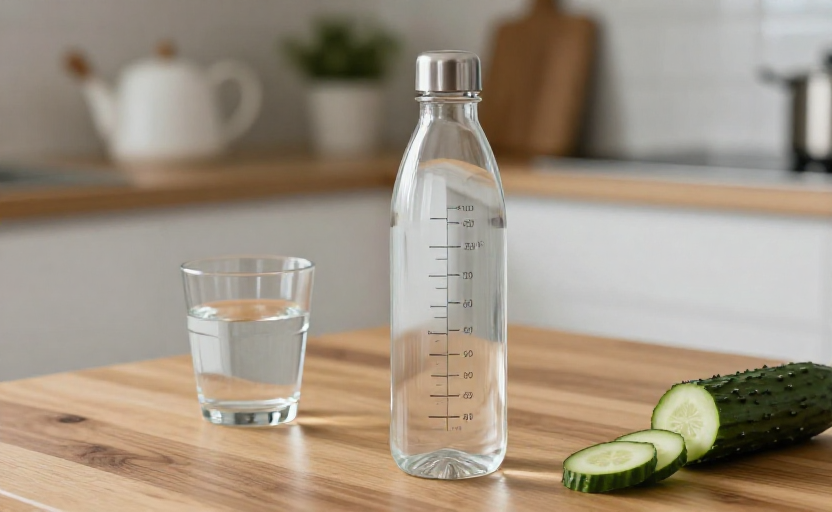
Fill a 32-ounce water bottle in the morning and commit to finishing it by lunch. Fill it again, finish by 4 p.m. A third refill can happen at dinner. The bottle becomes a visual cue. No app, no counting. You know where you stand at a glance.
Some dietitians use a marked bottle with time targets etched on the side. Others simply pair each refill with a daily anchor habit—finish the first bottle while making breakfast and listening to morning news, and the second while answering emails. The container acts as both reminder and portion control.
2. Urine color check
Dietitians know the body gives real-time feedback. Pale yellow or clear urine roughly correlates with good hydration. Dark amber? Time to drink. It’s not a scientific measure, but it’s immediate and requires no equipment. Check once in the morning after you empty your bladder, and once in the afternoon—that’s enough to catch a trend without overthinking it.
3. Tying sips to existing cues
You already have routines. Every time you go to the bathroom, take three gulps before leaving. Every time you start a meeting, place a glass of water next to your laptop. Dietitians call this “habit stacking.” The existing behavior reminds you, so you don’t have to remember a separate water goal. Over two weeks, most people double their intake without feeling like they changed anything.
4. The morning and evening rule
You naturally lose water overnight through breathing and sweat. Drink a full glass of water first thing in the morning—even before coffee—to start the day ahead. Then set a “last call” rule: stop drinking fluids 90 minutes before bedtime to avoid waking up for bathroom trips. That simple boundary prevents broken sleep while keeping daytime intake steady.
A tip from one registered dietitian: flavor flat water with a splash of lemon, a cucumber slice, or a few mint leaves. You don’t need a calorie-laden drink mix, and the subtle taste makes sipping more pleasant without adding sugar.
Foods that count as hydration
About 20–30 percent of your daily water intake comes from food. Dietitians leverage that by choosing hydrating foods, especially in warmer months or when appetite is low. Think of these as bonus water:
- High-water produce: cucumbers (96% water), zucchini, celery, lettuce, tomatoes, watermelon, strawberries, cantaloupe, and bell peppers.
- Soups and broths: vegetable soup, miso broth, or bone broth can deliver significant fluid along with electrolytes.
- Dairy and alternatives: milk, yogurt, and plant-based milks have high water content plus protein and calcium. Smoothies made with these and fruit are effectively a hydration meal.
Dietitians generally don’t count coffee or tea as pure water because caffeine has a mild diuretic effect, but moderate amounts (up to three cups) still contribute to total fluid balance. The dehydration effect is overstated for habitual drinkers—your body adapts. If you love your morning coffee, enjoy it. Just don’t let it replace your plain water.
When appetite masks thirst
The brain’s thirst center sits right next to the hunger center. Signals can cross. Many of us reach for a snack when what we actually need is water. Dietitians often recommend a simple test: drink 10–12 ounces of cool water and wait twenty minutes. If the urge to eat fades, that was thirst. If you’re still hungry, you genuinely need fuel.
This is especially relevant for afternoon slumps. Instead of a second latte or a sugary granola bar, try water first. Pair it with a small protein (a handful of almonds or half a cup of edamame) if you still feel off. That combination often beats the energy dip better than caffeine alone.
Electrolytes: when plain water isn’t enough
For most daily life, plain water works fine. But dietitians recognize three situations where electrolytes matter: heavy exercise lasting over an hour, illness with vomiting or diarrhea, and extreme heat waves. In those cases, plain water can dilute your blood sodium levels if you drink large volumes without replenishing minerals.
Instead of sports drinks loaded with sugar, consider adding a pinch of high-quality salt to your water, or using an unsweetened electrolyte powder. Coconut water also provides potassium naturally, though it has some sugar. The key is to use electrolytes intentionally, not as a daily habit when you’re sitting at a desk. Your body doesn’t need them then.
Adjusting for age, activity, and climate
Hydration needs shift across life. Older adults often feel thirst less keenly, so they can become dehydrated without recognizing it. Dietitians advise seniors to drink on a schedule—two glasses with each meal and one between—rather than relying on thirst. Pregnant and breastfeeding women also need more fluid: about 10 cups (80 ounces) during pregnancy and 13 cups (104 ounces) while nursing.
Climate matters too. Dry air (from air conditioning, airplane cabins, or desert climates) increases water loss through skin and breath without visible sweating. Increase your baseline in those environments even if you don’t feel active. Humid heat, on the other hand, causes drenching sweat—electrolyte replacement becomes more important than volume alone.
Flexibility, not perfection
The dietitians’ secret is that they don’t stress about it. They don’t panic if they miss a glass or have a day where coffee is the only fluid. They look at the week, not the hour. If you consistently hit around your target four out of seven days, your body will regulate. The long-term benefit comes from the pattern, not the single perfect day.
Pick one strategy from this article—starting tomorrow morning with a glass of water, or buying a marked bottle, or doing the urine check for a week—and don’t add another until that one feels automatic. That’s how dietitians build habits that last for years.