
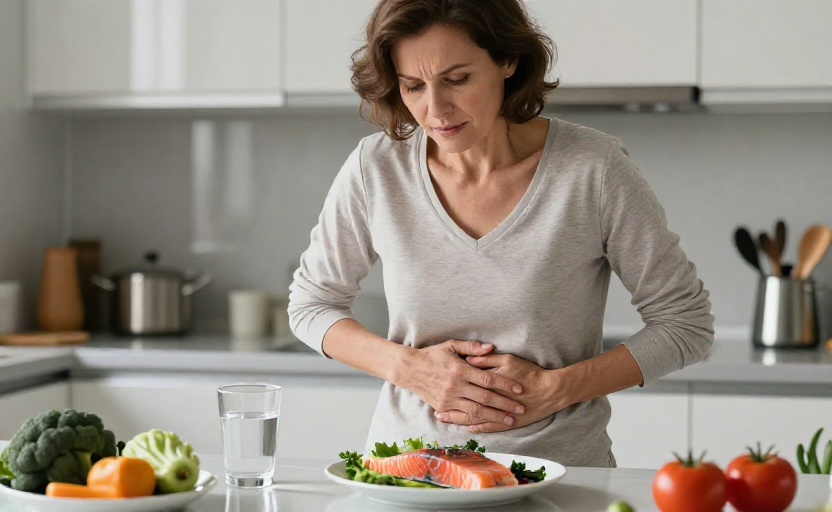
For many women, the bloating that comes with menopause is one of the most frustrating and physically uncomfortable symptoms. It can make your clothes feel tight, your abdomen distended, and your energy level low. While hormonal shifts are the root cause, the foods you eat can either worsen that puffiness or help calm it down. Here is a practical, expert-backed guide to managing menopause bloating through targeted diet changes.
The key is to understand that bloating during perimenopause and menopause is often driven by a combination of water retention and gas. Fluctuating estrogen and progesterone affect how your body handles sodium and digests certain carbohydrates. The good news? Small, consistent tweaks to what is on your plate can make a significant difference.
Why Menopause Makes You Feel Puffy
Before you change your grocery list, it helps to know what is happening inside. Estrogen helps regulate fluid balance. When estrogen levels drop, your body may hold onto more sodium and water. At the same time, progesterone—which helps keep digestion moving—declines, leading to slower gut transit. This combination means more water retention and more gas buildup from food that sits longer in the digestive tract.
A simple shift: Focus on supporting your body's natural ability to flush out excess fluid and keep digestion running smoothly. That is where diet comes in.
Cut Back on Sodium (But Keep the Flavor)
This is the most direct dietary lever for reducing water retention. Processed foods, restaurant meals, and even some healthy-looking soups are loaded with sodium. Your goal is not to eat bland food—it is to cook more meals from scratch using herbs, citrus, and spices instead of salt.
- Swap salty snacks for fresh fruit, raw vegetables, or unsalted nuts.
- Read labels on canned beans, broths, and salad dressings—choose low-sodium versions.
- Add potassium-rich foods like bananas, avocados, sweet potatoes, and spinach. Potassium helps counteract sodium and encourages your kidneys to excrete excess fluid.
Boost Your Potassium and Magnesium Intake
Both minerals play a starring role in fluid balance. Magnesium, in particular, can help reduce bloating by relaxing the muscles in your digestive tract and preventing constipation. Foods rich in magnesium include leafy greens, nuts, seeds, and dark chocolate. Potassium-rich choices include citrus fruits, tomatoes, and white beans.
Eat More Soluble Fiber (But Go Slow)
Fiber is essential for regular bowel movements, which helps prevent the backup that contributes to bloating. However, a sudden increase in high-fiber foods like beans or broccoli can actually cause more gas. The trick is to prioritize soluble fiber, which absorbs water and forms a gel-like consistency in the gut.
- Good sources: Oats, barley, apples (with the skin), carrots, and psyllium husk.
- Increase fiber gradually over a few weeks, and drink plenty of water alongside it to help it move through your system.
Identify and Reduce Trigger Foods
Some foods are notorious for causing gas and distention, especially in a slower digestive system. You do not need to eliminate them forever, but try reducing portion sizes or pairing them with easier-to-digest foods.
- Cruciferous vegetables: Broccoli, cauliflower, cabbage, and Brussels sprouts. Try cooking them thoroughly rather than eating them raw.
- Beans and lentils: Soaking dried beans overnight and discarding the water before cooking can reduce the gas-causing compounds.
- Carbonated drinks: The bubbles are trapped air—skip soda and sparkling water when bloating is bad.
- Artificial sweeteners: Sorbitol and other sugar alcohols found in sugar-free gum and some snacks can cause significant gas.
Watch Out for FODMAPs
If bloating is a persistent problem, consider a low-FODMAP diet for a short trial. FODMAPs are short-chain carbohydrates that are poorly absorbed in the small intestine and ferment in the colon, producing gas. Common high-FODMAP foods include wheat, onions, garlic, certain fruits (like apples and pears), and dairy. Working with a dietitian for a few weeks can help you identify which specific foods trigger your bloating without cutting out too many nutrients.
Hydrate Strategically
It may seem counterintuitive to drink more water when you already feel puffy, but dehydration actually makes your body hold onto more sodium and water. Aim for consistent, moderate hydration throughout the day. Herbal teas like peppermint or ginger can also help soothe the digestive tract and reduce gas.
One caveat: Avoid drinking large amounts of water with meals, as this can dilute stomach acid and slow digestion. Instead, sip between meals.
Consider Probiotics and Fermented Foods
A healthy gut microbiome helps break down food more efficiently, reducing gas and bloating. Incorporate a serving of fermented food daily: plain yogurt, kefir, sauerkraut, kimchi, or kombucha. If you choose a probiotic supplement, look for one that contains strains like Lactobacillus and Bifidobacterium, which have been studied for digestive comfort.
Sample Day to Minimize Bloating
Here is what a low-bloat day might look like:
- Breakfast: Oatmeal made with water or lactose-free milk, topped with sliced banana and a sprinkle of cinnamon.
- Lunch: Grilled chicken salad with mixed greens, cucumber, bell peppers, and a lemon-herb vinaigrette (skip the raw onion and garlic).
- Snack: A small handful of unsalted almonds and an orange.
- Dinner: Baked salmon with roasted carrots and a side of steamed white rice (easier to digest than brown rice when bloating is an issue).
- Beverages: Water throughout the day, plus a cup of peppermint tea after dinner.
Managing menopause bloating is not about a restrictive diet—it is about making informed swaps that support your body's changing needs. By cutting back on sodium, prioritizing potassium and magnesium, and identifying your personal trigger foods, you can significantly reduce that uncomfortable, puffy feeling.