That sudden, fluttering sensation in your chest—a skipped beat, a hard thump, or a feeling that your heart is racing for no reason. Occasional heart palpitations are a common experience, and while they can be startling, they’re often not a sign of something serious. Understanding what’s happening and having a few simple, grounded strategies at your fingertips can help you find your calm again.
Palpitations are essentially an awareness of your own heartbeat. You might feel it in your chest, throat, or neck. They can be triggered by stress, anxiety, caffeine, dehydration, or even hormonal shifts. The goal isn’t to panic, but to gently guide your body back to its natural rhythm. The following approaches are rooted in calming the nervous system and addressing common triggers, offering you a practical toolkit for those unsettling moments.
First, Pause and Breathe
When palpitations begin, the instinct is often to tense up, which can signal your body to release more stress hormones. The single most powerful thing you can do is interrupt that cycle with your breath. Deep, slow breathing activates your parasympathetic nervous system—the part responsible for rest and digestion—and tells your body it’s safe to calm down.
Try the 4-7-8 technique: inhale quietly through your nose for a count of 4, hold your breath for a count of 7, then exhale completely through your mouth for a count of 8. Repeat this cycle three or four times.
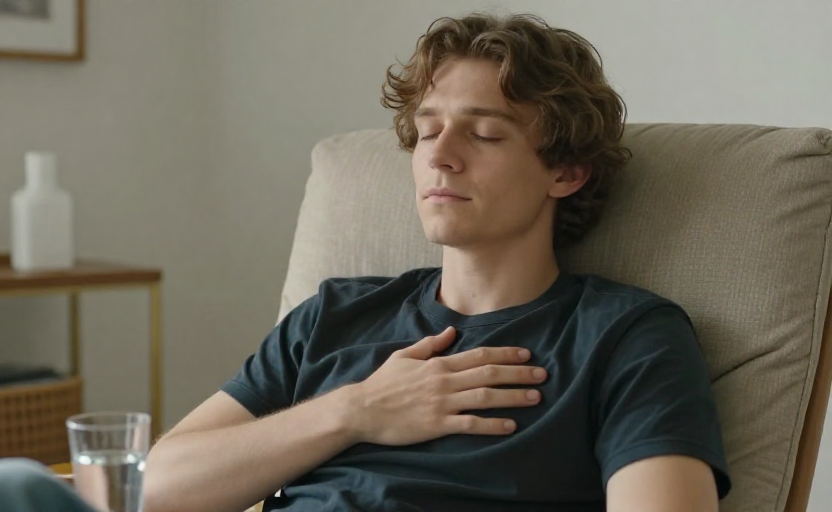
You don’t need a special technique, however. Simply focusing on making your exhalations longer than your inhalations can have a profound effect. Place a hand on your belly and feel it rise and fall. This simple act of mindful breathing shifts your focus away from the fear of the sensation and toward a concrete, calming action.
Hydrate, Simply and Steadily
Dehydration is a surprisingly frequent culprit behind palpitations. When your body is low on fluids, your blood volume can drop, making your heart work harder to pump blood. This can lead to irregular beats or a feeling of a pounding heart.
Reach for a glass of cool water and sip it slowly. Avoid gulping large amounts quickly, as this can sometimes trigger a reflex that might exacerbate palpitations in sensitive individuals. The aim is steady rehydration. If your palpitations are accompanied by strenuous activity or sweating, consider an electrolyte-rich drink to replenish minerals like potassium and magnesium, which are crucial for heart rhythm.
Identify and Minimize Common Triggers
Often, palpitations are your body’s way of signaling that it’s encountered a stimulant or irritant. Becoming a casual detective about your own patterns can be incredibly helpful. Keep a mental note—or even a brief journal—of when palpitations occur. Ask yourself:
- Did I just have a large coffee, an energy drink, or dark chocolate?
- Am I feeling unusually stressed or anxious right now?
- Did I skip a meal or eat something very sugary?
- Have I consumed alcohol or nicotine recently?
- Am I overly tired or recovering from an illness?
For many, caffeine is a primary trigger. It doesn’t mean you must never enjoy your morning brew, but you might experiment with having it with food, switching to half-caff, or noticing if a second cup is your personal threshold. Similarly, managing stress through daily habits—like a short walk, gentle stretching, or limiting doom-scrolling—can reduce the overall background level of nervous system arousal that makes palpitations more likely.
Use Gentle Vagal Maneuvers
The vagus nerve is a major communication highway between your brain and heart. Certain gentle physical actions can stimulate this nerve and help slow a rapid heart rate. These are not intense exercises, but subtle techniques.
The Valsalva Maneuver
This is a classic method often suggested by cardiologists for specific types of rapid rhythms. Pinch your nose closed, close your mouth, and gently try to breathe out, as if you’re bearing down slightly. Hold this for 10-15 seconds. The change in chest pressure can stimulate the vagus nerve.
Cold Shock Response
Splashing very cold water on your face, or placing a cold, damp washcloth over your eyes and cheeks for 15-30 seconds, can trigger the “dive reflex,” which prioritizes blood flow to vital organs and slows heart rate. Holding an ice pack to the center of your chest can have a similar, direct calming effect.
When to Shift from Home Care to Professional Care
While the strategies above are excellent for managing occasional, brief palpitations without other symptoms, it’s crucial to recognize when a different response is needed. Your awareness is your best safeguard.
Seek prompt medical attention if palpitations are accompanied by:
- Chest pain, pressure, or discomfort
- Severe shortness of breath
- Dizziness, lightheadedness, or feeling faint
- Palpitations that start suddenly and don’t settle quickly with calm breathing
It’s also wise to discuss any new, frequent, or worrying palpitations with your doctor. They can help rule out underlying conditions, provide reassurance, and may suggest monitoring like an ECG or a Holter monitor to capture your heart’s rhythm during an episode. This information is invaluable for getting a clear picture and peace of mind.
Ultimately, the power of these home strategies lies in their simplicity and their focus on restoring balance. They empower you to move from a place of fear to a place of agency. By calming your nervous system, hydrating, minding your triggers, and knowing when to call for help, you build a compassionate and effective response to your body’s occasional, quirky signals.