When the days grow short and sunlight becomes a scarce commodity, many of us feel the shift in more than just the temperature. A persistent low mood, a lack of energy, and a craving for carbohydrates can be more than just the "winter blues." For those with Seasonal Affective Disorder (SAD), this annual pattern is a significant clinical reality. Fortunately, one of the most well-researched and effective treatments doesn't come in a pill bottle—it comes from a light box.
Light therapy, or phototherapy, is a first-line treatment recommended by experts for managing the symptoms of seasonal depression. It's a simple concept with profound implications: by exposing yourself to a bright, artificial light that mimics natural sunlight, you can help reset your internal body clock and improve your mood. But not all light is created equal, and how you use it matters deeply for both safety and effectiveness.
How Does Light Therapy Work for Seasonal Depression?
The core idea behind light therapy is to compensate for the reduced natural sunlight we receive during fall and winter. This lack of light is believed to disrupt our circadian rhythms—the 24-hour internal clock that regulates sleep, mood, and hormone production. Specifically, it can cause a shift in melatonin, the sleep hormone, and serotonin, a neurotransmitter linked to mood.
By sitting in front of a specially designed light therapy lamp first thing in the morning, you signal to your brain that the day has begun. This helps normalize your circadian rhythm, suppress out-of-sync melatonin production, and boost serotonin activity. The result for many is a lift in energy, an improvement in mood, and a reduction in the excessive sleepiness and carbohydrate cravings often associated with SAD.
Choosing the Right Light Therapy Device
Walking down the wellness aisle or browsing online can present a dizzying array of options. To ensure you're getting a device that is both safe and likely to be effective, look for these key features.
Light Intensity (Lux): This is the most critical specification. Clinical research typically uses light boxes that emit 10,000 lux of cool-white fluorescent light. You can find effective devices at lower intensities (like 2,500 lux), but they require longer daily exposure times to deliver a comparable dose.
UV Filtering: A quality light therapy box must filter out virtually all ultraviolet (UV) light. UV rays are harmful to your eyes and skin, and they are not necessary for the therapeutic effect on seasonal depression. Always verify the product states it is UV-free.
Size and Angle: A larger surface area is generally better. It allows for more diffuse, comfortable light that enters your field of vision indirectly, which is both more effective and easier on the eyes than staring directly into a small, bright point.
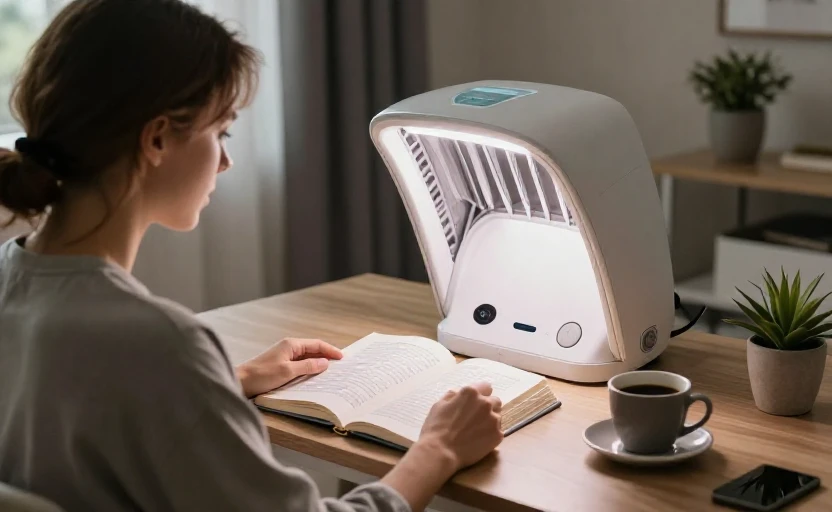
Think of your light therapy session as receiving ambient daylight at your desk, not staring into a spotlight.
An Expert-Backed Strategy for Using Your Light Box
Consistency and correct technique are what transform a simple lamp into a therapeutic tool. Follow these guidelines to build an effective routine.
Timing is Everything: Morning use is universally recommended. Aim for a session within the first hour of waking up. This timing is crucial for resetting your circadian rhythm most effectively. Using a light box too late in the day can lead to evening insomnia.
Distance and Position: Follow the manufacturer's instructions for optimal distance, usually 16 to 24 inches from your face. You do not need to look directly at the light. Position it slightly off to the side and angle it so the light reaches your eyes indirectly while you read, eat breakfast, or work at your computer.
Duration: A standard starting dose is 20 to 30 minutes of exposure to a 10,000-lux light box. If using a less intense model, you may need 45 minutes to 2 hours. Start with a shorter session and gradually increase to the full time over a few days to allow your eyes to adjust.
Make it a Daily Habit: For preventative and therapeutic benefits, daily use throughout the darker months is key. Many people start in early fall as the days shorten and continue until spring. You may begin to feel benefits within a few days to two weeks.
Important Safety Considerations and Side Effects
Light therapy is considered safe for most people when used correctly, but it's not without potential side effects and contraindications.
Some individuals may experience mild, temporary side effects as they adjust, such as eyestrain, headache, irritability, or feeling "wired." These often subside after a few days or can be mitigated by sitting slightly farther from the light or shortening initial sessions.
There are, however, important situations that require medical consultation before starting:
- If you have any pre-existing eye conditions (like glaucoma, cataracts, or retinal conditions).
- If you are taking medications that increase photosensitivity, such as certain antibiotics, antipsychotics, or herbal supplements like St. John's Wort.
- If you have a diagnosis of bipolar disorder, as light therapy could potentially trigger a manic episode.
It is always advisable to discuss starting light therapy with a healthcare provider, particularly if you have any underlying health conditions. They can help you determine if it's appropriate for you and integrate it with other aspects of your care.
Light therapy stands as a powerful, non-invasive tool grounded in decades of research. By understanding the why and how—choosing the right device, using it strategically in the morning, and respecting safety guidelines—you can harness the power of light to navigate the darker seasons with greater resilience and well-being. It’s a daily ritual that offers a tangible beam of support, helping to brighten your internal landscape when the external world grows dim.