When stress hits, it’s tempting to reach for the nearest bag of chips or sleeve of cookies. That craving isn’t just in your head—it’s a physiological response. Stress triggers cortisol, which can spike blood sugar and drive cravings for quick, high-energy foods. The problem is, that sugary or ultra-processed snack often leads to a crash, leaving you feeling more irritable and fatigued than before.
The good news is that you can use food to your advantage. By choosing snacks with specific nutrients, you can help buffer your body’s stress response, stabilize your energy, and support a calmer, more balanced mood. It’s not about a magic bullet, but about giving your brain and body the building blocks they need to cope.
What makes a snack “mood-stabilizing”?
Think of a mood-stabilizing snack as one that avoids the dramatic peaks and valleys in blood sugar. Steady glucose levels mean steady energy for your brain, which is crucial for emotional regulation. The ideal combination includes fiber, healthy fats, and protein. This trio slows digestion, provides sustained energy, and supports the production of neurotransmitters like serotonin, which influences mood.
Specific nutrients play starring roles. Magnesium, found in nuts and seeds, helps regulate the nervous system. Omega-3 fatty acids, present in walnuts and chia seeds, are anti-inflammatory and support brain health. Antioxidants from berries and dark leafy greens combat oxidative stress, which is heightened during anxious times.
Simple snacks to have on hand
You don’t need a complicated recipe. The best snacks are easy to assemble, even when you’re short on time and mental bandwidth.
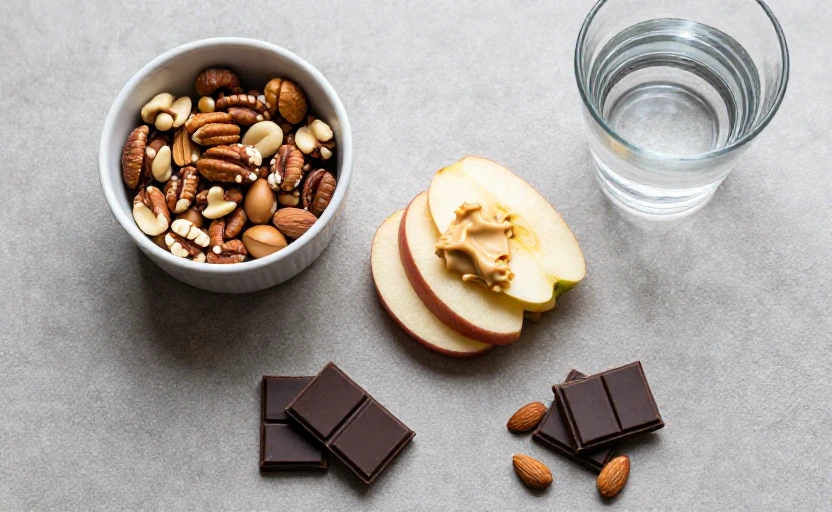
A handful of almonds and a few squares of dark chocolate. The almonds provide protein, healthy fat, and magnesium. The dark chocolate (aim for 70% cocoa or higher) contains flavonoids and can feel like a mindful treat, which is itself a mood booster.
Greek yogurt with berries and a sprinkle of chia seeds. Greek yogurt is packed with protein and probiotics, which are linked to gut health—and a healthy gut is increasingly connected to a healthy mood. Berries add fiber and antioxidants, while chia seeds contribute omega-3s.
Apple slices with almond or peanut butter. The apple offers fiber and a satisfying crunch, while the nut butter provides protein and fat to keep you full and focused. This classic combo is a reliable way to sidestep a mid-afternoon slump.
When stress eating feels inevitable, pause for one breath. Ask yourself: “Will this food make me feel better in 20 minutes?” That moment of mindfulness can guide you toward a more nourishing choice.
Building a snack strategy for stressful days
Planning is half the battle. On a less chaotic day, take ten minutes to prep a few options. Wash and cut vegetables, portion out nuts into small containers, or hard-boil a few eggs. Having these ready-to-go options makes the nourishing choice the easy choice when pressure mounts.
Hydration is also part of the equation. Mild dehydration can mimic feelings of anxiety or fatigue. Keep a water bottle nearby, and consider herbal teas like chamomile or peppermint, which can be soothing rituals in themselves.
Finally, remember the context. A snack is not just fuel; it’s a brief pause. Step away from your screen. Eat slowly. This small act of intentionality can interrupt the stress cycle and signal to your nervous system that it’s safe to dial down.
Foods to approach with caution
It’s not about strict rules, but about awareness. Highly processed snacks, sugary drinks, and refined carbs (like white bread or pastries) can cause rapid blood sugar spikes and crashes, potentially worsening irritability and anxiety. Caffeine in excess can also heighten feelings of jitteriness. This doesn’t mean you can never enjoy them, but being mindful of their effect can help you decide if they’re worth it in a moment of high stress.
The goal is steadiness. By choosing snacks that provide balanced, sustained energy, you’re not just feeding your hunger—you’re supporting your resilience, one bite at a time.