Your menstrual cycle is more than just your period. It’s a monthly rhythm, a vital sign of your overall health, and a complex interplay of hormones that influences everything from your energy to your mood. Understanding its phases isn't just about tracking fertility; it's about connecting with your body's natural patterns and recognizing what they can tell you about your well-being.
This guide walks you through the four key phases of a typical cycle, the symptoms you might experience, and how to observe these changes as meaningful health markers. Think of it as learning the language of your own body.
What are the four phases of the menstrual cycle?
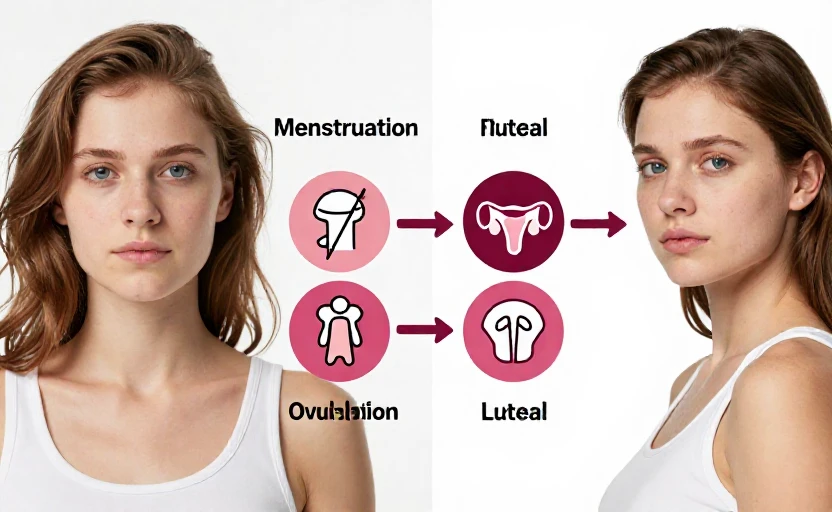
The menstrual cycle is commonly divided into four phases, each driven by distinct hormonal shifts. While the classic cycle is 28 days, a healthy range is typically between 21 and 35 days. Your unique rhythm is what matters most.
Menstrual Phase (Days 1-5, approximately)
This phase begins on the first day of full bleeding. Your body is shedding the uterine lining (endometrium) that built up during the previous cycle. Estrogen and progesterone levels are at their lowest, which can lead to symptoms like cramps, fatigue, and low back pain for some. It’s a time of release and renewal.
Your period is the most visible sign of your cycle, but it's just one chapter in a longer story.
Follicular Phase (Days 1-13, approximately)
This phase overlaps with menstruation. As you bleed, your brain's pituitary gland releases Follicle-Stimulating Hormone (FSH), which signals your ovaries to prepare several follicles (each containing an egg). One will become dominant. Rising estrogen levels help rebuild the uterine lining and often bring a surge in energy and mood as this phase progresses.
Ovulation (Day 14, approximately in a 28-day cycle)
This is the main event. A spike in Luteinizing Hormone (LH) triggers the release of the mature egg from its follicle. Ovulation is a brief window, usually 12-24 hours. Estrogen peaks right before, and you might notice clear, stretchy cervical mucus (often likened to egg whites) and a slight increase in basal body temperature afterward. Some feel a mild twinge or cramp on one side.
Luteal Phase (Days 15-28, approximately)
After releasing the egg, the empty follicle transforms into the corpus luteum, which produces progesterone. This hormone's job is to maintain and nourish the uterine lining in case of pregnancy. If pregnancy doesn't occur, the corpus luteum disintegrates, progesterone and estrogen levels fall, and the cycle begins anew with menstruation. This phase is typically the most consistent in length (around 14 days).
What symptoms are normal throughout the cycle?
Your hormones are messengers, and their fluctuations can create a symphony of physical and emotional sensations. Recognizing which are typical can help you distinguish normal patterns from potential concerns.
- Menstrual Phase: Cramping, bloating, breast tenderness, fatigue, headache, lower backache, and mood changes are common due to prostaglandins and low hormone levels.
- Follicular Phase: Energy often increases. Cervical mucus becomes wetter. Mood typically lifts as estrogen rises.
- Ovulation: Clear, stretchy cervical mucus, a slight rise in basal body temperature, increased libido, and possible mittelschmerz (ovulation pain).
- Luteal Phase: Progesterone can cause symptoms like breast tenderness, bloating, mood swings, food cravings, and acne. In the days just before your period, these may intensify into Premenstrual Syndrome (PMS).
It’s the pattern and severity of symptoms that matter. Severe pain, extremely heavy bleeding, or mood changes that disrupt your daily life warrant a conversation with a healthcare provider.
Using your cycle as a health marker
Your cycle is a powerful barometer. Tracking it consistently—noting the start and end of your period, physical symptoms, energy levels, and mood—can reveal invaluable insights.
Cycle Regularity: Consistent cycles (even if they are 32 days every time) generally indicate regular ovulation and hormonal balance. Highly irregular, absent, or very frequent cycles can signal underlying conditions like Polycystic Ovary Syndrome (PCOS), thyroid disorders, or high stress levels.
Bleeding Patterns: Note the flow. Needing to change a pad or tampon more than every 1-2 hours, passing large clots, or bleeding for more than 7 days may indicate issues like fibroids or hormonal imbalances. Very light bleeding could also be meaningful.
Symptom Clues: Severe pain (dysmenorrhea) isn't something you must simply endure; it can be associated with conditions like endometriosis. Tracking when symptoms occur helps your provider make a more accurate assessment.
Your cycle data is a conversation starter with your doctor, providing concrete clues about your hormonal health.
You can track using a simple calendar, a notes app, or a dedicated cycle-tracking app. The goal is observation, not judgment—learning your body's unique rhythm.
When to seek guidance
While variations are normal, certain patterns suggest it’s time to consult a healthcare professional. These include:
- Cycles consistently shorter than 21 days or longer than 35 days.
- Missing three or more periods in a row when not pregnant, breastfeeding, or in menopause.
- Extremely heavy bleeding that soaks through a pad/tampon in an hour for several hours.
- Severe pain that prevents normal activity.
- Bleeding between periods or after sex.
- Any sudden, dramatic change in your usual cycle pattern.
Understanding your cycle empowers you to participate actively in your healthcare. It turns a monthly occurrence into a source of knowledge, helping you advocate for your body and well-being with greater clarity and confidence.