For many people who menstruate, the question of what constitutes a "normal" amount of blood loss can be a source of quiet uncertainty. We’re often left comparing notes with friends or relying on vague cultural cues, which rarely provide a clear, medically-informed picture. Understanding the spectrum of menstrual flow is more than just a matter of curiosity—it’s a fundamental aspect of recognizing your body’s health signals.
This guide walks through the practical ways to gauge your flow, distinguish between typical variation and clinically heavy bleeding, and know when a conversation with a healthcare provider is the next wise step.
How much blood loss is typical during a period?
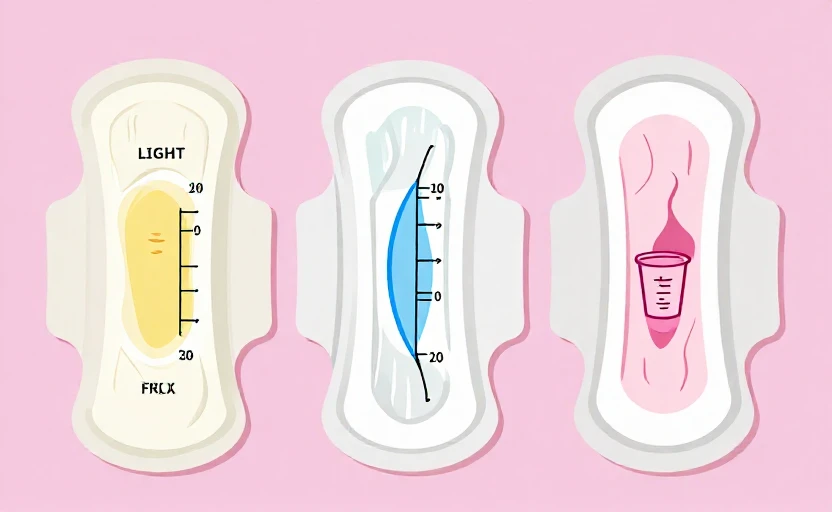
The average menstrual period results in a total blood loss of about 30 to 40 milliliters (mL), or roughly two to three tablespoons, over its entire course. It’s common for this amount to vary, with anything up to 80 mL generally considered within the normal range. For context, a fully saturated regular tampon or pad holds about 5 mL of blood.
Most periods last between three to seven days, with the heaviest flow typically occurring in the first day or two. It’s the pattern of your cycle—its regularity, duration, and how the flow feels to you—that often matters as much as the precise volume.
Think of your typical period as a baseline. A significant, persistent change in that baseline is often more telling than comparing your experience to a statistical average.
What does "heavy menstrual bleeding" actually mean?
In medical terms, heavy menstrual bleeding—also called menorrhagia—is defined as blood loss exceeding 80 mL per cycle. Since most of us aren’t measuring with a cup, this definition translates to more practical, observable signs:
- Needing to change your pad or tampon every 1-2 hours for several consecutive hours.
- Passing blood clots that are larger than a quarter.
- Bleeding that lasts longer than seven days.
- Needing to use double protection (like a tampon and a pad together) to control the flow.
- Experiencing fatigue, shortness of breath, or other signs of anemia, which can result from significant iron loss.
Heavy bleeding can disrupt daily life, causing anxiety about leaks, limiting activities, and impacting overall well-being.
How can I practically track my flow at home?
You don’t need a laboratory to get a reasonable sense of your flow. Simple observation is a powerful tool. Pay attention to:
- Product saturation: How often are you changing your pad, tampon, or menstrual cup? Note if you’re soaking through protection in short intervals.
- Clot size: Occasional small clots are normal. Frequent, large clots (bigger than a quarter) can indicate heavier flow.
- Impact on life: Are you planning your schedule around bathroom breaks? Do you avoid certain activities or outings due to fear of leakage?
Using a menstrual cup with volume markings can provide the most direct measurement. Alternatively, many period-tracking apps now include features to log flow intensity, which can help you identify patterns over several cycles.
What are common causes of heavier-than-usual bleeding?
Variations in flow are part of many healthy cycles, but persistent heavy bleeding often has an underlying cause. These can include:
Hormonal fluctuations
Imbalances in estrogen and progesterone, which regulate the uterine lining, are a frequent cause. This is common during perimenopause, after childbirth, or in conditions like polycystic ovary syndrome (PCOS).
Uterine structural factors
Non-cancerous growths like fibroids or polyps can increase the surface area of the uterine lining or interfere with normal uterine contraction, leading to heavier bleeding.
Medical conditions
Certain bleeding disorders, thyroid problems, or conditions like endometriosis or adenomyosis (where uterine-like tissue grows into the muscle wall) can be contributing factors.
It’s crucial to remember that while these are common associations, only a healthcare professional can diagnose the specific cause for you.
When should I talk to a doctor or gynecologist?
Seeking medical advice is recommended if you notice any of the following:
- You consistently soak through a pad or tampon every hour for two or more hours in a row.
- Your period lasts more than seven days.
- You need to set an alarm at night to change your protection.
- You pass large blood clots frequently.
- You experience symptoms of anemia, such as extreme fatigue, dizziness, or pale skin.
- Heavy bleeding is limiting your daily activities or causing significant anxiety.
- You have bleeding between periods or after menopause.
Preparing for your appointment can be helpful. Consider tracking your symptoms for a cycle or two—note the days of heavy flow, product use, and any associated pain or fatigue. This concrete information gives your provider a clearer picture than a general description.
What might I expect during an evaluation?
A healthcare provider will typically start with a detailed conversation about your menstrual history and symptoms. They may then suggest one or more of the following to help determine a cause:
- Blood tests: To check for anemia, thyroid function, and clotting disorders.
- Pelvic exam: A physical examination.
- Ultrasound: A non-invasive imaging test to look for fibroids, polyps, or other structural issues.
- Endometrial biopsy: A minor procedure to take a small sample of the uterine lining for analysis, often considered if you are over 45 or have specific risk factors.
The goal of this evaluation is not to alarm, but to understand. A clear diagnosis is the first step toward effective management, which can range from hormonal medications to minimally invasive procedures, all tailored to your individual needs and reproductive goals.
Understanding your menstrual flow demystifies a core aspect of your health. By moving from guesswork to informed observation, you empower yourself to recognize what’s normal for your body and to seek support confidently when something changes.