You wake up, shuffle to the bathroom, and wrap the blood pressure cuff around your arm. The number flashes on the screen, a metric that can feel like a verdict on your health. If that morning reading is often higher than you’d like, it’s natural to wonder what you can do. While genetics and underlying conditions play a role, the hours before bed hold more power over your morning numbers than you might think.
Your body doesn’t simply shut off at night. It’s engaged in a complex, restorative process that sets the stage for the next day. The choices you make in the evening—what you consume, how you wind down, even the light in your room—can directly influence your nervous system, blood vessels, and hormones, culminating in that first reading of the day. Understanding this connection is the first step toward more supportive habits.
Why does morning blood pressure matter?
For many people, blood pressure follows a natural rhythm, or circadian pattern. It typically dips during sleep, reaching its lowest point in the middle of the night. In the early morning hours, as the body prepares to wake, it begins to rise. This morning surge is a normal physiological event, driven by a cascade of hormones like cortisol and adrenaline.
However, when this surge is exaggerated, it becomes a concern known as “morning hypertension.” This period is associated with a higher risk of cardiovascular events like heart attack and stroke. The goal of healthy evening habits isn’t to eliminate the natural surge, but to prevent it from becoming an unhealthy spike, creating a gentler, more controlled rise as you start your day.
The evening habits that set the tone for morning
Think of your evening routine as preparing your body’s internal environment for repair and reset. Disruptions to this environment can keep your nervous system in a subtle state of alert, affecting blood pressure regulation overnight and into the morning.
What you consume in the hours before bed
Your last meal or snack is more than just fuel; it’s a set of instructions for your digestive and cardiovascular systems. A large, heavy, or salty meal too close to bedtime forces your body to work on digestion when it should be winding down. This can keep your heart rate elevated and your blood vessels under strain.
Sodium is a particular culprit. It encourages your body to retain fluid, increasing the volume of blood your heart must pump. That extra workload can translate directly to higher pressure readings the next morning. Similarly, while a nightcap might feel relaxing, alcohol can disrupt sleep architecture and lead to rebound increases in heart rate and blood pressure later in the night.
Even caffeine sensitivity matters here. A late-afternoon coffee might still be circulating in your system at bedtime, potentially interfering with deep sleep and contributing to a more reactive state in the morning.
How you wind down (or don’t)
The transition from day to night is crucial. If you go straight from a stressful work task or an intense drama series to trying to fall asleep, your sympathetic nervous system—the “fight or flight” branch—may remain engaged. This system tightens blood vessels and increases heart rate, the opposite of what you want for restful sleep and a calm morning.
Screen time is a major modern disruptor. The blue light emitted by phones, tablets, and TVs can suppress the production of melatonin, the hormone that signals sleepiness. Beyond the light, the content itself—be it work emails, news, or social media—can provoke stress or anxiety, activating those same cardiovascular responses.
Your sleep environment and quality
Poor sleep and high blood pressure have a bidirectional relationship; each can worsen the other. Conditions like sleep apnea, characterized by repeated breathing interruptions, are strongly linked to hypertension. Each apnea episode causes a sudden drop in blood oxygen, jolting the nervous system and spiking blood pressure.
Even without apnea, fragmented, low-quality sleep prevents the nocturnal “dipping” of blood pressure. Your body misses its essential repair window, leaving it in a state of stress by morning. Factors like a room that’s too warm, too noisy, or too bright can all chip away at sleep quality.
Practical steps for a more supportive evening
This isn’t about a complete lifestyle overhaul overnight. Small, consistent shifts can yield meaningful changes in how your body prepares for the morning.
- Establish a buffer zone. Aim to finish eating 2-3 hours before bed. If you need a snack, choose something small and balanced, like a few almonds or a piece of fruit. Be mindful of hidden sodium in processed foods, sauces, and bread.
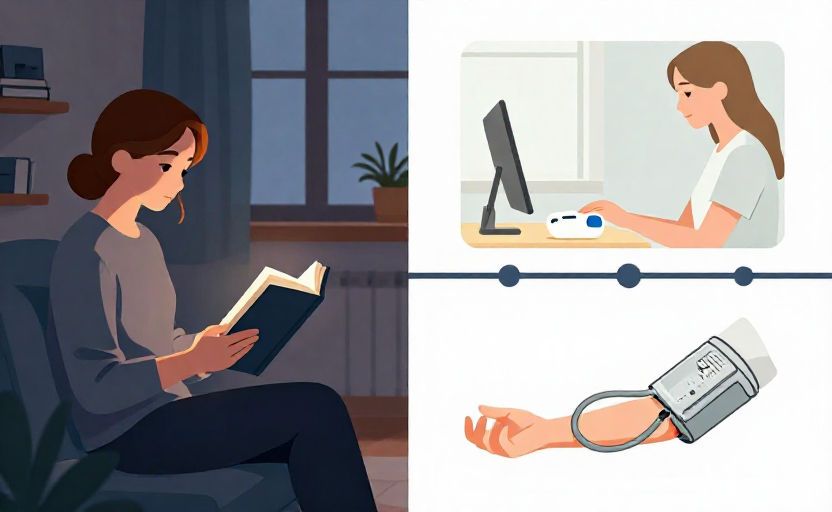
- Create a wind-down ritual. Dedicate the last 30-60 minutes before bed to calming activities. This could be reading a physical book (not an e-reader with a backlight), listening to gentle music or a podcast, light stretching, or practicing a few minutes of deep breathing or meditation.
- Manage light and tech. Use blue-light filters on devices in the evening, or better yet, charge your phone outside the bedroom. Dim the lights in your home as bedtime approaches to naturally cue melatonin production.
- Optimize your sleep space. Aim for a cool, dark, and quiet room. Consider blackout curtains, a white noise machine, or earplugs if needed. A consistent sleep and wake time, even on weekends, helps regulate your body’s internal clock.
If you consistently snore loudly, gasp for air at night, or wake feeling unrefreshed despite adequate time in bed, discussing the possibility of sleep apnea with a healthcare provider is a critical step.
Tracking and patience
Changes in blood pressure patterns don’t always happen immediately. Keeping a simple log can be illuminating. Note your evening activities (e.g., “late dinner,” “30-min walk,” “watched stressful news”) alongside your morning blood pressure reading. Over a few weeks, you may begin to see patterns emerge, showing you what works best for your body.
Remember, these lifestyle approaches work in concert with any medical treatment you may be following. They are foundational supports, not replacements for professional care. By tending to your evenings with a little more intention, you’re giving your body the best chance to wake up with a calmer, steadier rhythm.