Coming off birth control can feel like a shift for your entire system. For many women, one of the more confusing changes is the sudden appearance of ovarian cysts. You might wonder why your body is doing something new—or if something is wrong. The short answer is that cysts after stopping birth control are very common, and in most cases, they are a normal sign that your ovaries are waking back up.
Here’s a straightforward look at the mechanics behind it, what you can expect, and when to check in with your doctor.
What birth control does to your ovaries
To understand why cysts form after you stop, it helps to first understand how hormonal birth control changes your natural cycle. Combination pills, the patch, the ring, and hormonal IUDs all work, in part, by suppressing ovulation. They do this by delivering steady levels of synthetic hormones—primarily estrogen and progestin—that tell your pituitary gland not to release the signals that trigger an egg to mature and be released.
Think of your ovaries as being in a quiet, low-activity state while you are on birth control. The follicles that normally grow each month stay small and dormant. Without ovulation, there is no dominant follicle that swells, releases an egg, and then turns into the corpus luteum. For many women, this means fewer cysts during the time they are on contraception.
The “rebound effect” after stopping
When you stop taking hormonal birth control, your body’s natural hormonal system turns back on. Your pituitary gland begins releasing follicle-stimulating hormone (FSH) and luteinizing hormone (LH) again. Your ovaries respond by ramping up activity. This transition is often called the post-pill rebound.
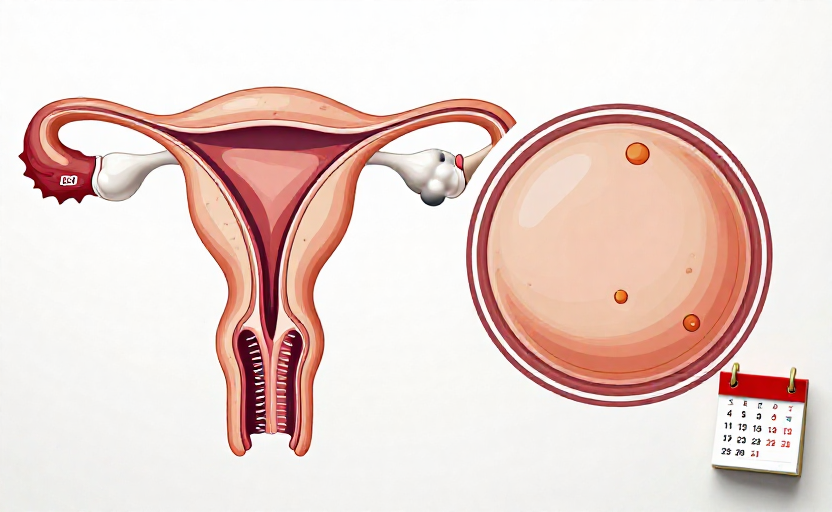
During the first few cycles off birth control, your ovaries may be a little over-enthusiastic. Instead of selecting just one dominant follicle to mature and ovulate, they might stimulate several follicles to grow at once. These follicles can swell into small, fluid-filled sacs called functional cysts. There are two main types:
- Follicular cysts – These form when a follicle grows larger than normal but doesn't release an egg. It simply keeps filling with fluid.
- Corpus luteum cysts – If ovulation does occur, the follicle normally deflates and becomes the corpus luteum. If that structure fills with fluid instead of dissolving, it turns into a cyst.
Functional cysts are the body’s way of recalibrating. In most cases, they are benign and resolve on their own within a few weeks or months—without any treatment.
How common are cysts after birth control?
Functional cysts are the most common type of ovarian cyst for all women of reproductive age, but research suggests they happen more frequently in the months right after discontinuing hormonal contraception. It is not a sign of disease. It is a sign that your ovulation cycle is returning to its normal rhythm. For some women, this may mean a few cycles with minor discomfort or pressure on one side of the lower abdomen. For others, the cysts may come and go without any noticeable symptoms.
Good to know: Most functional cysts measure less than 2 inches across. They rarely require medical intervention. Your body absorbs the fluid and the sac shrinks over time.
When cysts are not just “functional”
While the vast majority of post-pill cysts are functional, stopping birth control can also reveal underlying conditions that were masked by the hormones. The most relevant one is polycystic ovary syndrome (PCOS). Women with PCOS tend to have many small follicles on their ovaries—sometimes mistaken for cysts—and irregular ovulation. Because birth control keeps those follicles dormant, the condition may go unnoticed until a woman stops the pill and her cycles become irregular or anovulatory.
If your cycles do not regulate within three to six months of stopping birth control, or if you experience ongoing missed periods, excessive hair growth, or acne, it may be worth talking to your provider about whether PCOS is a factor.
Signs that a cyst might need attention
Even though most cysts are harmless, severe or sudden pain is not something to ignore. You should seek medical care if you experience:
- Sudden, sharp pain in the lower belly or pelvis
- Pain accompanied by nausea, vomiting, or fever
- Feeling faint or dizzy
- Pain that does not improve with rest or over-the-counter pain relievers
These could be signs of a ruptured cyst, ovarian torsion (twisting), or another issue. While these complications are uncommon, they require immediate evaluation.
Does the type of birth control matter?
The risk of developing cysts after stopping may vary slightly depending on the method you used. Women who used progestin-only methods (like the mini-pill, implant, or hormonal IUD) often have more unpredictable bleeding and ovulation patterns when they stop, which can lead to cyst formation as well. Combination methods (estrogen + progestin) tend to suppress ovulation more completely, so the “wake-up” can be more noticeable. Either way, functional cysts are a possible response during the transition.
How long do post-pill cysts last?
Most functional cysts disappear within one to three menstrual cycles. As your hormonal axis returns to its pre-birth control state, your ovaries learn to grow, select, and release a single follicle again. The excess follicular activity settles down. If you have a cyst that persists beyond a few cycles or keeps growing, your doctor may want to monitor it with an ultrasound to rule out less common types of ovarian cysts (like dermoid cysts or cystadenomas), which are not related to the post-pill transition.
What helps manage discomfort from cysts
If you feel mild aching or pressure from a cyst, self-care at home can help. Gentle warmth from a heating pad on your lower belly can relax the muscles and ease discomfort. Over-the-counter anti-inflammatories, such as ibuprofen, can reduce inflammation. Staying well-hydrated and eating fiber-rich foods can also help if you feel bloated.
If you are trying to conceive after stopping birth control, know that having a functional cyst in one cycle does not typically prevent ovulation in the next cycle. Your ovaries take turns. Most women resume normal fertility within the first few months—often sooner than they expect.
When to talk to your gynecologist
It is always reasonable to check in with your healthcare provider if you are unsure what is normal. A general rule: if the pain is interfering with your daily life, or if you have gone more than three months off birth control without a period, it is worth a visit. Your doctor can order a pelvic ultrasound to see what is happening and put your mind at ease.
Bottom line: Ovarian cysts after stopping birth control are not a sign of trouble. They are your body’s natural response to resuming ovulation. In nearly every case, they resolve on their own and do not require intervention.