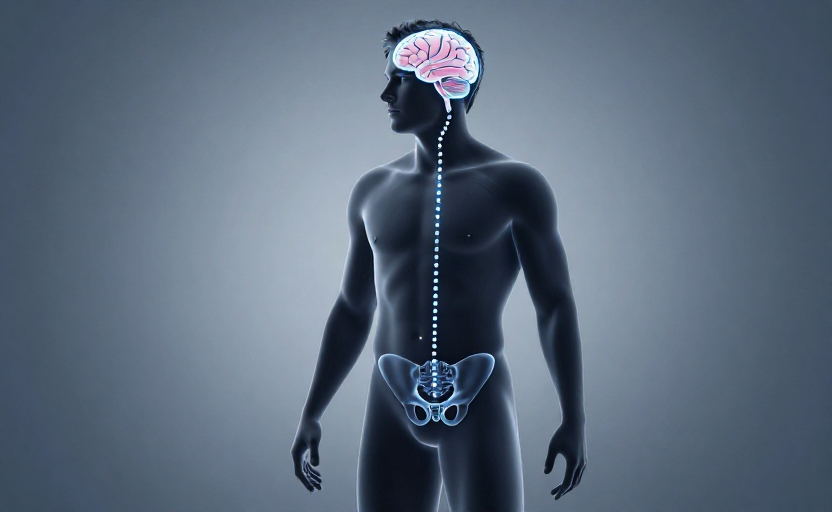
It is easy to think of erections as purely physical events — blood flow, nerves, hormones. But anyone who has experienced the spotlight effect of performance pressure knows that the mind can override the body in an instant. Sexual anxiety is one of the most common, yet least discussed, drivers of erectile difficulties. Understanding how it works is the first step to breaking the cycle.
When we talk about sexual anxiety, we are describing a specific kind of fear or worry that arises in sexual situations. It might be concern about pleasing a partner, fear of being judged, or past experiences that left a mark. For some men, even the anticipation of a sexual encounter triggers a cascade of stress hormones. And those hormones can directly interfere with the mechanism of an erection.
What happens in the body when sexual anxiety strikes?
The body's stress response — often called fight-or-flight — is governed by the sympathetic nervous system. When you feel anxious, your body releases adrenaline and cortisol. These hormones are excellent for running from a threat, but they are terrible for intimacy. They cause blood vessels to constrict, heart rate to spike, and blood to be redirected away from non-essential systems — including the penis.
An erection requires the opposite: a calm, parasympathetic state that allows the smooth muscles in the penile arteries to relax and fill with blood. Anxiety slams the brakes on that process. The result can be a partial erection, a rapid loss of erection, or difficulty achieving one at all. This is not a physical disorder like venous leak or arterial disease; it is a transient physiological response to a psychological trigger.
Sexual anxiety often creates a self-fulfilling loop: worry about performance leads to a loss of erection, which confirms the worry, which makes the next encounter even more loaded.
Seven ways sexual anxiety shows up as erectile warning signs
Not every instance of erectile difficulty is driven by anxiety, but certain patterns strongly point to a psychological origin. These signs often appear and disappear depending on context — for example, they might be present with a new partner but absent during masturbation or morning erections.
1. Inconsistent erection quality. If you can get a firm erection alone but struggle with a partner, anxiety is a likely culprit. The same applies if erections are fine on vacation but vanish under pressure at home.
2. Rapid loss of erection during sex. Anxiety can cause a sudden shift from arousal to stress mid-act, causing the erection to fade quickly — even if it started strong.
3. Difficulty reaching or maintaining an erection despite desire. You feel aroused and want to be sexual, but your body does not cooperate. This disconnection between mind and body is a classic anxiety signal.
4. Worry that begins hours or days before sex. Performance anxiety is not always in the moment. Some men experience anticipatory anxiety that builds for hours, flooding the system with cortisol before anything even starts.
5. Avoidance of sexual situations. When erectile difficulties happen once or twice, many men begin dodging intimacy to avoid the embarrassment. This avoidance is itself a strong warning sign of underlying sexual anxiety.
6. Racing thoughts during sex. Instead of being present, your mind is watching itself: Is it working? Is she enjoying it? What if I lose it? This internal commentary is a hallmark of spectatoring, a form of anxiety that sabotages arousal.
7. Guilt or shame after sex. Even when an encounter goes technically well, you may feel a wave of unease, self-criticism, or dread afterwards. That emotional hangover can feed future anxiety.
Why sexual repression and anxiety often travel together
Sexual repression — the inability to express or accept one's own sexual desires — is a potent source of anxiety. When you grow up with strict messages about sex being shameful, or you have had a bad sexual experience, those feelings do not simply disappear. They live in the background, surfacing as tension, guilt, or reluctance to engage fully.
According to gynecologist and obstetrician Dr. Aruna Kalra from CK Birla Hospital, Gurugram, people who are sexually repressed often have difficulty talking about sex with their partners. They may feel anxious after sex, which leads them to avoid it altogether. Over time, this creates a pattern of sexual absenteeism — and absenteeism compounds the anxiety.
Common roots of sexual repression include strict gender roles, confusion about sexual preferences, lack of sexual attraction to a partner, misinformation about sex, or a past traumatic sexual experience. Any of these can simmer beneath the surface and emerge as erectile issues later in life.
Can sexual anxiety alone cause long-term erectile dysfunction?
For most men, situational anxiety does not cause permanent physical damage. The erectile tissue and blood vessels remain functional. However, if anxiety-driven avoidance continues for months or years, secondary effects can set in. The penis, like any muscle group, benefits from regular oxygen-rich blood flow. Infrequent erections can lead to subtle tissue changes over time. Additionally, chronic stress raises cortisol levels, which over time can lower testosterone and reduce libido — creating a triple threat.
The good news is that anxiety-related erectile difficulties are highly treatable. Because the root is psychological, approaches that address the thought patterns and physical responses can often restore function without the need for medication.
Practical steps to break the anxiety–erection cycle
- Name the anxiety. Recognizing that your difficulty is likely anxiety-driven — not a sign of permanent dysfunction — can reduce the shame that fuels the loop.
- Shift focus from performance to sensation. Instead of aiming for intercourse, practice touch without a goal. This takes the pressure off and lets the body respond naturally.
- Talk to your partner. Dr. Kalra notes that people who are sexually repressed often find it hard to communicate. A simple confession — “I get nervous and it affects me physically” — can transform the dynamic.
- Consider therapy. A sex therapist or a therapist trained in cognitive behavioral therapy (CBT) can help untangle the beliefs and habits that keep anxiety in place.
- Address underlying repression. If you identify with the signs of sexual repression — guilt, shame, avoidance, faking happiness — working through those feelings with a professional can resolve both the emotional and the physical symptoms.
When to see a doctor
While anxiety is a common cause, erectile difficulties can also stem from medical issues such as cardiovascular disease, diabetes, hormone imbalances, or medications. A reasonable rule of thumb: if you have morning erections with some regularity, your physical plumbing is likely intact. But if erectile issues are persistent — whether anxiety is present or not — it is worth checking in with a healthcare provider to rule out underlying conditions.
Sexual anxiety does not have to define your sex life. The mind-body connection works both ways: just as thoughts can shut down an erection, changing your thoughts can help restore it. Understanding the warning signs is not about labeling yourself as broken — it is about recognizing that the system can be reset.