For many women with Polycystic Ovary Syndrome (PCOS), the midday meal can feel like a tightrope walk. You’re aiming for energy, satisfaction, and a sense of normalcy, all while trying to support your hormones and keep blood sugar from spiking. The good news is that a PCOS-friendly lunch doesn’t require a degree in nutrition or a radical overhaul of your life. It’s about building a simple, repeatable strategy that works with your body, not against it.
At its core, this approach focuses on the powerful combination of protein, fiber, and healthy fats. This trio works synergistically to slow the absorption of carbohydrates, leading to a gentler rise in blood sugar and insulin—a key factor in managing PCOS symptoms. It’s less about strict deprivation and more about thoughtful, nourishing assembly.
Why lunch matters for PCOS management
While every meal counts, lunch holds a unique position in your day. It’s often the meal where convenience can override intention, leading to choices that may disrupt your metabolic balance for the rest of the afternoon. A lunch that causes a rapid blood sugar spike can trigger fatigue, cravings, and brain fog, making it harder to stay on track later.
Consistently choosing lunches that promote stable glucose levels supports insulin sensitivity over time. This is foundational for PCOS, as improved insulin sensitivity can help regulate androgen levels, support ovulation, and reduce inflammation. Think of your lunch not just as a refueling stop, but as a daily opportunity to send a stabilizing signal to your endocrine system.
The building blocks of a stabilizing plate
Constructing your lunch becomes straightforward when you visualize your plate with these components in mind. Aim to include at least one element from each category to create a balanced, blood sugar-friendly meal.
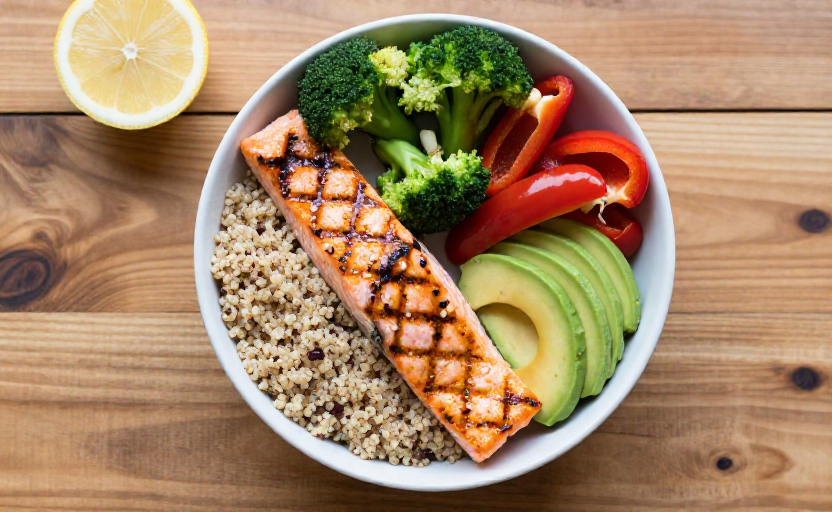
Quality Protein: Protein is essential for satiety and muscle maintenance, and it has a minimal impact on blood glucose. Options like grilled chicken, salmon, canned tuna or salmon, tofu, tempeh, lentils, chickpeas, or a couple of hard-boiled eggs are excellent foundations.
Non-Starchy Vegetables & Fiber: Fill at least half your plate with colorful, fibrous vegetables. They provide volume, nutrients, and crucial fiber that slows digestion. Think leafy greens, broccoli, bell peppers, cauliflower, zucchini, mushrooms, and green beans. A large salad or a hearty portion of roasted vegetables is perfect.
Healthy Fats: Fats add flavor, promote the absorption of fat-soluble vitamins, and further contribute to a feeling of fullness. Include a serving like a quarter of an avocado, a tablespoon of olive oil-based dressing, a small handful of nuts or seeds, or olives.
Smart Carbohydrates (optional, and mindful): If you include a carbohydrate, choose a high-fiber, complex option and keep the portion modest. A small sweet potato, a half-cup of quinoa or farro, or a slice of hearty, seeded sourdough can be part of a balanced plate. Listen to your body; some find they feel best including them, while others prefer to focus carbs at other meals.
The goal isn’t perfection, but consistency. A simple, balanced lunch you enjoy and can repeat is far more powerful than a "perfect" one you dread.
Putting the strategy into practice: simple lunch ideas
These ideas are templates, not recipes, designed for flexibility based on what you have on hand.
The Big Salad Bowl: Start with a massive bed of spinach and mixed greens. Top with a palm-sized portion of protein (leftover roasted chicken, chickpeas, or flaked salmon). Add a variety of chopped veggies (cucumber, tomato, red onion, shredded carrots). Sprinkle with pumpkin seeds and drizzle with a dressing made from olive oil, lemon juice, and herbs.
The Leftover Remix: Last night’s dinner is today’s best friend. Take leftover roasted vegetables and chicken, reheat, and add a dollop of pesto or a side of guacamole. Or, toss leftover quinoa with black beans, corn, diced peppers, and a lime-cilantro vinaigrette for a quick bowl.
The Hearty Soup: A broth-based soup packed with vegetables, beans, and lean protein is deeply satisfying. Think minestrone with lots of greens, turkey chili, or a lentil soup. Prepare a batch on the weekend for easy grab-and-go lunches.
The Lettuce Wrap or Collard Green Burrito: For a lower-carb option, use large lettuce leaves or blanched collard greens as wraps. Fill with turkey or tuna salad, sliced turkey with avocado and mustard, or spiced chickpeas with shredded cabbage.
Navigating common lunch challenges
Even with the best strategy, real-life situations arise. Here’s how to adapt.
Eating out or ordering in
Look for bowls, salads, or grilled protein plates. Ask for dressings and sauces on the side. Opt for extra vegetables instead of fries or chips. A burger without the bun, served with a side salad, is often a viable option.
The mid-afternoon energy crash
If you consistently hit a wall after lunch, first assess your plate: was it low in protein or fiber? Did it contain a large portion of refined carbs? Adjusting your balance is the first step. If you’re already balanced, a short walk after eating can significantly improve glucose uptake by your muscles.
Beating lunchtime boredom
Rotate your proteins, try a new vegetable each week, and experiment with different herbs, spices, and healthy sauces (tahini, yogurt-based dressings, salsa) to keep flavors exciting without relying on sugar or processed ingredients.
Building a PCOS-friendly lunch strategy is an act of steady, compassionate self-care. It’s not about crafting a photogenic meal every day, but about providing your body with the consistent, balanced nutrition it needs to find its own rhythm. By focusing on whole foods, prioritizing protein and fiber, and embracing simplicity, you create a sustainable habit that supports better blood sugar control, hormonal balance, and overall well-being, one lunch at a time.