Finding a rhythm with food can feel like a lifeline when you're navigating PCOS. The fatigue, the unpredictable cycles, the stubborn weight—it's a constellation of symptoms that often feels out of control. While there's no single "PCOS diet," a consistent, nutrient-focused eating pattern can be one of the most powerful tools you have to steady your hormones and ease your symptoms. This seven-day plan isn't about restriction or perfection. It's a practical template, built on principles of blood sugar balance, anti-inflammatory foods, and steady nourishment, designed to help you feel more like yourself again.
Think of this week as a gentle experiment. The goal is to provide structure without rigidity, offering meals and snacks that are satisfying and simple to prepare. Each day focuses on combining fiber-rich carbohydrates with lean protein and healthy fats—a trio that works together to slow digestion, prevent insulin spikes, and provide lasting energy. We've included options for variety and flexibility, because life happens, and the best plan is one you can actually follow.
What makes a meal plan PCOS-friendly?
PCOS is deeply intertwined with insulin resistance, where your body's cells don't respond well to insulin. This can lead to higher insulin and testosterone levels, driving symptoms like irregular periods, acne, and hair growth. An effective eating approach directly addresses this core issue.
The foundation is managing blood sugar. Instead of causing sharp rises and crashes, meals should promote a gentle, steady curve. This is achieved by always pairing carbohydrates—even healthy ones like fruit or whole grains—with protein or fat. A handful of berries is good; berries with a scoop of Greek yogurt is better. This combination helps your body process the sugars slowly.
We also emphasize anti-inflammatory foods. Chronic, low-grade inflammation is another hallmark of PCOS. Incorporating foods rich in omega-3 fatty acids, antioxidants, and spices like turmeric and ginger can help calm this internal fire. Finally, we prioritize high-fiber choices. Fiber not only supports gut health and keeps you full but also actively helps moderate blood sugar and insulin response.
The most sustainable approach is adding in—more color, more fiber, more healthy fats—rather than just taking things away.
Your 7-day PCOS-friendly meal plan
Use this as a blueprint. Portion sizes will vary based on your individual needs and activity level. Listen to your hunger cues. All meals can be prepped in advance for a smoother week.
Day 1
Breakfast: Scrambled eggs with spinach and cherry tomatoes, served with half an avocado.
Lunch: Large salad with mixed greens, grilled chicken, chickpeas, cucumber, bell peppers, and a lemon-tahini dressing.
Dinner: Baked salmon with a side of roasted broccoli and a small sweet potato.
Snack: Apple slices with a tablespoon of almond butter.
Day 2
Breakfast: Full-fat plain Greek yogurt topped with a handful of raspberries, chia seeds, and a sprinkle of cinnamon.
Lunch: Leftover baked salmon and roasted vegetables from dinner.
Dinner: Turkey and black bean chili (loaded with vegetables like zucchini and peppers), topped with avocado.
Snack: A small handful of walnuts and an orange.
Day 3
Breakfast: A smoothie made with unsweetened almond milk, a scoop of protein powder, a handful of spinach, half a frozen banana, and a tablespoon of flaxseed.
Lunch: A bowl of the leftover turkey chili.
Dinner: Sheet-pan meal with chicken thighs, Brussels sprouts, and red onion, all tossed in olive oil and herbs.
Snack: Two hard-boiled eggs.
Day 4
Breakfast: Two-egg omelet with mushrooms and a side of berries.
Lunch: Leftover sheet-pan chicken and vegetables.
Dinner: Lentil soup (with carrots, celery, and kale) and a small side salad with olive oil and vinegar.
Snack: Plain kefir or a small serving of cottage cheese.
Day 5
Breakfast: Overnight oats made with rolled oats, chia seeds, almond milk, and topped with sliced almonds and a few blueberries in the morning.
Lunch: A serving of the leftover lentil soup.
Dinner: Shrimp stir-fry with a variety of colorful vegetables (like snap peas, carrots, and cabbage) in a ginger-garlic sauce, served over a small portion of brown rice or cauliflower rice.
Snack: Sliced cucumber and bell pepper with hummus.
Day 6
Breakfast: Veggie and feta scramble with a side of sliced tomato.
Lunch: Leftover shrimp and vegetable stir-fry.
Dinner: Lean beef or plant-based burger (no bun) topped with avocado and sautéed onions, served with a large side salad and sweet potato fries (baked).
Snack: A pear and a few Brazil nuts.
Day 7
Breakfast: Chia pudding made with coconut milk and vanilla, topped with sliced strawberries.
Lunch: Large "kitchen sink" salad using any remaining vegetables, with canned tuna or leftover protein, and an olive oil-based dressing.
Dinner: Herb-roasted chicken with lemon, served with steamed asparagus and quinoa.
Snack: A square of dark chocolate (70% cocoa or higher) with a few almonds.
Building your own PCOS-friendly plates
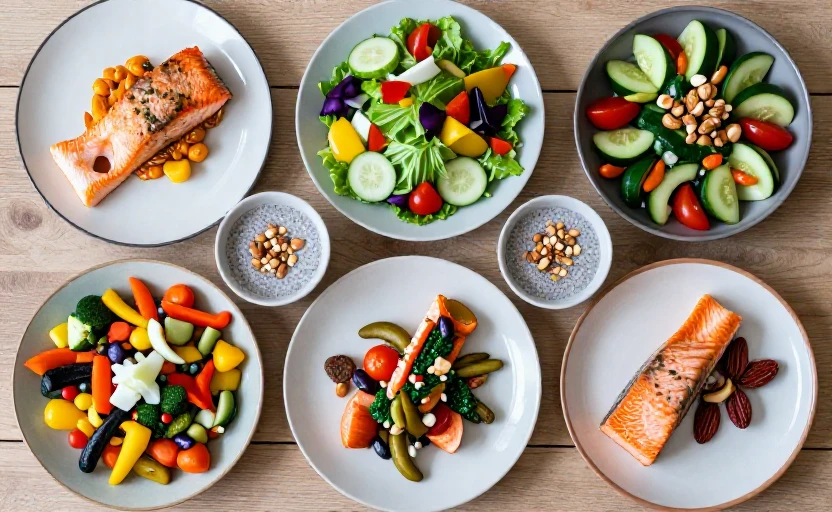
Once you get the rhythm, you can mix and match endlessly. The formula is simple: fill half your plate with non-starchy vegetables, a quarter with lean protein, and a quarter with a high-fiber carbohydrate or starchy vegetable. Add a thumb-sized portion of healthy fat.
- Non-starchy vegetables: Leafy greens, broccoli, cauliflower, zucchini, peppers, mushrooms, asparagus, green beans.
- Lean protein: Chicken, turkey, fish, eggs, tofu, tempeh, lentils, chickpeas.
- High-fiber carbs: Quinoa, oats, sweet potato, berries, beans, brown rice.
- Healthy fats: Avocado, olive oil, nuts, seeds, nut butters.
Foods to emphasize and foods to be mindful of
This isn't about creating a list of forbidden foods. It's about understanding how different choices affect your body so you can make informed decisions that support your well-being.
Foods to regularly include are fatty fish like salmon and sardines for their omega-3s, leafy greens and colorful vegetables for their antioxidants and fiber, and spices like cinnamon and turmeric for their anti-inflammatory and insulin-sensitizing properties. Berries are a fantastic low-sugar fruit choice, and legumes like lentils and chickpeas provide a powerhouse of fiber and plant-based protein.
It's helpful to be mindful of foods that can disrupt blood sugar or increase inflammation. This includes sugary drinks and snacks, refined carbohydrates like white bread and pastries, and highly processed foods. For some people with PCOS, reducing dairy intake can help with inflammation and acne, but this is highly individual. The same goes for gluten; it's not a universal issue, but some find symptom relief by limiting it.
Making this plan work for your life
Consistency beats perfection. If you have a busy day and end up with a simpler meal than planned, that's okay. The goal is to return to the pattern, not to achieve a flawless week. Meal prep is your best friend—spend an hour on Sunday washing and chopping vegetables, cooking a batch of quinoa or lentils, and hard-boiling some eggs. This makes throwing together a balanced meal effortless.
Stay hydrated with water throughout the day. Herbal teas like spearmint, which some studies suggest may help lower androgen levels, are a great addition. And remember, this nutritional approach is one part of a holistic strategy that also includes stress management, gentle movement, and adequate sleep for truly managing PCOS symptoms.