
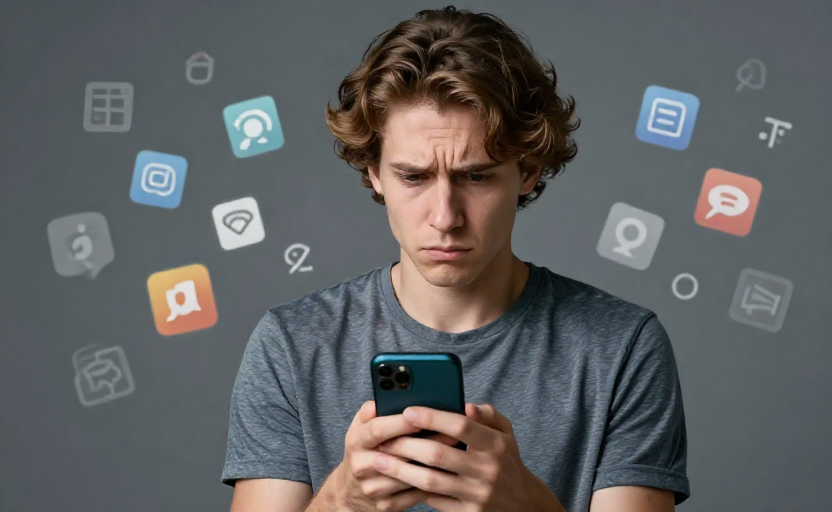
Scrolling through your feed, you might feel a familiar tightness in your chest. A pang of envy, a rush of worry, a creeping sense that you're not measuring up. What starts as a quick check-in can, for many of us, quietly become a source of persistent anxiety. The connection isn't always obvious—after all, these platforms are designed for connection and entertainment. But when your digital habits start to fuel your nervous system, the signs are often there, woven into your daily reactions and routines.
Recognizing these patterns is the first, crucial step toward reclaiming a sense of calm. It’s not about blaming the technology or yourself, but about observing the relationship you have with it. Here are some of the subtle, and not-so-subtle, warning signs that social media may be feeding your anxiety.
Your Mood Swings with Your Scroll
Pay attention to what happens in your body and mind in the minutes after you close an app. Do you feel more agitated, restless, or sad than you did before you opened it? This emotional hangover is a clear signal. Perhaps you saw a friend's vacation photos and felt a sudden drop in your own contentment, or read a contentious political thread that left you feeling irritable and on edge for hours.
The most telling metric isn't how long you spend online, but how you feel when you log off.
If your emotional state is consistently dictated by the last thing you saw—a comparison, an argument, a distressing news headline—it’s a sign the platform is acting as a mood regulator, and not for the better.
You Feel a Compulsive Need to Check
It’s one thing to browse out of boredom; it’s another to feel a genuine, anxious pull to constantly refresh and check notifications. This often manifests as a fear of missing out (FOMO) that’s laced with worry. You might think, “What if I miss an important update from my group?” or “I need to see if anyone liked my post.” The act of checking becomes a temporary relief from the anxiety of not knowing, creating a cycle that’s hard to break.
This compulsion can interrupt work, conversations, and moments of quiet. If you find yourself reaching for your phone during any slight pause, or feeling physically uneasy when you can’t check it, the dynamic has shifted from casual use to an anxiety-driven habit.
You Compare Your Real Life to Highlight Reels
Comparison is a natural human tendency, but social media supercharges it by providing a non-stop stream of curated perfection. When this comparison moves from casual observation to a source of personal deficit, anxiety takes root.
You might catch yourself thinking: “Their life is so much more together than mine,” “Why isn’t my career progressing like hers?” or “My body doesn’t look like that.” These thoughts, when repeated, chip away at your self-worth and create a background hum of inadequacy. The anxiety stems from the perceived gap between your reality and the idealized versions you consume.
This often shows up in specific areas:
Body image: Feeling anxious about your appearance after seeing fitness influencers or filtered photos.
Life milestones: Worrying you’re “behind” on marriage, home ownership, or travel after seeing peers’ announcements.
Success: Feeling your professional achievements are insufficient compared to the curated success stories online.
You Experience “Doomscrolling”
Doomscrolling is the act of consuming an endless stream of negative news or content, even when it makes you feel awful. You know it’s worsening your sense of dread about the world, yet you can’t seem to stop. This behavior is often a misguided attempt to feel in control—if you just consume enough information, you might be prepared or find a solution.
In reality, it floods your nervous system with threats, keeping you in a prolonged state of fight-or-flight. If you regularly find yourself down rabbit holes of bad news, contentious debates, or worrying trends, and feel a heightened, generalized anxiety about the state of things afterward, this is a major warning sign.
Online Interactions Leave You Physically Wound Up
Notice your physical state during and after online debates or even passive consumption of conflict. Does your heart rate increase? Do your shoulders tense up? Do you feel a knot in your stomach? Social media conflicts lack the resolution of in-person conversations—they can linger, escalate unpredictably, and leave you feeling attacked or misunderstood with no closure.
If you regularly feel physically agitated after reading comments, engaging in arguments, or even witnessing public disagreements between others, your body is telling you that these interactions are being processed as genuine threats. This somatic anxiety is a direct feedback loop from your digital experience.
You Feel Lonelier After Connecting
Paradoxically, spending hours “connected” online can amplify feelings of loneliness and isolation. You might have hundreds of friends or followers, yet feel deeply unseen or disconnected. This happens because digital interaction often lacks the nuanced empathy, shared silence, and physical presence of real-world connection.
The anxiety here is social in nature—a worry that you’re not truly part of a community, coupled with the exhaustion of performing a curated version of yourself. If your screen time is high but your sense of authentic connection is low, social media may be exacerbating social anxiety rather than alleviating it.
It Interferes with Sleep or Real-World Activities
This is one of the most concrete signs. Is scrolling the last thing you do at night and the first thing you do in the morning? The blue light from screens can disrupt melatonin production, but the mental stimulation is just as disruptive. Lying in bed while processing envy, outrage, or comparison is a recipe for restless sleep and next-day anxiety.
Similarly, if you’re cancelling plans, skipping workouts, or neglecting household tasks because you’re caught in a scroll, the platform is actively displacing anxiety-reducing activities like movement, face-to-face socializing, and accomplishment. The avoidance behavior itself fuels more anxiety about what you’re not getting done.
Noticing these signs isn't a cause for alarm, but for awareness. It’s a map of where your current digital habits and your mental well-being are in conflict. The goal isn’t necessarily to quit altogether, but to cultivate a more intentional relationship with these tools—one where you use them, not the other way around. Start by identifying just one sign that resonates with you. From there, a small change, like turning off non-essential notifications or setting a phone-free hour before bed, can begin to loosen anxiety’s grip and help you feel more grounded in your own life, not just the one on your screen.