
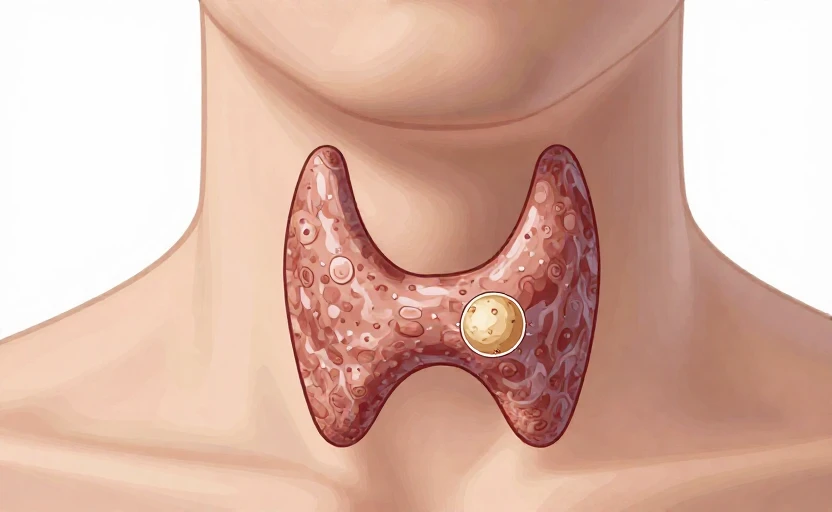
You might discover a thyroid nodule during a routine check-up, feeling a subtle lump in your neck while washing your face, or after a scan for an unrelated issue. Often, these small growths on the butterfly-shaped gland at the base of your throat are silent passengers, causing no noticeable trouble. But sometimes, they send signals—subtle whispers or more persistent nudges that something is amiss.
Understanding these signs isn't about self-diagnosis; it’s about informed awareness. Knowing what to watch for empowers you to have a more productive conversation with your doctor, ensuring nothing important gets overlooked on the path to your well-being.
What does a thyroid nodule feel like?
Before diving into the warning signs, it helps to know what you might be feeling for. A thyroid nodule is a solid or fluid-filled lump that forms within your thyroid gland. Most are benign, but their presence or behavior can sometimes indicate a need for further evaluation. You might feel one as a distinct bump on the front of your neck, below your Adam's apple and above your collarbone. It may move slightly when you swallow.
Signs your thyroid nodule may need attention
The following sensations and changes are worth bringing to a healthcare provider’s attention. They don’t automatically mean something is wrong, but they are clues that deserve professional interpretation.
1. A visible lump or swelling in your neck
This is often the most straightforward sign. You might notice a protrusion in the lower front of your neck, especially when looking in a mirror, tilting your head back, or swallowing. It may be more pronounced on one side. While many things can cause neck swelling, a new, persistent lump in the thyroid’s location warrants a check.
Tip: Try drinking a glass of water while looking in a mirror. The thyroid moves with your swallow, making a nodule more noticeable.
2. A feeling of tightness or fullness in the throat
This sensation is less about pain and more about pressure. You might feel like your shirt collar is suddenly too tight, even when it’s not. Some describe it as a constant, vague feeling of something being stuck in the lower throat, or difficulty swallowing thin liquids or pills. This can happen if a nodule grows large enough to press on your esophagus.
3. Hoarseness or voice changes that don’t resolve
Your thyroid sits just in front of the nerves that control your vocal cords. A nodule, particularly if it is growing, can occasionally irritate or press on these nerves. If you develop a raspy, hoarse, or weakened voice without a clear cause like a cold or overuse, and it lasts for more than a few weeks, it’s a sign to get it checked.
4. Discomfort or pain at the front of the neck
Most thyroid nodules are painless. However, discomfort or a persistent ache in the gland’s location can occur, particularly if a nodule bleeds internally or grows rapidly. The pain might radiate up to your jaw or ears. Any persistent, unexplained neck pain should be evaluated.
5. Trouble swallowing (dysphagia)
This goes beyond the feeling of fullness. You might experience a real sense that food, especially solid foods like bread or meat, is getting “stuck” on the way down. This is due to physical pressure from a larger nodule on the esophagus. It’s a significant sign that should never be ignored.
6. Breathing difficulties, especially when lying down
In rare cases, a large nodule can press on your windpipe (trachea). You might notice this first as a feeling of shortness of breath when lying flat on your back, or a need to prop yourself up with pillows to sleep comfortably. Some people report a whistling sound (stridor) when breathing in. This requires prompt medical attention.
7. Symptoms of hyperthyroidism
A small percentage of nodules are “functioning” or “hot,” meaning they produce thyroid hormone independently of your body’s regulatory system. This can lead to an overactive thyroid (hyperthyroidism), with symptoms like:
- Unexplained weight loss despite a normal or increased appetite
- Rapid or irregular heartbeat, palpitations
- Increased nervousness, anxiety, or irritability
- Tremors in your hands
- Heat intolerance and increased sweating
- More frequent bowel movements
What to do if you notice these signs
If you experience one or more of these warning signs, the next step is to schedule an appointment with your primary care doctor or an endocrinologist. Panic is not necessary—most nodules are benign—but proactive follow-up is.
Your doctor will likely start with a physical exam of your neck. From there, common diagnostic steps include:
- Thyroid Ultrasound: This painless imaging test is the gold standard for evaluating a nodule’s size, shape, and characteristics.
- Blood Tests: These check your levels of Thyroid Stimulating Hormone (TSH) to see how your thyroid is functioning overall.
- Fine-Needle Aspiration (FNA) Biopsy: If the ultrasound shows suspicious features, a doctor may use a thin needle to collect cells from the nodule for analysis. This is the best way to determine if cells are benign or need further attention.
The goal of evaluation is to gather clear information, which then guides a calm, informed management plan. That plan might be simple monitoring with periodic ultrasounds, or in other cases, discussion of further options.
Living with awareness, not anxiety
Noticing a potential sign of a thyroid nodule can be unsettling. The key is to shift that energy from worry to action. Your body’s signals are a form of communication. By listening and bringing these observations to a healthcare professional, you’re taking the most important step toward clarity and care. Regular check-ups and being attuned to changes in your neck and overall feelings of health are the foundations of managing your thyroid wellness.