
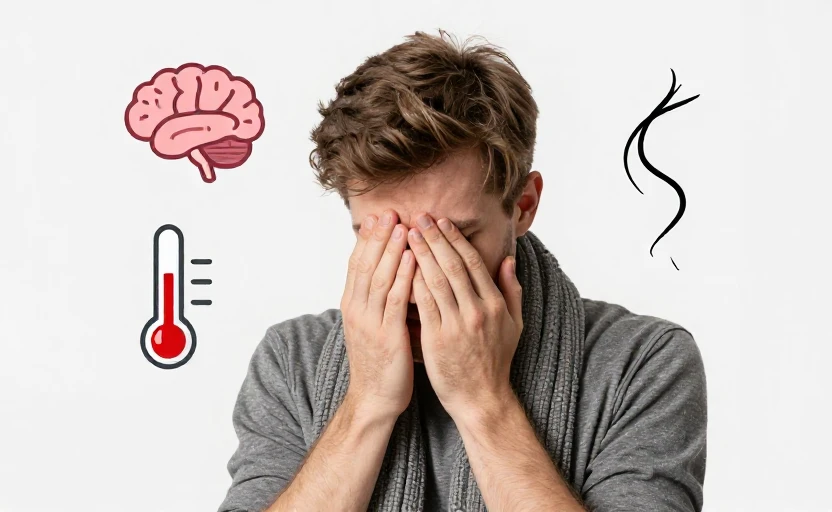
Fatigue that doesn’t lift with rest. A creeping chill you can’t shake. Unexplained weight gain that feels stubbornly resistant to your efforts. These vague, persistent feelings are easy to dismiss as just “being busy,” “getting older,” or “stress.” Yet, they can be the quiet, early whispers of an underactive thyroid—a condition where your thyroid gland doesn’t produce enough hormones to keep your body’s engine running at the right speed.
Hypothyroidism often develops so gradually that its signs blend into the background of daily life. You might not connect the dots between your dry skin, low mood, and that persistent brain fog. Recognizing these subtle signals is the first step toward understanding what your body is trying to tell you and seeking the appropriate guidance to feel like yourself again.
What does your thyroid actually do?
Think of your thyroid, that small butterfly-shaped gland in your neck, as your body’s master metabolic regulator. The hormones it produces—primarily thyroxine (T4) and triiodothyronine (T3)—travel through your bloodstream to nearly every cell. They act like a thermostat, setting the pace for how you use energy, how you burn calories, how warm you feel, and even how your heart, brain, and muscles function.
When thyroid hormone production drops, everything slows down. This systemic slowdown is why the symptoms are so widespread and varied, affecting everything from your digestion to your mood to the growth of your hair and nails.
Seven commonly missed signs of an underactive thyroid
While extreme fatigue and weight gain are more recognized, many people live with less obvious symptoms for years without realizing their thyroid may be involved. Here are seven warning signs that frequently fly under the radar.
1. A chill you can’t seem to warm up from
Do you find yourself reaching for a sweater when others are comfortable, or feeling an unusual sensitivity to cold drafts? Since thyroid hormones help regulate body temperature, a deficiency can make you feel perpetually cold. This isn’t just disliking winter; it’s a deep-seated chill that comes from within, even in a warm room.
2. Hair and skin changes that seem unrelated
Your skin may become unusually dry, rough, or pale, and lotion doesn’t seem to help for long. Your hair might thin, not just on your head but also on the outer edges of your eyebrows. It can become brittle, coarse, and fall out more easily. These changes happen because slowed cell renewal affects your skin’s ability to stay hydrated and your hair’s growth cycle.
Noticeable hair loss, especially at the outer third of the eyebrow, is a classic—though often overlooked—clue.
3. Persistent puffiness and swelling
Hypothyroidism can cause fluid retention, leading to a puffy face, especially around the eyes. Your hands, feet, or ankles might also feel swollen. This isn’t typical bloating; it’s a result of substances called mucopolysaccharides accumulating in the skin and other tissues, creating a swollen appearance.
4. A hoarse or raspy voice
If your voice has taken on a new, unexplained huskiness or feels thicker, your thyroid could be a factor. The gland itself can enlarge (a condition called a goiter) and put pressure on your vocal cords. Even without a visible goiter, hormonal changes can affect the tissues in your throat and larynx.
5. Cognitive changes that feel like “brain fog”
Struggling to concentrate, forgetfulness, and a general feeling of mental sluggishness are common complaints. You might find it hard to focus at work or feel like your thoughts are moving through molasses. This “brain fog” is a direct result of your brain cells running on low energy due to insufficient thyroid hormone.
6. Heavier or irregular menstrual cycles
For women, thyroid hormones are intricately linked with reproductive hormones. An underactive thyroid can lead to menorrhagia—heavier, longer, or more frequent periods. It can also cause irregular cycles. Because these issues have many potential causes, the thyroid connection is often not the first thing considered.
7. Aching muscles and stiff joints
General muscle aches, tenderness, and stiffness, particularly in the shoulders and hips, can mimic the symptoms of other conditions like fibromyalgia or arthritis. This happens because slowed metabolism affects muscle repair and energy production, and fluid retention can put pressure on nerves.
What to do if you recognize these signs
If several of these signs feel familiar, it doesn’t automatically mean you have hypothyroidism. Many of these symptoms are nonspecific and can overlap with other health conditions or even periods of high stress. The crucial next step is not to self-diagnose, but to start a conversation.
Bring your observations to a healthcare provider. Be specific: instead of just saying “I’m tired,” note that “I’m sleeping eight hours but still need a nap by 2 p.m.” or “I’m wearing two layers when my partner wears one.” This detailed history is invaluable.
Diagnosis is typically straightforward, involving a simple blood test to measure your level of Thyroid-Stimulating Hormone (TSH). A high TSH level usually indicates that your pituitary gland is working overtime to try to stimulate a sluggish thyroid.
Living well with thyroid health in mind
While treatment for diagnosed hypothyroidism is managed by a healthcare professional with medication, certain lifestyle foundations support overall thyroid and metabolic health for everyone.
- Nourish your body consistently: Extreme calorie restriction or erratic eating can signal to your body to slow down metabolism. Focus on regular, balanced meals.
- Consider key nutrients: The thyroid needs iodine (found in iodized salt, seaweed, fish) to make hormones, and selenium (found in Brazil nuts, tuna, eggs) to help activate them. Most people get enough through a varied diet, but significant deficiencies can impact function.
- Manage stress thoughtfully: Chronic stress affects the hypothalamic-pituitary-thyroid axis, the communication system that governs thyroid hormone production. Practices like mindful breathing, walking, or adequate sleep can help modulate this response.
- Listen to your body’s signals: The symptoms we’ve discussed are your body’s way of communicating. Persistent changes deserve attention and a professional opinion.
Your health is a mosaic, and your thyroid is one important piece. Noticing these subtle signs is an act of tuning in, not an alarm for panic. By bringing awareness to these often-missed clues, you empower yourself to seek clarity and support, paving the way back to feeling vibrant and fully energized.