Feeling out of sync with your own body is a uniquely frustrating experience. When your menstrual cycle feels unpredictable or your mood and energy swing on a pendulum, it’s natural to look for ways to find your center again. While many factors are at play, the food you eat provides the fundamental building blocks your endocrine system uses to create and regulate hormones. Nourishing your body with specific, supportive foods is a gentle, foundational step toward greater balance.
Think of it less as a strict prescription and more as a way of aligning your plate with your body’s natural rhythms. The goal isn’t perfection, but consistent, supportive choices that can help create an internal environment where your hormones can function more smoothly.
How does food influence hormones and your cycle?
Your hormones are chemical messengers, and they’re crafted from the nutrients you consume. For instance, cholesterol—often misunderstood—is the essential precursor from which your body makes sex hormones like estrogen and progesterone. Key vitamins and minerals act as co-factors, enabling the countless enzymatic reactions that produce, metabolize, and clear hormones from your system.
Food also directly impacts inflammation and blood sugar stability. Chronic inflammation can disrupt hormonal signaling, while sharp spikes and crashes in blood sugar can stress your adrenal glands and throw off insulin, which is itself a powerful hormone. By choosing foods that help moderate these responses, you support the entire hormonal network.
Foods to support your cycle and hormone balance
These seven food groups offer specific nutrients that play starring roles in hormonal health. Incorporating them regularly can be a simple, powerful act of self-care.
1. Fatty fish
Salmon, mackerel, sardines, and anchovies are rich in omega-3 fatty acids, particularly EPA and DHA. These fats are potent anti-inflammatory agents. Since inflammation is a known disruptor of hormonal balance, consuming omega-3s can help create a calmer internal state. They’re also crucial for brain health, which is deeply connected to mood regulation throughout the menstrual cycle.
Tip: Aim for two servings of fatty fish per week. If you don’t eat fish, consider discussing other sources of omega-3s with a healthcare provider.
2. Leafy green vegetables
Spinach, kale, Swiss chard, and collard greens are nutritional powerhouses for hormone health. They are excellent sources of magnesium, a mineral that’s involved in over 300 biochemical reactions in the body, including those that regulate the nervous system and support progesterone production. Many leafy greens also provide B vitamins, which are essential for energy production and liver detoxification pathways that help process and clear used hormones.
3. Cruciferous vegetables
This family includes broccoli, cauliflower, Brussels sprouts, cabbage, and bok choy. They contain a compound called indole-3-carbinol, which supports the liver in metabolizing and excreting excess estrogen. This can be particularly helpful for promoting a healthy estrogen balance. They’re also packed with fiber, which aids in the elimination of hormones from the body.
4. Colorful berries
Berries like blueberries, raspberries, strawberries, and blackberries are loaded with antioxidants and fiber. Their vibrant colors come from anthocyanins and other antioxidants that help protect cells from oxidative stress, which can interfere with hormonal function. The high fiber content helps slow sugar absorption, supporting stable blood sugar levels, and also assists in binding and removing excess hormones via the digestive tract.
5. Healthy fats from avocados, nuts, and seeds
Avocados, almonds, walnuts, flaxseeds, chia seeds, and pumpkin seeds deliver a combination of monounsaturated fats, fiber, and key minerals. These fats are necessary for the production of hormones and help you absorb fat-soluble vitamins (A, D, E, K). Flaxseeds, in particular, contain lignans, a type of phytoestrogen that may have a mild balancing effect on estrogen levels. Pumpkin seeds are a top source of zinc, a critical mineral for ovarian function and progesterone production.
6. Complex carbohydrates
Think whole, fiber-rich carbs: quinoa, oats, sweet potatoes, brown rice, and beans. Unlike refined carbohydrates, these break down slowly, providing sustained energy and preventing the insulin spikes that can aggravate hormonal conditions like PCOS. They also provide B vitamins and magnesium, and their fiber supports a healthy gut microbiome, which is increasingly understood to play a role in estrogen metabolism.
7. Fermented foods
A healthy gut is integral to a healthy hormone system. Fermented foods like yogurt (with live cultures), kefir, kimchi, sauerkraut, and kombucha introduce beneficial probiotics. These good bacteria support a balanced gut microbiome, which helps regulate inflammation and plays a direct part in the detoxification and recycling of hormones like estrogen.
Building a hormone-supportive plate
You don’t need a complicated diet. A practical approach is to build meals that combine several of these elements. For example:
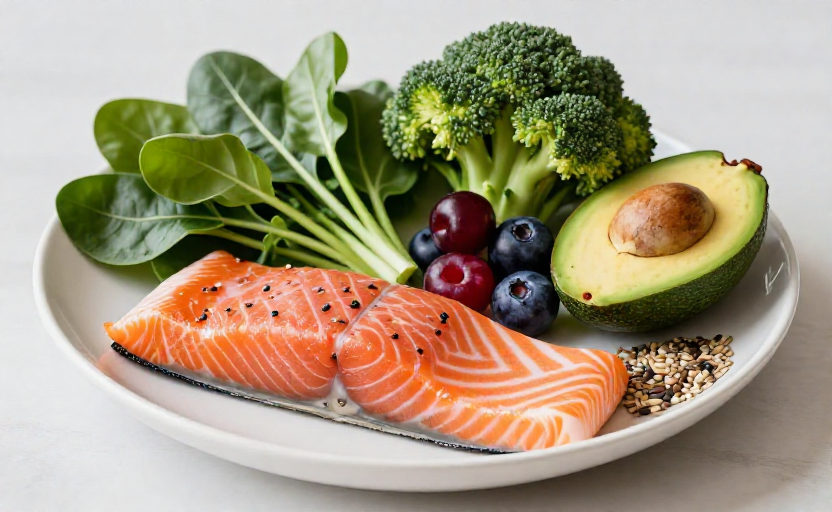
- A lunch bowl with quinoa (complex carb), salmon (fatty fish), roasted broccoli (cruciferous), and an avocado slice (healthy fat).
- A smoothie with spinach (leafy green), berries, flaxseed (healthy fat), and kefir (fermented).
- A snack of full-fat yogurt (fermented) with walnuts (healthy fat) and a handful of blueberries.
Listen to your body’s cues. Some may find they feel best with consistent, balanced meals throughout the day, while others may benefit from adjusting carbohydrate intake during different phases of their cycle. The most supportive diet is one that feels sustainable and nourishing to you.
A note on balance and professional guidance
Food is a powerful tool for foundational support, but it is not a substitute for medical diagnosis or treatment. Significant menstrual irregularities, severe PMS or PMDD, sudden changes in your cycle, or symptoms that disrupt your life warrant a conversation with a gynecologist or endocrinologist. They can help identify any underlying conditions and create a comprehensive management plan that may include dietary strategies alongside other appropriate care.
Ultimately, choosing these foods is an act of nourishment, not restriction. It’s about adding in what supports you, creating a sense of steadiness from the inside out, and honoring your body’s intricate, rhythmic nature.