Living with Polycystic Ovary Syndrome (PCOS) often means navigating a maze of symptoms—irregular cycles, stubborn weight gain, fatigue, and hormonal acne. While there’s no one-size-fits-all cure, what you put on your plate can be a powerful lever for better hormone balance. A well-designed PCOS-friendly meal plan doesn’t require extreme deprivation or a kitchen full of exotic ingredients. Instead, it centers on whole foods that help steady blood sugar, reduce inflammation, and support the gut.
Below, we walk through a practical 7-day framework built around seven key food groups. Each day features a simple template you can mix, match, and adjust based on what’s in your fridge. The goal is to show how these ingredients work together—not to prescribe a rigid menu.
Day 1: Leafy greens & lean protein
Kick off the week with a base of dark leafy greens like spinach, kale, or Swiss chard. These are packed with magnesium, which can help lower cortisol and improve insulin sensitivity. Pair them with a palm-sized serving of grilled chicken, turkey, or tofu.
Sample day: Breakfast — a spinach-and-mushroom omelet cooked in olive oil. Lunch — a large kale salad with sliced chicken, cucumber, and a lemon-tahini dressing. Dinner — baked salmon with a side of steamed broccoli and a handful of arugula.
Day 2: Berries & nuts
Berries (blueberries, strawberries, raspberries) are low on the glycemic index and high in antioxidants called anthocyanins, which can help fight oxidative stress common in PCOS. Nuts like walnuts and almonds add healthy fats and fiber to keep blood sugar stable.
Sample day: Breakfast — plain Greek yogurt topped with a handful of berries and chopped walnuts. Lunch — turkey and avocado lettuce wraps with a side of raspberries. Dinner — grilled shrimp over a bed of mixed greens with sliced almonds and a balsamic vinaigrette.
Day 3: Fatty fish & cruciferous vegetables
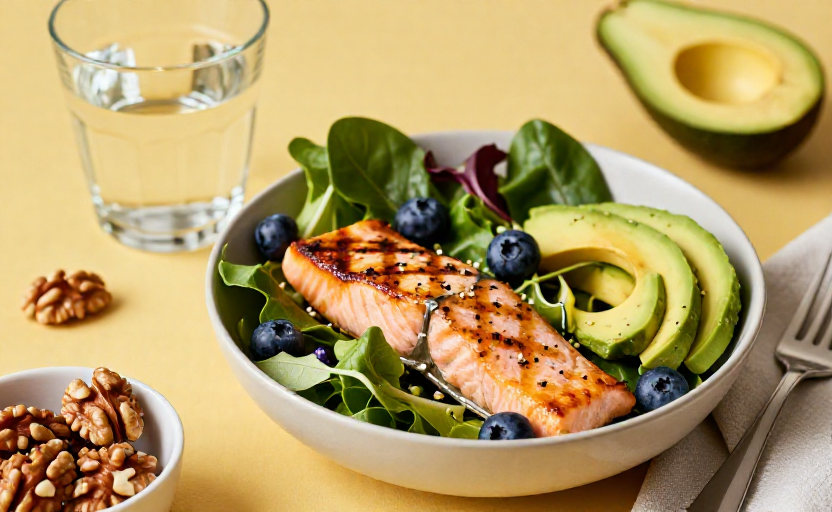
Salmon, sardines, and mackerel provide omega-3 fatty acids that help lower inflammation and may improve ovulation rates. Cruciferous veggies like broccoli, cauliflower, and Brussels sprouts contain sulforaphane, a compound that supports liver detox and estrogen metabolism.
Sample day: Breakfast — a smoothie made with unsweetened almond milk, a handful of spinach, and a tablespoon of flaxseed. Lunch — cauliflower rice stir-fried with shredded chicken and broccoli. Dinner — baked salmon with roasted Brussels sprouts and a side of quinoa.
Day 4: Legumes & whole grains
Lentils, chickpeas, black beans, and quinoa bring a steady release of energy without spiking glucose. They’re also rich in inositol, a natural compound that some studies suggest can help improve insulin sensitivity in women with PCOS.
Sample day: Breakfast — quinoa porridge with a sprinkle of cinnamon and a few sliced almonds. Lunch — lentil soup with a side of steamed green beans. Dinner — black bean and sweet potato tacos in corn tortillas with salsa and a squeeze of lime.
Day 5: Avocado & eggs
Avocados deliver monounsaturated fats that support cell membrane health and hormone production. Eggs provide high-quality protein and choline, which supports liver function and the metabolism of fats—important for keeping testosterone in check.
Sample day: Breakfast — two poached eggs over half an avocado on a slice of sprouted grain toast. Lunch — chopped salad with romaine, cherry tomatoes, black beans, corn, and diced avocado. Dinner — baked chicken thigh with roasted zucchini and a small side of wild rice.
Day 6: Fermented foods & healthy oils
Gut health plays an underrated role in PCOS. Fermented foods like sauerkraut, kimchi, or plain kefir introduce beneficial bacteria that can help reduce systemic inflammation. Extra virgin olive oil and avocado oil supply polyphenols that further calm internal inflammation.
Sample day: Breakfast — plain kefir with a tablespoon of chia seeds and a few berries. Lunch — chopped cucumber, tomato, and onion salad tossed with olive oil, plus a spoonful of sauerkraut on the side. Dinner — grilled lamb chops (or portobello mushrooms for a plant-based twist) with roasted asparagus and a drizzle of olive oil.
Day 7: Dark chocolate & pumpkin seeds
Day seven is about keeping things doable and kind. Dark chocolate (70% cocoa or higher) provides magnesium and antioxidants that can help manage cravings and stabilize mood. Pumpkin seeds are rich in zinc, a mineral that may help regulate testosterone levels and support follicle health.
Sample day: Breakfast — a pumpkin seed and oat bar (homemade or low-sugar store-bought). Lunch — large salad with mixed greens, sliced apple, pumpkin seeds, and a light apple-cider vinaigrette. Dinner — leftover-friendly chili made with ground turkey, beans, diced tomatoes, and a square of dark chocolate melted in for richness (trust us, it works).
Why this approach works for PCOS
The foods highlighted here all share a few common traits: they’re low to moderate on the glycemic index, rich in fiber, and packed with micronutrients that directly or indirectly support hormone balance. When you build meals around these ingredients, you naturally crowd out pro-inflammatory, high-sugar, and ultra-processed options that can worsen insulin resistance and androgen imbalances.
A 7-day plan like this is not a magic reset, but it gives your body a consistent signal of nourishment. Many women with PCOS notice steadier energy, fewer cravings, and less bloating within a week or two of shifting toward this style of eating.
A quick caveat: If you have a history of disordered eating or specific medical concerns, please work with a registered dietitian who specializes in PCOS before making major changes.
Finally, listen to your body—your appetite, your energy levels, and your cycle. The right meal plan for you is the one that feels sustainable, satisfying, and gentle on your system.