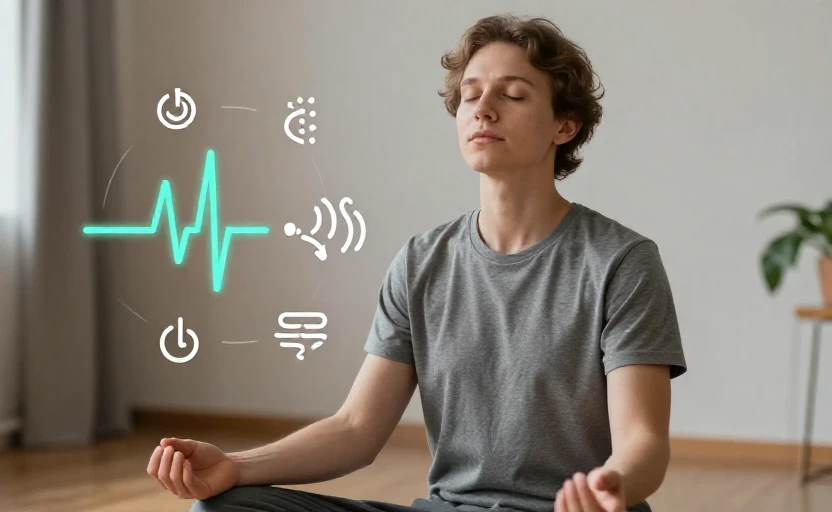
Panic attacks can feel like they come out of nowhere, a sudden and overwhelming storm of fear that crashes over you. Yet, for many people, there are subtle shifts in the body and mind that signal the gathering clouds before the storm hits. Learning to recognize these early warning signs isn't about living in fear of the next attack; it's about empowering yourself with awareness. That moment of recognition can be the critical window you need to deploy calming strategies and potentially lessen the attack's intensity or duration.
Understanding these signals is a form of self-compassion. It allows you to respond to your own distress with knowledge instead of confusion, to say, "This is my body's alarm system activating, and I have tools to help soothe it." Let's explore seven common early indicators and the practical, grounding responses that can help you navigate through them.
What Does a Panic Attack Feel Like?
A panic attack is an intense surge of fear or discomfort that peaks within minutes. It's your body's fight-or-flight response firing at full throttle, even when there's no immediate physical danger. The experience is profoundly physical, often creating a terrifying feeling of losing control, having a heart attack, or even dying. While the full-blown attack is acute, the lead-up often involves a cascade of smaller sensations that, when pieced together, form a recognizable pattern.
7 Early Warning Signs and How to Respond
These signs can appear in any order, and you may not experience all of them. The key is to notice what your personal pattern tends to be.
1. A Sudden Wave of Heat or Chills
You might feel an unexplained flush of heat across your chest and face, as if a thermostat in your body suddenly spiked. Conversely, a cold chill or feeling of icy numbness in your hands and feet can also occur. This is due to blood vessels constricting and dilating as your autonomic nervous system reacts.
How to respond: If you feel heat, try placing a cool, damp cloth on the back of your neck or wrists. For chills, wrap yourself in a blanket or hold a warm mug (focus on the sensation of warmth). This direct physical counter-signal can help regulate your system.
2. Heart Palpitations or a Pounding Heart
Your heart may begin to beat more noticeably—not just fast, but hard, as if it's thumping against your chest wall. This sensation is often one of the most frightening, as it can mimic serious cardiac issues.
How to respond: Remind yourself this is a common symptom of anxiety, not a heart attack. Place a hand over your heart and feel its rhythm. Take slow, deep breaths, aiming to make your exhale longer than your inhale. This stimulates the vagus nerve, which can help slow your heart rate.
3. Dizziness or Lightheadedness
A feeling of unsteadiness, as if the room is gently swaying or you might faint, can set in. This is often caused by changes in breathing patterns (like hyperventilation) that alter oxygen and carbon dioxide levels in your blood.
How to respond: If it's safe to do so, sit down immediately. Plant your feet firmly on the ground and focus on a stationary object across the room. Engage in "box breathing": inhale for a count of four, hold for four, exhale for four, hold for four. This helps restore balance to your respiratory system.
4. Tunnel Vision or a Sense of Unreality
Your peripheral vision may seem to darken or blur, narrowing your focus. You might also experience derealization (feeling detached from your surroundings) or depersonalization (feeling detached from yourself). The world may seem dreamlike or distant.
How to respond: Gently widen your gaze. Practice the "5-4-3-2-1" grounding technique: Name five things you can see, four things you can feel, three things you can hear, two things you can smell, and one thing you can taste. This pulls your awareness back into the present moment and your immediate environment.
5. Nausea or Stomach Distress
A knot in your stomach, queasiness, or a sudden churning feeling can arise. The gut has a dense network of neurons and is highly sensitive to stress hormones, often called the "second brain."
How to respond: Sip slowly on cool water. If possible, try gentle abdominal massage in a clockwise circle. Avoid telling yourself you're "going to be sick," as this can increase anxiety. Instead, acknowledge the sensation without judgment: "I'm feeling nausea, which is a symptom of anxiety right now."
6. Tingling or Numbness
Often in the hands, feet, or around the mouth, a pins-and-needles sensation or numbness can occur. This, like dizziness, is frequently related to changes in breathing that affect blood chemistry.
How to respond: Rub your hands together vigorously, creating heat and sensation. Press your palms firmly against a solid surface like a table or wall. The strong physical feedback can override the tingling signals and help reorient your nervous system.
7. A Sudden, Overwhelming Sense of Dread
This is the cognitive hallmark—a feeling of impending doom or fear that something catastrophic is about to happen, even in a safe, familiar place. It's the mental echo of the body's physical alarm.
How to respond: Use a mantra. Repeat a simple, factual phrase to yourself in a calm, inner voice. Examples include: "This is a panic symptom, and it will pass," "I am safe in this moment," or "My body is having a reaction, but I am okay." The repetition can create a cognitive anchor.
What to Do When You Recognize the Signs
The moment you identify one or more early signs, the most powerful step is to pause. Don't try to fight the sensations or berate yourself for having them. Acknowledge what is happening: "I am starting to feel panicked." Then, choose one or two of the response techniques above. The goal isn't to magically stop the attack (which can create more pressure), but to ride the wave with more tools at your disposal.
If possible, remove yourself from overstimulating environments—bright lights, loud noises, crowded spaces—and find a quieter place, even if it's just a bathroom stall for a few minutes.
When to Seek Professional Support
While these strategies can be immensely helpful for managing acute symptoms, recurring panic attacks are a sign to consult a healthcare professional. A doctor can rule out any underlying medical conditions and a therapist, particularly one trained in cognitive behavioral therapy (CBT), can help you understand the roots of your panic and develop long-term coping strategies. You don't have to manage this alone.
Remember, recognizing the early signs of a panic attack is a skill. It takes practice and patience. Each time you notice a sign and respond with kindness and a grounding technique, you reinforce your own resilience and reclaim a sense of agency over your well-being.