
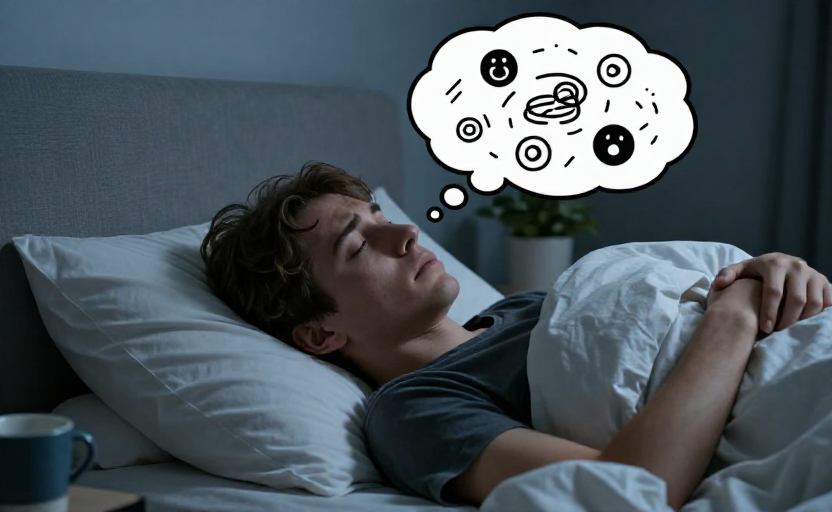
You lie down after a long day, exhausted, yet your mind refuses to quiet. Hours pass as you stare at the ceiling, or you wake at 3 a.m. with your heart racing and thoughts spiraling. If this sounds familiar, you may be caught in a loop where stress and anxiety are hijacking your sleep.
Occasional restless nights are normal, but when sleep problems become chronic, it is worth asking whether your mental state is the underlying cause. The connection works both ways: anxiety disrupts sleep, and poor sleep fuels more anxiety. Recognizing the specific warning signs can help you break the cycle. Below are six indicators that your sleep troubles are likely tied to stress or anxiety.
1. Racing Thoughts the Moment You Lie Down
You may feel tired all day, but as soon as your head hits the pillow, your brain suddenly wakes up. This is sometimes called 'racing thoughts' or a 'busy mind.' You replay conversations, worry about tomorrow, or obsess over small mistakes from years ago. When this happens night after night, it is a classic sign that anxiety is interfering with your sleep transition. The brain stays in a hyper-aroused state, unable to shift into the relaxation needed for sleep onset.
2. Waking Up at 3 a.m. and Unable to Fall Back Asleep
Waking in the middle of the night is common for everyone, but if you consistently wake between 2 a.m. and 4 a.m. with a sense of dread or a pounding heart, it points toward stress-driven insomnia. Cortisol, the primary stress hormone, naturally dips in early sleep but surges in the second half of the night for people under chronic stress. This early-morning awakening—sometimes called 'cortisol awakening'—can leave you alert, anxious, and unable to return to sleep for an hour or more.
3. Physical Tension That Won't Release
Do you wake up with a sore jaw, clenched fists, or tight shoulders? Do you find yourself grinding your teeth at night? Stress and anxiety cause muscles to remain in a low-level state of tension, and during sleep, this can manifest as bruxism (teeth grinding), restless legs, or a general inability to relax. Instead of waking refreshed, you feel as if you have been holding a plank all night. This physical tension is a direct signal that your nervous system is not fully shifting into repair mode.
4. Frequent Nightmares or Disturbing Dreams
While everyone has odd dreams occasionally, a pattern of vivid, stressful, or frightening dreams often reflects daytime anxiety. Your brain uses dreaming to process unresolved emotions. When you carry high levels of stress or worry into sleep, your dreams may become chaotic, threatening, or repetitive. If you regularly wake from nightmares with a start or find yourself reluctant to sleep due to bad dreams, your sleep problems may be emotionally driven.
5. Feeling 'Wired But Tired' at Bedtime
You are physically exhausted—your eyes are heavy, and you can barely keep them open on the couch. But the moment you move toward the bedroom, you feel a jolt of energy. This paradoxical state is common with anxiety. The body is fatigued from the day's mental load, but the sympathetic nervous system (your 'fight-or-flight' response) is stuck in overdrive. You may feel restless, have a sense of inner trembling, or find it impossible to settle. This is not insomnia caused by caffeine or screen time alone—it is a direct sign of unresolved stress.
6. You Wake Up Feeling Unrefreshed, No Matter How Long You Sleep
Perhaps you manage to get seven or eight hours, but you still wake up groggy, irritable, and mentally foggy. This is because stress and anxiety reduce the quality of sleep, not just the quantity. High cortisol levels can suppress deep sleep (slow-wave sleep) and REM sleep—the restorative stages. You may spend more time in lighter sleep stages, waking frequently without remembering it. If you track your sleep and see adequate hours but feel terrible upon waking, stress or anxiety is likely stealing your sleep quality.
Recognizing these signs is the first step. If they sound familiar, consider exploring stress-management techniques such as deep breathing, journaling before bed, or a consistent wind-down routine. If sleep problems persist for more than a few weeks, consult a healthcare provider to rule out other conditions.