

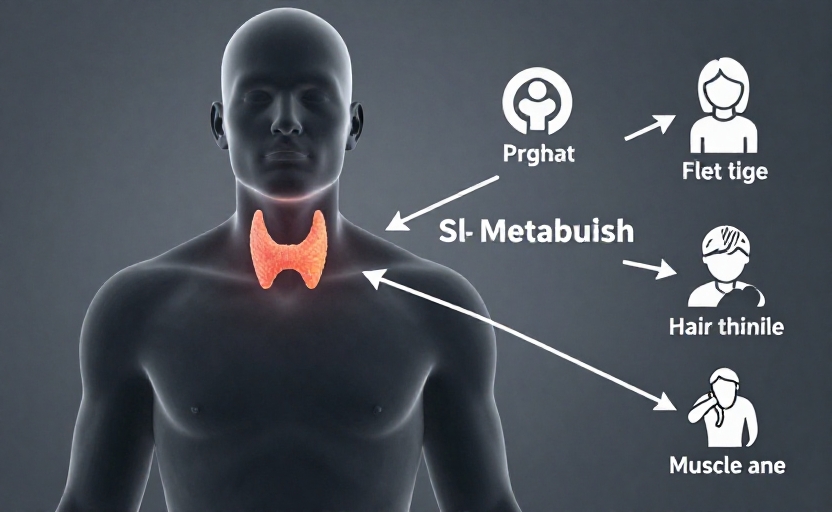
It can start so gradually that you barely notice. Your jeans feel a little snug, even though you haven't changed what you eat. You feel foggy in the afternoons. Your hands and feet are cold, even when the thermostat says otherwise. These aren't just random annoyances of getting older. For many people, they are the first whispers that the thyroid—the small, butterfly-shaped gland at the base of the neck—is not keeping up with demand.
When the thyroid gland does not produce enough thyroid hormone (a condition called hypothyroidism), your body's engine essentially slows down. Metabolism is not just about weight; it controls how your cells produce energy, how fast your heart beats, and how quickly you burn calories at rest. Below are six concrete warning signs that your metabolism may be slowing due to a thyroid issue. If these resonate, it is a reason to have a conversation with your healthcare provider and request a simple blood test called a TSH (thyroid-stimulating hormone) screen.
1. Unexplained Weight Gain or Difficulty Losing Weight
This is the hallmark metabolic slowdown. You might expect weight gain if you were eating a surplus of calories, but with a sluggish thyroid, the scale can creep upward even when you are eating moderately. That is because your resting metabolic rate—the calories you burn just to keep your body alive—drops. Some people gain only 5 to 10 pounds, but it feels stubborn. Even more telling is the inability to lose weight despite extra effort at the gym or stricter dieting. If your energy levels are also low, this creates a frustrating cycle where movement feels harder, and the body clings to fat stores.
2. Persistent Fatigue and Brain Fog
Tiredness after a poor night of sleep is one thing. A metabolism-related fatigue is different. It feels like a heavy blanket of exhaustion that sleep does not fix. You wake up groggy, crash by mid-afternoon, and feel mentally "slow." This brain fog is a direct result of reduced thyroid hormone signaling to the brain. Tasks that used to be easy—remembering a password, following a conversation, focusing on a spreadsheet—suddenly take effort. This symptom often gets dismissed as stress or aging, but when combined with other signs on this list, it points directly to the thyroid.
3. Feeling Cold When Others Are Comfortable
Metabolism generates heat. When your metabolic rate falls, your body produces less internal warmth. People with hypothyroidism often complain that their hands and feet are perpetually cold. They might wear a sweater in a room where everyone else is in short sleeves. This symptom is sometimes called "cold intolerance." It happens because less thyroid hormone means less cellular activity, and less cellular activity means less heat production. If you find yourself reaching for a blanket in the middle of summer, pay attention.
4. Hair Thinning and Dry, Brittle Skin
Thyroid hormones are essential for the hair growth cycle and the turnover of skin cells. When levels drop, hair follicles can enter a resting phase, leading to noticeable thinning—often on the scalp, brows, and outer edges of the eyebrows. The skin can become dry, rough, and flaky because oil gland production slows down. Your nails may become brittle and chip easily. While hair and skin changes can have many causes (hormonal shifts, nutrient deficiencies), a pattern of thinning hair and dry skin alongside low energy is a strong signal for a thyroid-related metabolism issue.
5. Constipation That Won't Go Away
The digestive system is highly dependent on thyroid hormone. A slowing metabolism means the muscles of the digestive tract also slow down. This can lead to chronic constipation—infrequent bowel movements, straining, and a sense of incomplete evacuation. You might try increasing fiber and water but see little improvement. This is not a casual tummy upset; it is a consistent, low-grade slowdown of the entire gastrointestinal system. When your metabolism is slow, everything moves slower, including digestion.
6. Muscle Aches, Joint Stiffness, and Weakness
Metabolism directly affects how muscles repair and use energy. With a slow thyroid, you may notice vague muscle aches, joint stiffness, or a feeling of weakness when climbing stairs or lifting groceries. The muscles may feel sore for no clear reason. This is partly due to a condition called myxedema, where compounds build up in the tissues, and partly because reduced thyroid hormone impairs the muscle cells' ability to generate ATP (energy). If you feel like your body is "heavy" and stiff in the mornings, and it lasts beyond a few minutes of movement, this is worth noting.
What Should You Do If These Signs Sound Familiar?
A simple blood test (TSH) is the standard first step. It is a routine, inexpensive lab that can reveal if your thyroid is underactive. Do not try to self-treat with supplements or iodine—too much can be harmful.
If your TSH comes back elevated, your doctor will likely check your free T4 and TPO antibodies to confirm Hashimoto's thyroiditis, the most common cause of hypothyroidism in adults. Treatment usually involves a daily synthetic thyroid hormone (levothyroxine) to bring levels back to normal. Once the dose is right, most people notice their energy returning, the weight creep stopping, the hair regrowing, and the cold sensitivity fading. It is not a miracle pill, but proper treatment restores metabolic function to what it should be.
If your TSH is normal but you still have multiple symptoms listed here, consider asking for a full thyroid panel, including free T3 and reverse T3. Some people have conversion issues where the thyroid gland produces enough T4 but the body cannot convert it to the active T3 hormone. A standard TSH test alone can miss this picture.
Ultimately, your metabolism is not a number on a scale. It is the sum of how your body's engine is running. If you recognize these six warning signs, you are not imagining things. Listen to your body, talk to a clinician, and get your thyroid checked. It is one of the most straightforward investigations in modern medicine, and it could change how you feel every single day.








