
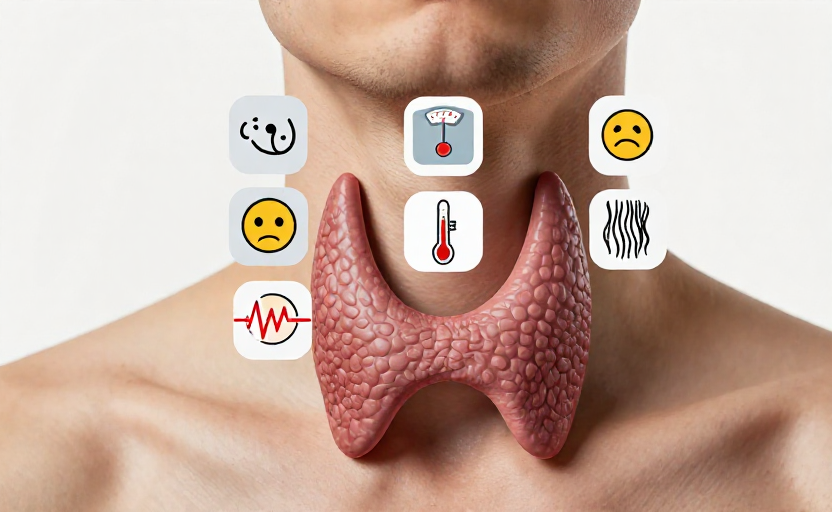
Your thyroid is a small gland with a big job. The hormones it produces influence nearly every system in your body, from your heart rate to your digestion. But when those hormone levels shift—up or down—the changes can be subtle at first. By the time you notice something is off, the imbalance may have been affecting you for weeks or months.
Recognizing the early warning signs of a thyroid hormone fluctuation can help you get the support you need sooner. Here are six common signals that your thyroid hormone levels may be out of balance.
1. Unexplained Fatigue That Does Not Improve With Rest
Feeling tired after a late night is normal. But a deep, bone-level exhaustion that persists even after a full night of sleep is different. This is one of the most frequent complaints when thyroid hormone levels drop too low (hypothyroidism).
Your cells rely on thyroid hormone to produce energy. When levels are insufficient, your metabolism slows down, and so do you. The fatigue tends to be constant, not tied to activity, and it can make even simple tasks like getting out of bed feel monumental.
Conversely, if your thyroid produces too much hormone (hyperthyroidism), you may feel restless and wired but still exhausted. Your body is working in overdrive, burning energy rapidly, which can leave you deeply tired by the end of the day.
2. Sudden, Unintentional Weight Changes
Your weight is not strictly a reflection of calories in and calories out. Thyroid hormones help regulate your basal metabolic rate (BMR). When they fluctuate, your BMR shifts accordingly.
Low thyroid (hypothyroidism) often leads to modest, unexplained weight gain or difficulty losing weight even with careful diet and exercise. You may also retain more fluid, which adds to the number on the scale.
High thyroid (hyperthyroidism) does the opposite. You may lose weight rapidly even if your appetite has increased. Some people lose ten or more pounds in a month without changing their habits. Either scenario—weight gain or loss that does not seem linked to your usual patterns—is worth investigating.
3. Temperature Intolerance: Feeling Too Cold or Too Hot
Do you find yourself reaching for a sweater when everyone else is comfortable? Or do you sweat through meetings while your coworkers are perfectly fine? A shift in thyroid hormones can spoil your internal thermostat.
Hypothyroidism slows metabolic heat production, so you frequently feel cold, especially in your hands and feet. Hyperthyroidism speeds it up, leaving you overheated and prone to heavy sweating even in cool environments.
Temperature sensitivity is often one of the earliest signs. If your comfort zone has shifted noticeably, it may point to a thyroid issue.
4. Mood Swings, Anxiety, or Brain Fog
Thyroid hormone fluctuations directly affect brain function and neurotransmitter activity. When levels are low, you may experience brain fog—trouble concentrating, forgetfulness, and a general sense of mental slowness. Depression can also result from hypothyroidism.
When levels are high, the nervous system gets revved up. You might feel anxious, irritable, or jittery for no clear reason. Panic attacks can occur, and your usual coping strategies may stop working.
These mood changes are not just in your head. They are biochemical signals that your thyroid hormones are not in their proper range.
5. Heart Rate and Rhythm Changes
Your heart responds directly to thyroid hormone. Even small deviations can alter your pulse.
With hyperthyroidism, your resting heart rate may be noticeably faster—over 100 beats per minute is common. You might also feel palpitations or a fluttering sensation in your chest. Some people experience irregular heart rhythms, such as atrial fibrillation.
With hypothyroidism, the opposite occurs: your heart rate may drop below 60 beats per minute. You may feel easily winded during activity, but the resting bradycardia (slow heart rate) is usually more noticeable during quiet moments.
Any persistent change in your heart rate—especially when accompanied by other symptoms on this list—warrants a checkup.
6. Changes in Hair, Skin, and Nails
Thyroid hormones regulate the growth cycle of hair follicles, skin cells, and nails. When those hormones fluctuate, visible changes often follow.
Hair may become dry, brittle, or start thinning. Some people notice hair loss at the outer edge of their eyebrows—a classic sign of hypothyroidism. Skin can become dry, rough, or pale. Nails may grow slowly, become brittle, or develop ridges.
In hyperthyroidism, skin may feel warm, moist, and flushed, and nails may separate from the nail bed (a condition called onycholysis).
These changes are often gradual. If you notice that your hair is suddenly falling out more than usual or your skin has changed texture without a clear cause, include that in your health history review.
When to See a Doctor
One or two of these signs could be due to stress, a sleep debt, or a temporary illness. But if you have several symptoms—especially fatigue paired with weight changes, temperature intolerance, or mood shifts—it may be time to check your thyroid.
A simple blood test measuring TSH (thyroid-stimulating hormone) can reveal whether your thyroid is underactive, overactive, or simply fluctuating. Your healthcare provider can interpret the results in the context of your overall health.
Understanding these warning signs is about being proactive. You know your body better than anyone else. When something feels different, trust that instinct—and let a professional help you find the cause.