When most people think of polycystic ovary syndrome (PCOS), the first thing that comes to mind is irregular or missed periods. And while menstrual disruption is a hallmark symptom, it is far from the only one. In fact, many individuals with PCOS experience a constellation of signs that have nothing to do with their cycle—and these can be easy to dismiss or misattribute to stress, diet, or aging.
Endocrinologists, who specialize in the body's hormone systems, often see patients who have been living with PCOS for years without knowing it. Below are six warning signs they say deserve attention, even if your period seems relatively normal.
1. Persistent acne that doesn't respond to standard treatments
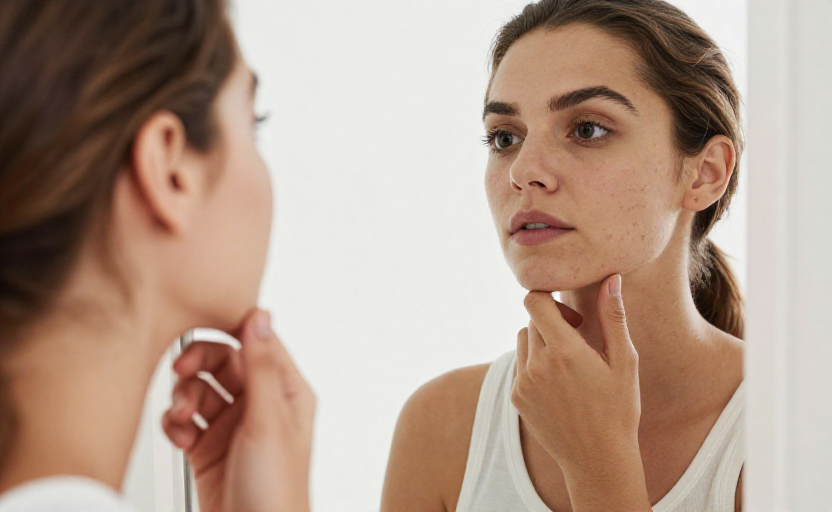
Acne that lingers well past the teenage years—especially along the jawline, chin, and neck—may be a clue that androgens (male-type hormones) are elevated. In PCOS, the ovaries produce excess androgens, which can stimulate the sebaceous glands and lead to inflammatory breakouts. If you have tried topical creams, cleansers, and even antibiotics without lasting improvement, it is worth asking your doctor about hormonal testing.
One telltale sign: the acne tends to flare cyclically but never fully clears, and it often appears alongside oily skin or scalp.
2. Thinning hair on the scalp (androgenetic alopecia)
While some women with PCOS notice unwanted hair growth on the face or chest, others experience the opposite problem on their head: gradual thinning along the crown or top of the scalp. This pattern—sometimes called female pattern hair loss—is driven by the same androgens that cause acne. The hair follicles shrink over time, producing finer, shorter strands until they stop growing altogether.
Endocrinologists note that this symptom can be easily mistaken for stress-related shedding or a thyroid problem. But if you notice a widening part, a visible scalp through the hair, or extra hair in your brush while also dealing with other PCOS clues, a workup may be in order.
3. Unwanted hair growth on the face, chest, or back (hirsutism)
This is one of the most specific signs of PCOS. Coarse, dark hair sprouting on the upper lip, chin, sideburns, chest, lower abdomen, or inner thighs is a direct result of androgen stimulation. It can range from a few stray strands to thick patches that require regular removal.
Keep in mind that hirsutism is defined by the type of hair—terminal, thick hair in a male-like distribution. Light, fine vellus hair (peach fuzz) is normal. If you need to shave or wax regularly to manage growth, mention it to your provider.
4. Unexplained weight gain or difficulty losing weight
Many people with PCOS have insulin resistance, a condition where the body's cells do not respond well to insulin. This causes the pancreas to pump out more insulin, and high insulin levels promote fat storage—especially around the midsection. Even with a reasonable diet and active lifestyle, the scale may not budge.
Endocrinologists look for a pattern: weight that accumulates in the abdomen rather than hips or thighs, along with skin tags or darkened, velvety patches in the neck, armpits, or groin (acanthosis nigricans). These are visible markers of insulin resistance that often accompany PCOS-related weight challenges.
5. Dark, velvety skin patches (acanthosis nigricans)
This symptom is so closely linked to insulin resistance that some doctors call it a red flag for metabolic issues. The skin in places like the back of the neck, armpits, knuckles, or under the breasts becomes thickened, darkened, and sometimes slightly rough. It can look like dirt that does not wash off.
While acanthosis nigricans can occur on its own in people without PCOS (for example, due to obesity or certain medications), it is very common in PCOS because of the underlying insulin dysregulation. Treating the insulin resistance—often through lifestyle changes or medication prescribed by a doctor—can help lighten these patches over time.
6. Mood swings, anxiety, or depression that feel unconnected to life events
It is not all in your head. Hormonal imbalances in PCOS—including high androgens and erratic insulin levels—can affect brain chemistry. Studies show that women with PCOS have significantly higher rates of anxiety and depression than the general population. The fatigue, body image stress, and frustration of managing other symptoms can compound the effect.
If you find yourself feeling on edge, tearful, or hopeless for no clear reason, and these feelings coincide with other PCOS signs, a full evaluation may offer answers and open the door to support—including therapy, peer support groups, or medical treatment for the underlying hormonal issue.
It is important to note that having one or even several of these signs does not automatically mean you have PCOS. Other conditions—such as thyroid disorders, high prolactin, or late-onset congenital adrenal hyperplasia—can mimic some of them. A proper diagnosis requires specific blood work and often a pelvic ultrasound. If these warning signs resonate, the next step is to see an endocrinologist or a gynecologist experienced in hormonal disorders. They can help you connect the dots.