When you think about staying hydrated, your mind probably goes straight to your water bottle. But what if a significant portion of your daily fluid intake could come from your plate? It can. Many whole foods are composed largely of water, offering a delicious, passive way to support your hydration throughout the day.
This approach is less about counting ounces and more about incorporating foods with high water content into your regular meals and snacks. It’s a gentle, sustainable strategy that works alongside your drinking habits, adding an extra layer of hydration support, especially on busy days when you might forget to sip.
Why does food-based hydration matter?
While drinking water is essential, the fluids we get from food are a meaningful part of the equation. The water in fruits and vegetables is often accompanied by electrolytes like potassium and magnesium, which help your body retain and use the fluid effectively. Furthermore, eating these foods provides fiber, vitamins, and antioxidants—benefits a glass of water alone doesn’t offer.
Think of hydrating foods as a two-for-one: nourishment and fluid, delivered together.
Focusing on water-rich foods can be particularly helpful for those who simply don’t enjoy drinking plain water, or for older adults whose sense of thirst may diminish. It turns hydration into a sensory experience—a crunchy, juicy, flavorful one.
Five everyday foods to help you eat your water
You don’t need exotic ingredients. Some of the most hydrating foods are likely already in your kitchen. Here’s a closer look at five excellent, accessible choices.
Cucumber
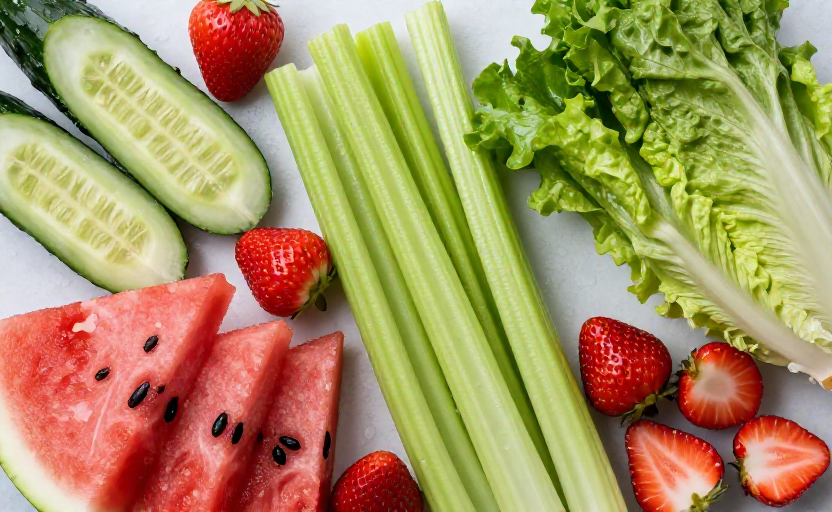
Topping the list, cucumber is about 96% water. Its mild flavor and satisfying crunch make it incredibly versatile. Add slices to your water for a subtle infusion, chop it into salads, or enjoy it as a standalone snack with a sprinkle of herbs.
It’s a low-calorie option that provides a small amount of vitamin K and potassium, supporting not just hydration but overall cellular function.
Celery
Composed of roughly 95% water, celery is a classic hydrating food. Its high water content and fibrous structure mean it requires more chewing, which can promote a feeling of fullness. This makes it a great choice for a mindful, hydrating snack.
Beyond water, celery contains compounds like apigenin, and its subtle salty taste hints at a natural sodium content that can aid in electrolyte balance when consumed as part of a varied diet.
Watermelon
True to its name, watermelon is roughly 92% water. It’s a sweet, summery staple that delivers hydration along with vitamins A and C, and the antioxidant lycopene. The natural sugars are balanced by the high water and fiber content, making it a refreshing choice.
Enjoy it cubed, blend it into a chilled soup or smoothie, or freeze chunks for a hydrating frozen treat.
Strawberries
All berries have good water content, but strawberries lead the pack at about 91% water. They are a nutrient-dense way to hydrate, packed with vitamin C, manganese, folate, and powerful antioxidants. Their bright flavor and versatility are a bonus.
Add them to oatmeal, salads, or yogurt, or simply enjoy a bowl on their own. Because they are delicate, eating them fresh maximizes their water content.
Romaine Lettuce
While iceberg lettuce is famously watery, romaine lettuce is a more nutrient-rich choice at about 95% water. It provides a significant amount of vitamins A and K, folate, and a bit more fiber. It’s the foundation of a hydrating salad, but don’t stop there.
Use large leaves as a wrap for fillings like grilled chicken or beans, chop and add to soups just before serving, or blend a leaf or two into a green smoothie for extra volume and fluid.
How to weave these foods into your day
Incorporating these foods doesn’t require a complete diet overhaul. Small, consistent additions can make a noticeable difference. Start one meal at a time.
For breakfast, add berries to your cereal or yogurt. At lunch, make a salad with romaine as the base and include cucumber and celery. For snacks, keep pre-cut cucumber, celery, or watermelon in the fridge for easy access. At dinner, serve a side salad or a slice of watermelon for dessert.
The goal is to make the hydrating choice the easy and appealing choice.
Hydration from food is cumulative. Each juicy bite adds up over the course of the day.
A note on balance and listening to your body
Relying solely on food for hydration is not advisable; drinking water and other fluids remains crucial. View food as a complementary source. Pay attention to your body’s signals—such as the color of your urine (aiming for pale yellow) and feelings of thirst or dry mouth—as your best guides.
If you have specific health conditions, such as kidney issues, that require fluid restriction, always follow the guidance of your healthcare provider regarding both fluids and high-water foods.
Ultimately, eating for hydration is a simple, intuitive practice. It connects the act of nourishing yourself with the act of caring for your body’s fundamental need for water, making wellness a more integrated and enjoyable part of daily life.