That mid-afternoon mental fog, the feeling that your brain has run out of fuel, is more than just an inconvenience. It's a signal. Often, it's a direct reflection of what you ate a few hours earlier. A lunch heavy in refined carbs and sugars can lead to a sharp spike and subsequent crash in blood sugar, leaving you feeling drained, unfocused, and irritable.
The good news is that you can eat your way to clearer thinking. By choosing nutrient-dense foods that provide steady energy and the raw materials your brain needs to function, you can build a lunch that fights fatigue instead of causing it. The goal is a plate that balances complex carbohydrates for fuel, quality protein for satiety and neurotransmitter support, healthy fats for brain cell structure, and a rainbow of vegetables for protective antioxidants.
What makes a lunch “brain-boosting”?
Before we get to the recipes, let’s look at the nutritional players that turn a simple meal into focused energy. First are complex carbohydrates—think quinoa, sweet potatoes, or whole-grain bread. These break down slowly, providing a steady stream of glucose, your brain’s primary fuel source, without the crash.
Next is protein, from sources like lentils, chickpeas, salmon, or chicken. Protein provides amino acids like tyrosine, which is used to create alertness-boosting neurotransmitters dopamine and norepinephrine.
Then come the healthy fats, particularly omega-3 fatty acids found in fatty fish, walnuts, and flaxseeds. These fats are essential components of brain cell membranes and support cognitive function. Finally, we have the micronutrient powerhouses: leafy greens, berries, and colorful vegetables packed with antioxidants and B-vitamins that help protect brain cells from oxidative stress and support energy production at a cellular level.
A lunch that combats mental fatigue is built on balance: steady energy from complex carbs, staying power from protein, and foundational support from healthy fats and phytonutrients.
5 Nutrient-Dense Lunch Ideas
1. The Ultimate Brain-Bowl: Salmon & Quinoa Power Plate
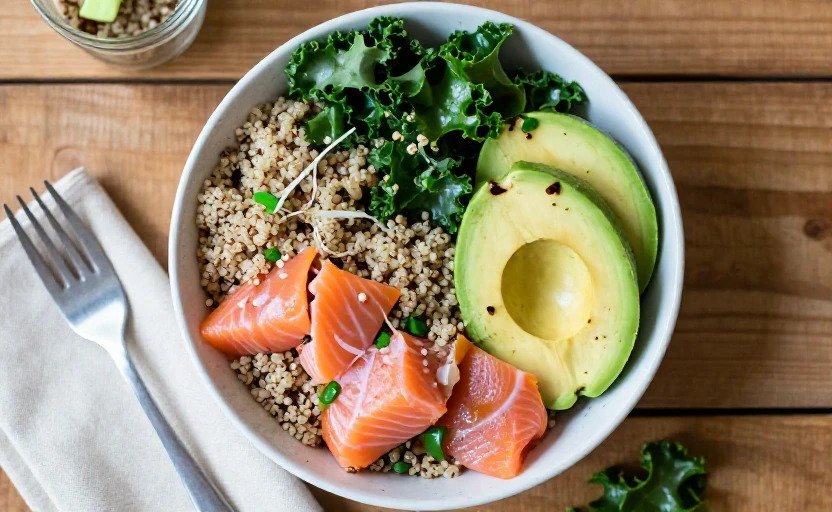
This bowl is a masterclass in brain-supportive nutrition. Start with a base of cooked quinoa, a complete protein and complex carb. Top it with a fillet of baked or pan-seared wild salmon, rich in omega-3s DHA and EPA. Add a large handful of massaged kale or spinach for iron and folate, some roasted broccoli for antioxidants, and a sprinkle of pumpkin seeds for magnesium and zinc. A simple drizzle of olive oil and lemon juice ties it all together.
The combination provides long-lasting energy, critical fats for brain structure, and a suite of vitamins to help convert food into mental fuel.
2. The Lentil & Avocado “Everything” Salad
Lentils are a lunchtime superhero. They’re packed with plant-based protein and fiber to stabilize blood sugar and keep you full, plus iron which helps transport oxygen to your brain. For this hearty salad, combine cooked green or black lentils with diced avocado (for creamy, monounsaturated fat), cherry tomatoes, cucumber, red onion, and plenty of chopped parsley.
Toss it in a bright lemon-tahini dressing. Tahini, made from sesame seeds, adds more protein, healthy fats, and minerals like calcium. This salad is deeply satisfying, prevents the post-lawnch slump, and provides a spectrum of nutrients that support cognitive endurance.
3. The Smarter Wrap: Turkey & Hummus Collard Green Roll-Up
Ditch the refined flour wrap that can lead to an energy crash. Instead, use a large collard green leaf, blanched briefly to make it pliable, as your vessel. Spread it with a generous layer of hummus for plant-based protein and fiber. Add slices of roasted turkey (a source of tyrosine) or baked tofu, shredded carrots, bell pepper strips, and a few spinach leaves.
Roll it up tightly and slice it in half. You get the convenience of a handheld lunch with none of the processed carbs. The collard green adds a major boost of vitamin K, which is linked to brain health, and the combination of protein and fiber ensures a slow, steady release of energy.
4. The Mindful Nourish Bowl: Sweet Potato, Chickpea & Kale
This warm, grounding bowl is perfect for days when you need comfort without compromise. Cube and roast a sweet potato—a superb source of complex carbohydrates and beta-carotene. On the same pan, roast rinsed chickpeas with a dash of paprika until crispy for protein and crunch.
Arrange them over a bed of chopped raw kale. The final, crucial element is a creamy dressing made by blending an avocado with lemon juice, a clove of garlic, water, and a handful of fresh herbs. The healthy fats from the avocado help your body absorb the fat-soluble vitamins in the kale and sweet potato, making all the nutrients more available to your body and brain.
5. The 5-Minute Zen Lunch: Sardine & Whole Grain Avocado Toast
When time is short but mental clarity is non-negotiable, this is your move. Toast a thick slice of hearty, seeded whole-grain bread. Mash half an avocado on top with a squeeze of lemon and a pinch of salt. Then, crown it with a few sardines from a tin (packed in olive oil or water).
Sardines are one of the most concentrated sources of omega-3s, are rich in vitamin B12 (crucial for nerve function), and are sustainable. The whole grains provide fiber, the avocado provides fat to absorb fat-soluble vitamins, and the sardines deliver a powerful dose of brain-specific nutrients. It’s shockingly simple and profoundly effective.
Building a lunch that fights mental fatigue isn’t about restrictive dieting or complicated recipes. It’s about making intentional swaps and combinations that serve your cognitive well-being. Start by incorporating one or two of these ideas into your week. Notice how you feel in the hours that follow. With a little planning, you can turn your midday meal into a source of sustained energy and focus, empowering you to move through your afternoon with clarity and calm.