You know the feeling: that mid-morning crash where your focus dissolves and your energy plummets, long before lunch is even a thought. What you choose to eat in the morning can be the deciding factor between a day of steady, productive energy and one spent battling fatigue. It’s less about a quick sugar rush and more about building a foundation that sustains you. We spoke with dietitians to understand the principles behind a truly energizing breakfast and the specific foods they consistently recommend to their clients.
The goal is a combination of nutrients that work together—primarily protein, fiber, and healthy fats. This trio slows the digestion of carbohydrates, providing a gradual release of glucose into your bloodstream instead of a sharp spike and subsequent crash. It’s this stable blood sugar that translates to stable energy and mental clarity for hours.
What makes a breakfast truly energizing?
Think of your morning meal as setting the metabolic tone for your day. A pastry and coffee might give you a jolt, but it’s often followed by a deficit. An energizing breakfast, however, is built for endurance. The key components dietitians emphasize are:
- Protein: Essential for satiety and for slowing digestion. It helps you feel full and provides the amino acids your body uses for repair and function.
- Fiber: Found in whole grains, fruits, and vegetables, fiber adds bulk, feeds beneficial gut bacteria, and critically, moderates how quickly sugars enter your system.
- Healthy Fats: Sources like nuts, seeds, and avocado provide dense, slow-burning fuel and aid in the absorption of fat-soluble vitamins.
When these elements are present together, you create a sustained energy release that keeps hunger at bay and cognitive function sharp.
1. Eggs: The versatile protein staple
It’s no surprise eggs top the list. They are a complete protein, meaning they contain all nine essential amino acids your body cannot make on its own. This makes them exceptionally efficient for maintaining muscle and promoting fullness. The protein and fat in eggs provide a steady fuel source, preventing the rapid blood sugar swings that come from a carbohydrate-heavy meal.
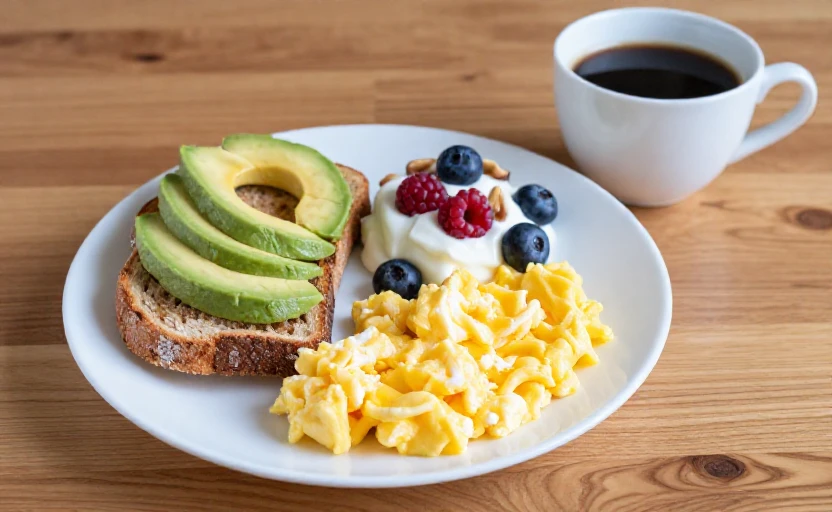
Pair them with a slice of whole-grain toast or some sautéed vegetables to add the crucial fiber component for a perfectly balanced plate.
2. Plain Greek yogurt or skyr
For a quick, no-cook option that’s packed with protein, dietitians frequently point to plain Greek yogurt or its even thicker cousin, Icelandic skyr. A single serving can contain 15 to 20 grams of protein. This high protein content is directly linked to increased satiety and a blunted blood sugar response. Opting for the plain variety allows you to control added sugars, which are often the culprit behind energy crashes.
Top it with your own additions: a handful of berries for fiber and antioxidants, a sprinkle of chia seeds for omega-3s, or a few almonds for crunch and healthy fat. This customization turns a simple yogurt into a complete, energy-supporting meal.
3. Oats (especially steel-cut or old-fashioned)
Not all carbohydrates are created equal. Oats are a whole grain and an excellent source of a specific type of fiber called beta-glucan. This soluble fiber forms a gel-like substance in your gut, dramatically slowing digestion and the absorption of glucose. The result is a long, gradual trickle of energy rather than a sudden flood.
Steel-cut oats have a lower glycemic index than instant varieties, meaning they have an even milder effect on blood sugar. Prepare them with milk or a milk alternative for added protein, and stir in nut butter or nuts after cooking to incorporate healthy fats. This transforms a simple bowl of oatmeal into a powerhouse of sustained energy.
A note on sweetening your oats
Instead of brown sugar or syrup, try mashing in a ripe banana for natural sweetness and extra potassium, or stir in a spoonful of unsweetened applesauce. A dash of cinnamon can also enhance sweetness without adding sugar.
4. Nut and seed butters
Almond butter, peanut butter, tahini, or sunflower seed butter are concentrated sources of healthy fats, protein, and fiber. The combination of fat and protein is profoundly satiating and provides a very slow-burning energy source. They’re also rich in magnesium, a mineral involved in hundreds of biochemical reactions in the body, including those that convert food into energy.
The key is to use them as a component, not the whole meal. Spread a tablespoon or two on whole-grain toast, swirl it into your oatmeal, or use it as a dip for apple slices. This adds the fat-protein element needed to balance the carbohydrates.
5. Berries and other high-fiber fruits
While fruit contains natural sugars, choices like raspberries, blackberries, blueberries, and apples are exceptionally high in fiber. This fiber content modulates the sugar’s release. Berries are also packed with antioxidants called polyphenols, which may help reduce cellular stress and support overall vitality.
Eating fruit whole, rather than juiced, preserves all the fiber. Add a cup of berries to your yogurt or oatmeal, or have an apple alongside a handful of nuts for a balanced, portable snack if you’re not in the mood for a full sit-down breakfast.
Building your plate for lasting energy
The magic happens in the combination. A breakfast built around one or two of these foods, while incorporating elements from the others, is your best strategy. Here’s what that looks like in practice:
- Two scrambled eggs with spinach and a side of avocado on whole-grain toast.
- A bowl of steel-cut oats cooked with milk, topped with almond butter and fresh raspberries.
- Plain Greek yogurt layered with blueberries, chia seeds, and a sprinkle of walnuts.
These meals aren’t just recipes; they are templates that balance the macro-nutrients your body needs to avoid the 11 a.m. slump. By focusing on whole, minimally processed foods that provide protein, fiber, and healthy fats, you invest in energy that lasts well beyond the morning.