
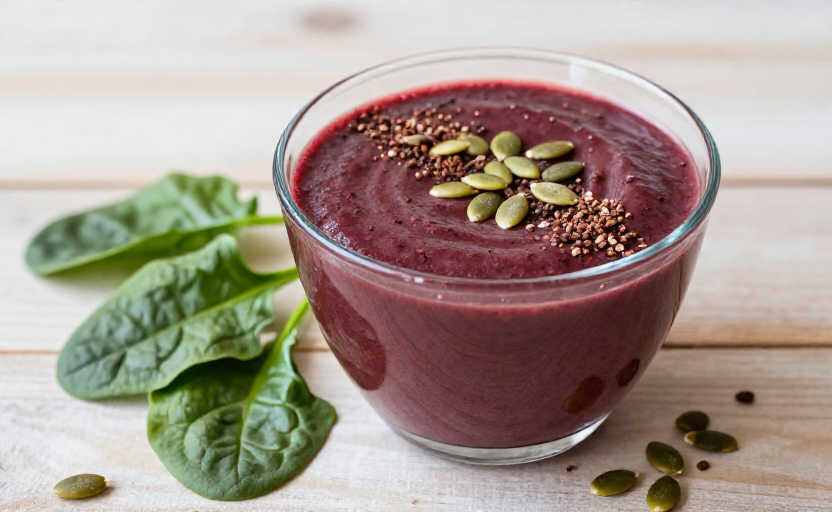
The weeks leading into breastfeeding come with their own physical demands—and a quiet nutritional shift that begins long before the baby arrives. One of the most important nutrients in this transition is iron, especially after delivery. Once the placenta is gone, your body recalibrates blood volume, and iron stores become the foundation for energy, milk supply, and postpartum recovery.
Smoothies are a gentle, hydrating way to build those stores without heavy meals. Below are five iron-rich recipes made for breastfeeding preparation—each balanced with vitamin C for absorption and designed to be easy on digestion.
The Spinach-Berry Recovery Blend
Spinach is a reliable source of non-heme iron, and when paired with vitamin C-rich berries, the absorption increases significantly. This smoothie is a go-to for mornings when you want something light but nutrient-dense.
Ingredients: 2 cups fresh spinach, 1 cup frozen mixed berries (strawberries, blueberries, raspberries), 1 tablespoon chia seeds, 1 cup unsweetened oat milk, and a splash of lemon juice (for extra vitamin C). Blend until smooth.
Chia seeds provide omega-3s and fiber, which help stabilize blood sugar and support digestive health during the early breastfeeding period. The lemon juice is subtle—just enough to boost iron uptake without making the smoothie tart.
Beet-and-Cocoa Power Shake
Beets are surprisingly high in iron, plus they offer nitrates that support blood flow—a useful benefit for lactation. Cocoa powder (unsweetened) adds a second source of iron while making the shake taste indulgent.
Ingredients: 1 small cooked beet (peeled and quartered), 1 tablespoon unsweetened cocoa powder, 1 banana (frozen for creaminess), 1 tablespoon almond butter, 1 cup coconut water or milk. Blend until velvety.
Almond butter adds healthy fats and a touch of protein. The banana provides natural sweetness, so there's no need for added sugar. If you prefer a cooler drink, use frozen banana chunks and a chilled beet.
Pumpkin Seed and Date Energizer
Pumpkin seeds are one of the highest plant-based sources of iron, with about 4 mg per quarter-cup. Dates contribute a small amount of iron themselves and give this smoothie a caramel-like sweetness.
Ingredients: ¼ cup raw pumpkin seeds, 3 Medjool dates (pitted), 1 cup unsweetened almond milk, ½ teaspoon cinnamon, and a handful of ice. Blend the pumpkin seeds first into a powder, then add the rest.
Cinnamon adds warmth and may help with blood sugar regulation. This smoothie is especially good for late-afternoon slumps when energy dips and you need something satisfying without caffeine.
Kale, Mango, and Hemp Twist
Kale contains more iron per calorie than many leafy greens, but it can be bitter. Mango balances the flavor while supplying vitamin C to improve iron absorption. Hemp seeds contribute protein and a mild, nutty taste.
Ingredients: 1 cup chopped kale (stems removed), 1 cup frozen mango chunks, 2 tablespoons hemp seeds, ½ cup plain full-fat yogurt (or a dairy-free alternative), and ¾ cup water or coconut milk. Blend until the kale is fully broken down.
The yogurt adds probiotics, which are important for postpartum gut health. Hemp seeds also contain magnesium and zinc, both of which support tissue repair and immune function during the early weeks of breastfeeding.
Dried Apricot and Oat Milk Nourisher
Dried apricots are concentrated in iron and offer a chewy sweetness that blends well into smoothies. Oat milk is naturally creamy and contains beta-glucans, which some women find supportive of milk supply.
Ingredients: ½ cup dried apricots (unsulfured), 1 cup oat milk, 1 tablespoon ground flaxseed, ¼ teaspoon vanilla extract, and a pinch of salt. Soak the apricots in warm water for 10 minutes first, then drain and blend.
Ground flaxseed provides lignans and omega-3 fatty acids that can aid hormonal balance. The pinch of salt enhances flavor without making it salty—it just rounds out the sweetness of the apricots.
Tips for Maximizing Iron Absorption
Building iron stores isn't just about what you add—it's also about what you avoid around mealtimes. Tannins in black tea and coffee can bind to iron and reduce absorption by up to 60 percent. Try to wait at least an hour after an iron-rich meal before drinking these beverages. Calcium can also interfere, so schedule dairy-heavy snacks separately from iron-focused smoothies.
Pairing plant-based iron with vitamin C is the most effective strategy. Many of the recipes above use citrus, berries, or mango to do this naturally. If you're using a blender that pulverizes greens well, the iron becomes more bioavailable than simply chewing leaves whole.
Short memory cue: Iron plus vitamin C equals better absorption. Avoid tea and coffee for one hour before and after iron-rich foods.
A Note on Timing and Consistency
Iron stores won't rebuild overnight. The goal during the third trimester and early postpartum period is consistent intake across many weeks, not one heavy load. Smoothies make it easier because they're quick to prepare and can be sipped between naps or during late-night feedings.
If you're using a iron supplement alongside these smoothies, let your healthcare provider know. Some forms of iron interact with certain foods, and spacing them out can reduce stomach upset. Always prioritize whole-food sources for traceability and cofactors, but know that supplementation may still be necessary if bloodwork shows deficiency.