That familiar afternoon slump—the creeping brain fog, the short fuse, the sudden urge to tackle your inbox with your head on the desk—isn't just a sign of a long day. Often, it's a direct message from your body about what you ate a few hours prior. Your lunch choice can either set you up for a calm, focused afternoon or send you spiraling into a cycle of stress and exhaustion.
Nutrition doesn't just fuel your body; it directly influences your nervous system, hormone balance, and brain chemistry. By choosing foods that provide steady energy, support neurotransmitter production, and keep blood sugar stable, you can build a powerful dietary defense against workplace tension.
What makes a food good for stress?
Before we get to the plate, let's understand the mechanics. Stress, whether from a looming deadline or a crowded inbox, triggers a physiological response. Your body releases cortisol and adrenaline, your heart rate increases, and your resources are diverted for a 'fight or flight' reaction. Chronic, low-grade stress keeps this system subtly activated, which is draining over time.
Certain nutrients help modulate this response. They can support the production of calming neurotransmitters like serotonin and GABA, help regulate cortisol levels, and protect your cells from the oxidative damage that stress can accelerate. The goal of an anti-stress lunch isn't sedation, but resilience: providing your brain and body with the tools to handle pressure without tipping into overwhelm.
The most powerful tool against afternoon stress isn't a meditation app—it's your lunchbox.
Five lunchtime allies for a calmer afternoon
These foods aren't magical cure-alls, but incorporating them into your midday meal can create a foundation of nutritional support that makes a noticeable difference in how you feel and function.
1. Fatty fish (like salmon, sardines, or mackerel)
The omega-3 fatty acids found in fatty fish, specifically EPA and DHA, are fundamental for brain health. Research suggests they can help reduce inflammation and may even lower the body's production of cortisol and adrenaline during stressful events. A lunch rich in these fats helps build brain cell membranes that are more fluid and better at communication, which can support a clearer, less reactive mind.
How to eat it: A simple salmon salad, a tin of sardines on whole-grain crackers, or leftover baked mackerel with a side of vegetables. If you don't eat fish, consider a small handful of walnuts or flaxseeds in your salad, though the conversion to the potent EPA/DHA is less efficient.
2. Leafy greens (spinach, kale, Swiss chard)
These are powerhouses of magnesium, a mineral that acts as a natural relaxant for your nervous system. Magnesium helps regulate the body's stress-response system and is involved in hundreds of enzymatic reactions, including those that produce energy. Stress can deplete magnesium stores, and a deficiency can, in turn, make you feel more anxious—a cycle easily broken by including these greens.
How to eat it: They form the perfect base for a large, nutrient-dense salad. Sauté them with garlic as a warm side, or blend a handful into a green smoothie (if that's your lunch preference). The fiber also helps slow digestion, preventing energy crashes.
3. Complex carbohydrates (sweet potatoes, quinoa, oats, beans)
Carbohydrates have been unfairly villainized. The right kind is crucial for stress management. Complex carbs—those rich in fiber—cause a gradual rise in blood sugar, providing sustained energy. This steady fuel supply prevents the irritability and anxiety that come with a blood sugar crash. Furthermore, they aid in the transport of tryptophan to the brain, where it's used to produce serotonin, a neurotransmitter that promotes feelings of calm and well-being.
How to eat it: A quinoa bowl with roasted vegetables, a hearty lentil soup, a sweet potato stuffed with chickpeas, or a bowl of oatmeal topped with nuts and seeds if you prefer a lighter lunch.
4. Probiotic-rich foods (yogurt, kefir, kimchi, sauerkraut)
The connection between your gut and your brain, known as the gut-brain axis, is a major pathway in stress biology. About 95% of your body's serotonin is produced in the gut. Eating fermented foods introduces beneficial bacteria that support a healthy gut microbiome, which communicates directly with the brain via the vagus nerve. A balanced gut can mean a more balanced mood and stress response.
How to eat it: A plain yogurt parfait with berries, a side of kimchi with your rice bowl, or a spoonful of sauerkraut on the side of your plate. Look for labels that say "live and active cultures."
5. Dark chocolate (70% cocoa or higher)
Yes, it can be part of lunch. A small square of high-quality dark chocolate after your meal is more than a treat. It contains flavonoids, antioxidants that can improve blood flow to the brain and have been linked to reduced stress. It also contains magnesium and may stimulate the production of endorphins. The key is small quantity and high quality—think of it as a functional garnish, not a dessert bar.
How to eat it: Enjoy one or two small squares mindfully after your meal. You can even grate a little over a bowl of yogurt or oatmeal.
Building your stress-resilient plate
The magic happens in combination. Aim to include two or three of these elements in your lunch. For example:
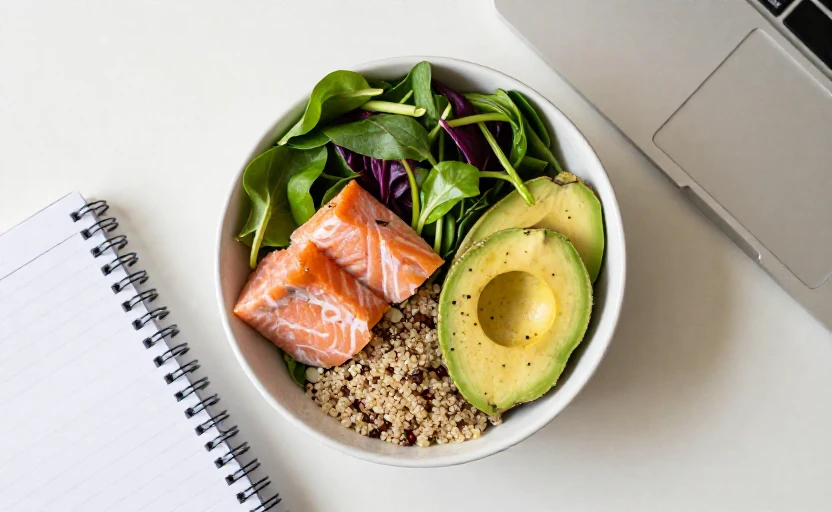
- A large salad with leafy greens, salmon, quinoa, and a yogurt-based herb dressing.
- A bowl of black bean and sweet potato chili with a side of sauerkraut.
- A wrap with sardines, spinach, and hummus in a whole-grain tortilla, followed by a square of dark chocolate.
Equally important is what to avoid or minimize: heavy, fried foods that demand energy for digestion; lunches dominated by simple sugars and refined carbs (white bread, pastries, sugary sauces) that lead to a sharp energy spike and crash; and excessive caffeine, which can heighten feelings of anxiety and jitteriness.
A note on the bigger picture
While these foods can significantly support your nervous system, they work best within a holistic approach. Pair your nourishing lunch with other stress-management practices: taking a short walk after eating, staying hydrated with water, and setting boundaries to actually step away from your desk for your meal. Food is a foundational piece of the resilience puzzle, giving your body the literal building blocks it needs to cope. When you feed yourself with intention, you're not just satisfying hunger—you're fortifying your capacity to meet the demands of your day with greater calm and clarity.