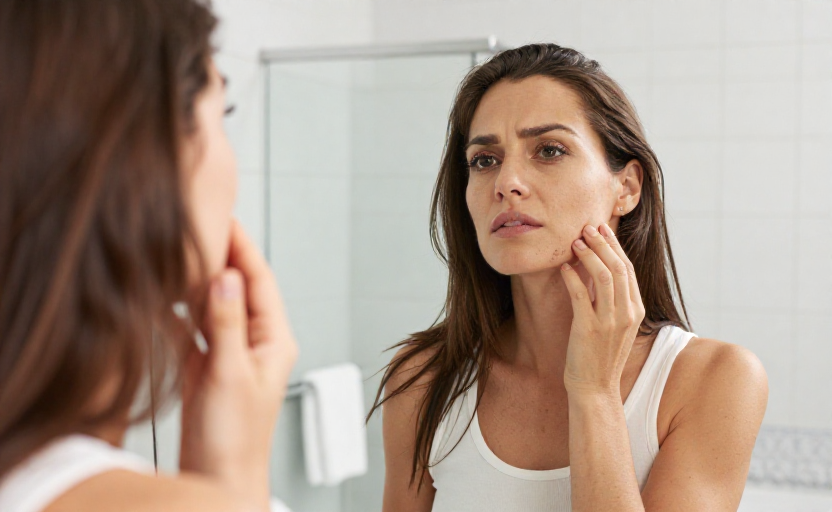
When you have Polycystic Ovary Syndrome (PCOS), unwanted hair growth can feel like a relentless cosmetic problem. You pluck, wax, or shave, hoping to keep it under control. But what if that coarse, dark hair on your chin, chest, or upper abdomen is trying to tell you something more significant than just a grooming inconvenience? It might be a loud signal from your endocrine system that your hormone levels are out of balance in ways that require attention.
While hirsutism—the medical term for this type of hair growth—is a common PCOS symptom, its severity and pattern can offer clues about what is happening beneath the surface. Ignoring these signs can mean missing an opportunity to address root causes that affect your metabolic health, fertility, and long-term well-being. Here are four red flags that your hair growth might be pointing to deeper hormone issues.
1. The hair is spreading to new, androgenic territories
PCOS-related hair growth typically follows a male-like pattern. If you are noticing thick, terminal hairs appearing in places that were previously smooth, it may indicate rising androgen levels. The classic areas include the upper lip, chin, sideburns, chest, lower back, and inner thighs.
However, a warning sign occurs when this growth expands to less typical zones—the upper abdomen in a line from the navel upward, the shoulders, or the upper arms. This pattern suggests that your body is producing or metabolizing androgens, such as testosterone, at a rate that may be accelerating. This change can correlate with other shifts in your cycle, such as longer gaps between periods or worsening acne. When the hair map changes, it is time to check your lab work.
2. Rapid onset of hair growth alongside thinning scalp hair
One of the most telling signs of a hormone shift is the combination of increased facial and body hair with noticeable thinning on the top of your head. This condition is called androgenic alopecia. If you are seeing more hair in your brush or on your pillow while simultaneously finding more stubble on your chin, it is a classic hallmark of elevated free testosterone and dihydrotestosterone (DHT).
This dual signal is not just about aesthetics—it is a metabolic clue. Research has shown that women with PCOS who experience both hirsutism and scalp thinning often have higher insulin resistance. The relationship works in a loop: high insulin levels tell your ovaries to produce more androgens, which then attack the hair follicles at your crown and stimulate growth in sensitive follicles on your face. If you are seeing this pattern, it is a strong indicator that managing blood sugar could be as important as any topical treatment.
Think of hair growth and hair loss as two sides of the same hormonal coin. When both are changing rapidly, it is rarely coincidence.
3. The growth is resistant to standard lifestyle changes
Many women with PCOS can manage mild hirsutism with dietary adjustments, stress reduction, and consistent exercise. These strategies help lower insulin and reduce circulating androgens over time. But if you have been diligent with a low-glycemic diet, regular movement, and stress management for several months—yet the dark, coarse hairs keep coming—this resistance suggests a deeper issue.
In some cases, this stubbornness can point to non-classical congenital adrenal hyperplasia (NCAH) or a mild form of Cushing's syndrome, both of which mimic PCOS symptoms. It can also indicate that your adrenal glands are the primary driver of your androgen production, rather than just your ovaries. Adrenal-driven PCOS often requires a different management approach, one that focuses on cortisol regulation and adrenal support rather than just ovulation induction. If your efforts feel futile, ask your healthcare provider about a full adrenal panel, including 17-hydroxyprogesterone and DHEA-S levels.
4. You are experiencing sudden, severe changes with other systemic symptoms
While PCOS typically develops gradually, a sudden explosion of hair growth accompanied by other symptoms is a medical red flag. If you notice a significant increase in hair growth over a few weeks or months, and it is paired with deepening of your voice, clitoromegaly, a rapid increase in muscle mass, or a dramatic libido shift, you need to seek evaluation for a potential androgen-secreting tumor or ovarian hyperthecosis.
These conditions are rare but serious. Similarly, if the hair growth is accompanied by central obesity, easy bruising, purple stretch marks, or high blood pressure, the possibility of Cushing's syndrome becomes a higher priority. In these scenarios, the hair is not the main issue—it is a symptom of a systemic overload that requires imaging and specialist referral. Do not let anyone dismiss sudden severe symptoms as just another PCOS day.
What to do if you recognize these signs
If one or more of these warning signs resonates with you, your next step is strategic, not reactive. Book an appointment with an endocrinologist or a reproductive specialist who understands PCOS complexity. Ask for specific tests: a comprehensive hormone panel measuring total and free testosterone, sex hormone-binding globulin (SHBG), DHEA-S, 17-hydroxyprogesterone, and a fasting insulin with glucose. Imaging may be warranted if adrenal or ovarian tumors are suspected.
Treatment is not just about removing the hair. The goal is to lower the androgen drive. Options may include a combination of anti-androgen medications like spironolactone, insulin-sensitizers like metformin or inositol, hormonal contraception to regulate the cycle, and adrenal-supporting adaptogens if stress is a factor. Laser hair removal and electrolysis are effective only if the hormonal trigger is addressed simultaneously; otherwise, the hair will keep coming back.
Your hair growth is not a vanity problem. It is a biomarker. When you listen to what it is signaling, you open the door to treatment that can protect your pancreatic function, bone density, and heart health for years to come.